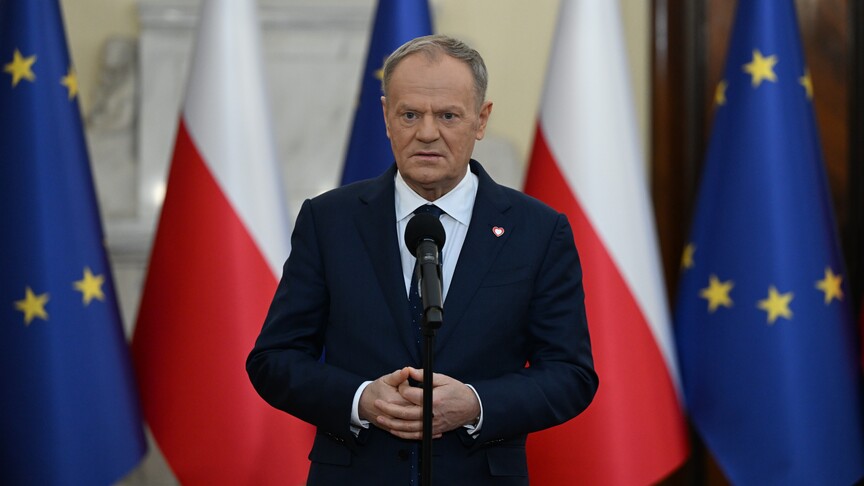
PM Donald Tusk Sounds Alarm Over Possible Russian Test of NATO: Poland has once again found itself at the center of Europe’s security concerns after Prime Minister Donald Tusk warned that the coming months could prove “critical” as tensions with Russia continue to rise. His remarks followed reports suggesting that Moscow may be considering an armed provocation on Polish territory in an effort to test the unity and resolve of the NATO alliance.
Speaking to reporters, Tusk said his government was preparing for “various scenarios”, emphasizing that Poland could not afford to underestimate the rapidly changing security environment in Eastern Europe. Although he stopped short of confirming specific intelligence details, he made clear that Warsaw is treating every potential threat with the utmost seriousness.
A Growing Sense of Uncertainty
The warning comes at a time when relations between Russia and NATO remain deeply strained. Since the conflict in Ukraine escalated, countries along NATO’s eastern flank have significantly increased military readiness, strengthened border security, and expanded cooperation with allied forces.
According to media reports citing U.S. intelligence sources, Russian planners may be exploring ways to stage a limited military or hybrid operation designed to challenge NATO without triggering a full-scale conflict. Such actions could include cyberattacks, sabotage, border incidents, or other forms of unconventional warfare intended to create confusion and test the alliance’s response.
While no official evidence has been publicly released, Polish leaders have made it clear that they are taking every warning seriously.
Poland Strengthens Its Defenses
Poland has become one of NATO’s strongest military contributors in recent years. The country has dramatically increased defense spending, invested in advanced weapons systems, and expanded the size of its armed forces.
Officials say these investments are not intended to provoke conflict but rather to ensure that any potential aggressor understands the high cost of challenging Polish sovereignty.
Military exercises have also become more frequent, with Polish forces regularly training alongside U.S., British, German, and other allied troops stationed throughout the region. These exercises are designed to improve coordination and demonstrate NATO’s commitment to collective defense.
Prime Minister Tusk stressed that preparation is essential in today’s security environment.
“We must be ready for every possible development,” he said, adding that responsible governments cannot ignore warning signs even if the probability of an attack remains uncertain.
NATO’s Collective Defense at Stake
At the heart of the concern lies Article 5 of the NATO treaty, which states that an attack against one member is considered an attack against all. Any deliberate Russian provocation targeting Poland would therefore carry enormous geopolitical consequences.
Security experts believe that testing NATO’s unity—rather than launching a full invasion—could be one of Moscow’s strategic objectives. A carefully calibrated incident might seek to expose divisions among alliance members or delay a coordinated response.
However, NATO leaders have repeatedly emphasized that collective defense commitments remain firm. The alliance has increased troop deployments across Eastern Europe and continues to monitor developments closely.
Western governments argue that maintaining credible deterrence is the best way to prevent conflict from expanding beyond Ukraine.
Hybrid Warfare Remains a Key Concern
Modern security threats extend well beyond traditional military attacks. Intelligence agencies across Europe have warned about increasing risks from cyber operations, disinformation campaigns, infrastructure sabotage, and espionage.
Poland has previously accused Russia and Belarus of attempting to destabilize the country through cyberattacks and by encouraging irregular migration along its eastern border.
Analysts say hybrid tactics allow adversaries to create political and social disruption while avoiding actions that clearly cross the threshold of conventional war.
For this reason, Polish authorities are strengthening cybersecurity, protecting critical infrastructure, and improving intelligence cooperation with NATO partners.
Regional Security Continues to Evolve
The war in Ukraine has fundamentally reshaped Europe’s security landscape. Countries bordering Russia and Belarus now face a much more unpredictable strategic environment than they did only a few years ago.
Poland’s geographic location makes it a critical logistics hub for military assistance heading to Ukraine, increasing its strategic importance within NATO.
Government officials say maintaining strong defenses and close coordination with allies is essential to preserving regional stability.
Despite heightened tensions, Polish leaders continue to emphasize that their objective is deterrence rather than confrontation.
International Attention Focuses on Eastern Europe
The latest warning from Warsaw is likely to receive close attention in Washington, Brussels, and other NATO capitals. Allied governments are expected to continue sharing intelligence and coordinating contingency plans should security conditions deteriorate.
Diplomatic channels also remain active, with Western leaders seeking to prevent misunderstandings that could unintentionally escalate into broader conflict.
At the same time, intelligence agencies continue monitoring Russian military activity for signs of unusual troop movements or preparations that might indicate a shift in strategy.
In Summary
Prime Minister Donald Tusk’s remarks underscore the uncertainty facing Europe as geopolitical tensions remain elevated. While there is no confirmation that any Russian provocation is imminent, Polish authorities believe preparedness is the best defense against an increasingly unpredictable security environment.
The coming months are expected to be closely watched by military planners and policymakers across NATO. Whether through diplomacy, deterrence, or enhanced defense cooperation, the alliance will seek to demonstrate that any attempt to undermine its unity will be met with a coordinated response.
For Poland, the message is clear: vigilance is essential. As one of NATO’s frontline members, the country intends to remain prepared for every possibility while working alongside its allies to preserve peace and stability across Europe