
Iran Holds State Funeral for Khamenei Amid Renewed Diplomatic Push by Pakistan
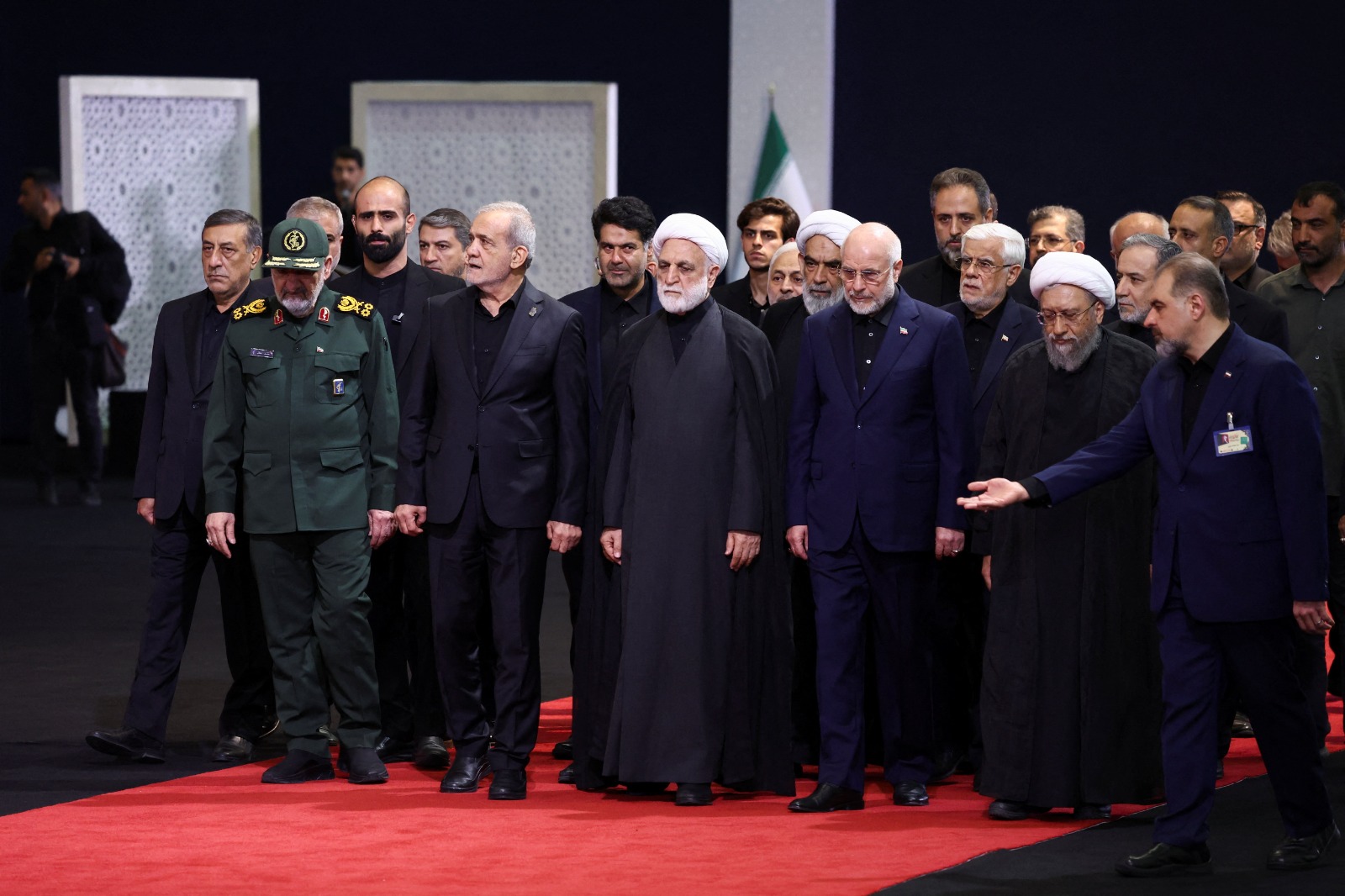
Tehran/Islamabad: Iran on Saturday began a dayslong state funeral for its late Supreme Leader, Ayatollah Ali Khamenei, with thousands of mourners gathering in Tehran to pay their final respects to the country’s most influential leader. The solemn ceremonies unfolded amid heightened regional tensions and coincided with Pakistan’s renewed diplomatic outreach to the United States, underscoring the shifting geopolitical dynamics in West Asia following the recent conflict.
The funeral commenced at the Grand Mosalla in Tehran, where authorities unveiled Khamenei’s casket in a glass enclosure, allowing members of the public to bid farewell to the leader who guided Iran for nearly four decades. Men, women and children lined up to pay their respects as emotional mourners chanted slogans pledging loyalty to the Islamic Republic and calling for revenge against those responsible for his death.
“Our word is one! Revenge! Revenge!” echoed through the vast prayer hall as crowds waved Iranian flags and portraits of the late leader. Many participants performed rhythmic chest-beating, a traditional Shiite mourning ritual, while others carried banners praising Khamenei’s leadership and his role in shaping Iran’s regional policies.
Large billboards featuring Khamenei’s image adorned streets across Tehran, while black flags and mourning banners draped government buildings, mosques and public squares. Authorities expect funeral ceremonies to continue over several days before the Supreme Leader is laid to rest.
Khamenei, who was 86, was killed months earlier in an airstrike that marked the opening phase of the recent war involving Iran. His death represented one of the most significant moments in the country’s modern political history, bringing an end to a leadership that spanned more than three decades and profoundly influenced Iran’s domestic governance and foreign policy.
Throughout his tenure, Khamenei oversaw Iran during periods of intense sanctions, regional conflicts, nuclear negotiations and shifting alliances across the Middle East. Supporters viewed him as a symbol of resistance against Western influence, while critics accused his administration of tightening political control and limiting civil liberties.
The funeral has become both a national moment of mourning and a demonstration of political unity. Iranian officials have portrayed the large public turnout as evidence of continued support for the Islamic Republic despite the uncertainties that followed the conflict and the loss of its long-serving leader.
As Iran focused on commemorating Khamenei, diplomatic activity elsewhere in the region gathered pace.
In Islamabad, Pakistan President Asif Ali Zardari reached out to U.S. President Donald Trump with a letter congratulating him and the American people on the 250th anniversary of the U.S. Declaration of Independence. The message also highlighted Islamabad’s interest in strengthening bilateral relations with Washington through structured engagement across several strategic sectors.
According to a statement issued by Pakistan’s President’s Office, Zardari proposed expanding cooperation in areas including energy security, trade, investment, defence and counter-terrorism. The outreach signals Pakistan’s intention to reinvigorate ties with the United States at a time when regional security challenges continue to evolve.
The Pakistani President also expressed appreciation for the confidence the United States had placed in Islamabad’s role as a facilitator in negotiations involving Iran. Pakistan has sought to position itself as a constructive diplomatic actor capable of maintaining communication with multiple regional and global powers despite competing strategic interests.
In his letter, Zardari stressed that a lasting solution to the ongoing tensions in West Asia could only be achieved through dialogue, diplomacy and de-escalation rather than military confrontation.
His remarks reflected Pakistan’s longstanding position that regional disputes should be resolved through negotiations and political engagement. Islamabad has consistently advocated peaceful conflict resolution while maintaining diplomatic relations with both Tehran and Washington.
The timing of the letter is particularly significant as Pakistan seeks to balance its relationship with neighbouring Iran while also strengthening economic and security cooperation with the United States.
Pakistan shares a lengthy border with Iran and has traditionally maintained close diplomatic and economic ties with Tehran. At the same time, successive Pakistani governments have viewed strong relations with Washington as essential for regional security, defence cooperation and economic development.
Analysts say Islamabad’s diplomatic balancing act has become increasingly important following the recent conflict involving Iran. The country’s leadership has attempted to avoid becoming entangled in regional rivalries while encouraging dialogue among major stakeholders.
Iran’s funeral ceremonies and Pakistan’s diplomatic outreach together highlight the contrasting priorities currently shaping the region.
While Tehran focuses on honouring a leader whose influence defined Iranian politics for decades and seeks to project resilience after the war, Islamabad is emphasizing diplomacy and international engagement to navigate an increasingly complex geopolitical landscape.
The developments also underscore broader efforts by regional governments to prevent further escalation following months of instability. Calls for dialogue from Pakistan come as several countries continue exploring diplomatic initiatives aimed at reducing tensions and restoring stability across West Asia.
For Iran, the state funeral marks the closing chapter of Khamenei’s leadership while opening a new phase in the country’s political journey. For Pakistan, renewed engagement with Washington represents an attempt to strengthen strategic partnerships without compromising its regional relationships.
As mourners continue to gather in Tehran over the coming days, attention will remain focused not only on the symbolic significance of Khamenei’s funeral but also on how regional diplomacy evolves in the aftermath of one of the most consequential conflicts in recent years.
The parallel developments illustrate a region simultaneously grappling with loss, political transition and the urgent need for diplomatic engagement, as governments seek stability in an increasingly uncertain geopolitical environment. Facts Behind the Rise of Domain-Based Global Leadership (Tech, Trade, Energy) | Maya


