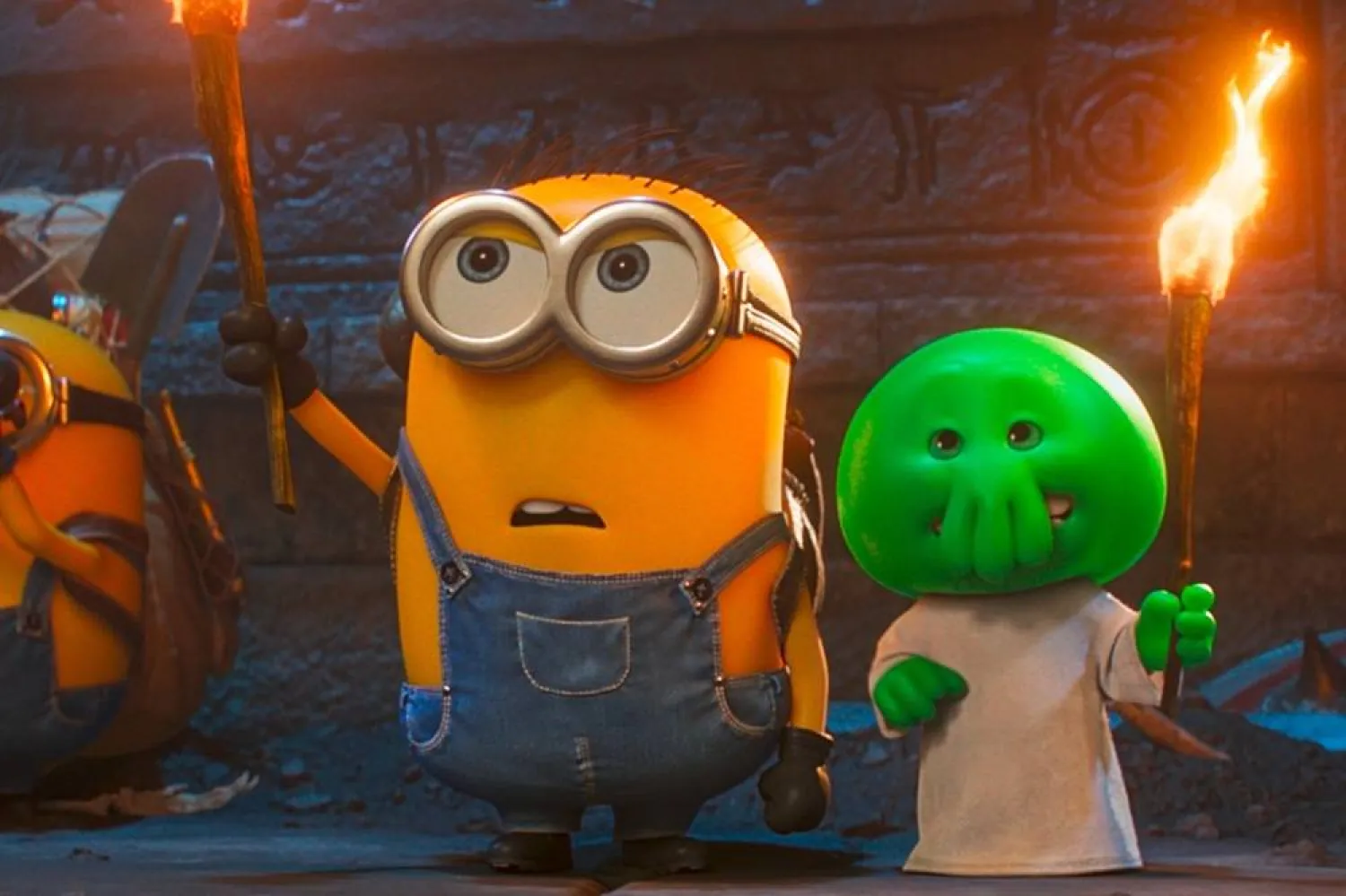
Minions & Monsters Tops Toy Story 5 at the Box Office—But the Win Comes With an Asterisk- Illumination’s latest animated release, Minions & Monsters, has claimed the No. 1 spot at the North American box office this weekend, narrowly edging out Pixar’s Toy Story 5 with an estimated $36.4 million to $31 million.
On paper, that makes it a clear weekend victory. But in the broader context of release timing, franchise performance, and overall momentum, the picture is far less straightforward.
A weekend win with context attached
Minions & Monsters arrives as the latest entry in the long-running Despicable Me universe, which began in 2010 and expanded into a global franchise powered by the breakout success of the Minions. This new installment continues that legacy, but its debut suggests a noticeable cooling of audience enthusiasm compared to earlier films.
While the film did finish first this weekend, it also delivered a franchise-low domestic opening for the series. Even when factoring in its Wednesday release and extended holiday corridor, its early domestic total of around $61.4 million still trails behind the opening weekend standards set by previous entries.
That contrast is what makes the “win” feel more complicated than celebratory.
Toy Story 5’s stronger long game
Meanwhile, Toy Story 5 may have slipped to second place in its third weekend, but its overall performance tells a very different story. Pixar’s sequel opened with a massive $160 million domestic debut and more than $300 million globally, instantly establishing it as one of the year’s strongest animated launches.
Since then, it has continued to build on that foundation through strong word-of-mouth and family audience retention. By the end of this weekend, its global total has climbed significantly, placing it well ahead of Minions & Monsters in cumulative earnings.
In other words, while Minions & Monsters won the weekend snapshot, Toy Story 5 remains the dominant force across the full theatrical run so far.
The importance of timing
One of the key reasons for the apparent contradiction lies in release timing. Toy Story 5 is already deep into its theatrical lifecycle, where a natural decline in weekend earnings is expected after a strong opening surge.
By contrast, Minions & Monsters is just entering the early phase of its run. New releases often benefit from front-loaded demand among core fans and families, especially in animated franchises with strong brand recognition.
However, even with that advantage, analysts note that the opening is still modest by franchise standards. The Despicable Me series has historically been one of the most reliable performers in animation, often delivering stronger debuts even for spin-offs and prequels.
That makes this latest result a potential signal of franchise fatigue, or at minimum, softer audience urgency.
Franchise expectations vs. reality
The Despicable Me universe has been a powerhouse for Illumination for over a decade. From the original film’s surprise success to the Minions’ rise as pop culture icons, the franchise has consistently delivered high box office returns and strong global appeal.
But Minions & Monsters suggests that even established IPs are not immune to audience saturation. While $36.4 million is still a solid opening in absolute terms, it falls short of the franchise’s historical benchmark, where earlier entries regularly posted significantly higher debuts.
Adjusted for inflation and historical context, the gap becomes even more pronounced. The original Despicable Me opened to roughly $56.4 million, meaning the new entry lags behind even the earliest installment in nominal terms, and significantly more when adjusted for today’s ticket prices.
That comparison is likely to raise eyebrows within the industry, particularly for a franchise that has long been considered recession-proof in theatrical animation.
Pixar’s consistency advantage
On the other side, Pixar continues to demonstrate the value of brand consistency and audience trust. Toy Story 5 may not have topped this weekend’s chart, but its trajectory reflects strong long-term performance rather than short-term spikes.
The Toy Story franchise remains one of the most durable in modern animation history, and the fifth installment appears to be following that pattern. Strong opening numbers combined with steady retention suggest that families are still showing up well after release week, a key indicator of staying power.
This kind of performance often matters more to studios than a single weekend ranking, especially when evaluating total revenue potential over a multi-week run.
Weekend wins vs. overall dominance
The contrast between the two films highlights a familiar box office truth: winning a weekend does not necessarily mean winning the race.
Minions & Monsters may currently sit at No. 1, but its victory is narrow and arrives under circumstances that complicate interpretation. Toy Story 5, meanwhile, has already secured a much larger global footprint and continues to build on it.
In practical terms, Illumination can claim the headline, but Pixar holds the advantage in overall performance, audience reach, and long-term earnings potential.
The bigger takeaway
What this weekend ultimately illustrates is the evolving challenge for even the biggest animated franchises. Familiar characters alone are no longer a guarantee of explosive openings, and audience expectations are increasingly shaped by quality, timing, and competition.
For Illumination, Minions & Monsters is a reminder that even global IP giants can experience softer-than-expected launches. For Pixar, Toy Story 5 reinforces the enduring strength of legacy storytelling and sustained audience goodwill.
So while Minions & Monsters technically tops the chart, the broader box office story is far less clear-cut.
In the end, it’s not just about who wins the weekend—it’s about who wins the run. How AI Is Helping Historians Decode Ancient Languages | Maya
:max_bytes(150000):strip_icc():focal(705x379:707x381)/Sebastian-Stan-Annabelle-Wallis-Women-In-Motion-dinner-051826-tout-cb5c06d2237e42a393ef5ebdc1c86b3d.jpg "Sebastian Stan’s Cannes Speech Is Going Viral for One Reason")