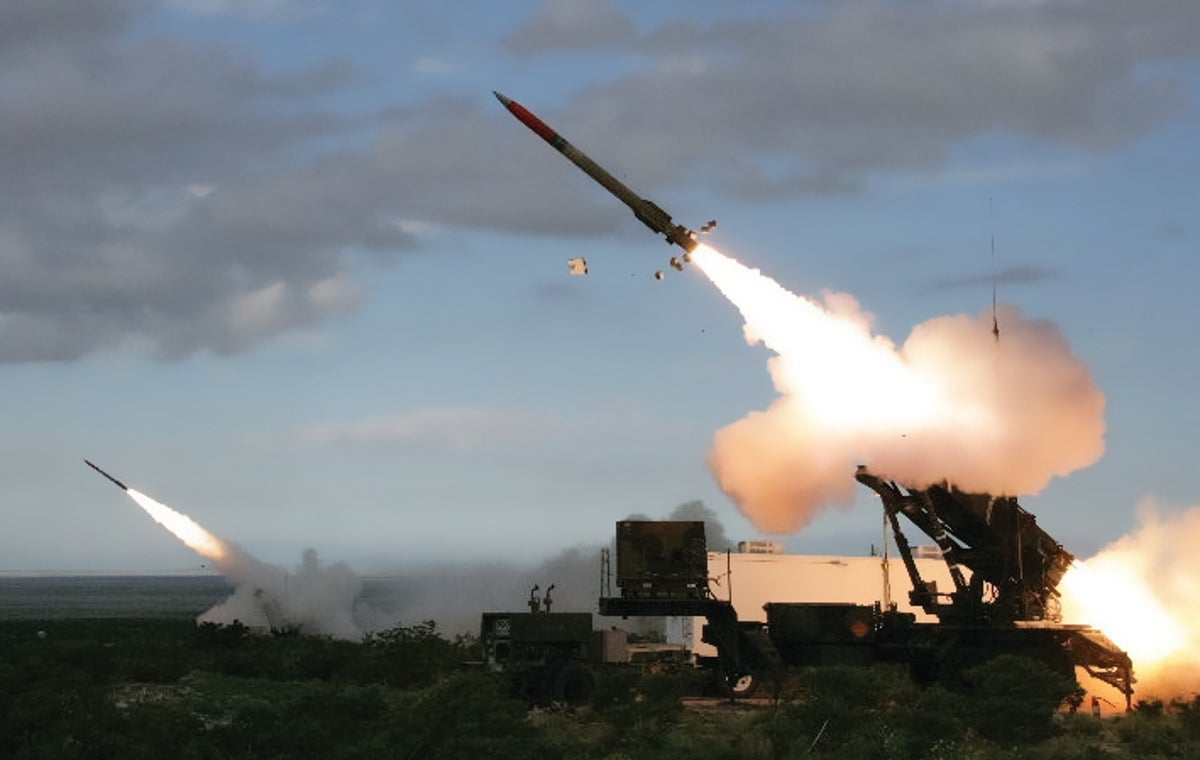
China’s Submarine Missile Test Rattles the Pacific — and the Timing Isn’t Coincidental- On Monday at 12:01pm, a Chinese nuclear-powered submarine fired a long-range ballistic missile into the Pacific Ocean, carrying a dummy warhead. Chinese state media called it routine annual training. Almost nobody in the region treated it that way.
The launch marks China’s first known submarine-based missile test since 1982, and the first ever confirmed to have been fired from a nuclear-powered submarine. For a program long characterized by opacity, that alone would be significant. But the geopolitical context surrounding the test — who was notified, how much warning they got, and what else was happening in the region that same day — tells a fuller story about where Pacific security is heading.
Notification as leverage
Beijing insists it followed proper protocol: relevant governments were informed in advance, and the test “was not directed against any specific country or target.” In practice, the notice varied sharply by country, and that gap has become part of the story itself.
Japan received roughly 90 minutes’ warning before the noon launch, delivered to its embassy in Beijing by China’s Defense Ministry. Tokyo used that window to formally object, urging Beijing to reconsider drills that could threaten Japanese security — particularly any missile path crossing Japanese airspace. New Zealand fared little better: Foreign Minister Winston Peters said Wellington was told only hours beforehand, despite New Zealand’s repeated objections to this kind of Chinese activity in the Pacific.
Short notice that technically satisfies protocol while leaving no real room for diplomatic response is itself a form of signaling. It tells affected governments that consultation is not really on the table — only notification.
A treaty problem, not just an optics problem
Peters raised a specific legal point that elevates this beyond typical diplomatic friction: the missile landed inside the South Pacific Nuclear Free Zone, established under the 1985 Treaty of Rarotonga. He argued the test runs counter to the treaty’s intent, and warned that this now looks like a pattern rather than an isolated event — China fired a similar intercontinental ballistic missile into the South Pacific in September 2024. Two tests in under two years, in a zone explicitly designed to keep nuclear weapons activity out of the South Pacific, is difficult to wave off as coincidence.
Australia’s Foreign Minister Penny Wong framed the test in structural terms, calling it “destabilising” and linking it directly to what she described as a rapid Chinese military build-up lacking the transparency the region expects. That’s a notably blunt characterization from Canberra, which has generally tried to balance economic ties with Beijing against security concerns.
The same-day coincidence that wasn’t
Perhaps the most telling detail: the missile test landed on the same day Australia and Fiji signed a new mutual defence treaty, part of a broader “Ocean of Peace” security framework that Canberra has explicitly left open for other Pacific nations to join. Australian Prime Minister Anthony Albanese is currently on a multi-country tour of the region locking in security agreements — precisely the kind of Western-aligned coordination Beijing has spent years trying to discourage among Pacific Island states.
Whether the submarine test was timed deliberately to overshadow the Fiji announcement, or simply landed on the same news cycle by coincidence, matters less than how it will be read across the region. Either way, it reinforces a familiar dynamic: as Western-aligned powers deepen security cooperation in the Pacific, China responds with displays of capability rather than de-escalation.
What to watch next
A few threads are worth tracking as this develops. First, whether Washington issues its own formal response — a nuclear-powered submarine test carries different strategic weight than the surface-ship drills China has more routinely conducted near Australia and New Zealand in recent years. Second, whether Pacific Island Forum members, who have consistently pushed the “Ocean of Peace” framing for the region, issue any collective statement, given Peters’ explicit call for the region not to let such tests “become normalised or routine.” Third, whether further technical details emerge about the missile and submarine involved — reporting so far has not confirmed the exact platform, though earlier Chinese Type 094-class submarines have been the assumed baseline capability.
None of this necessarily signals an imminent shift in the regional balance of power. Submarine-launched ballistic missile tests are, in isolation, a normal feature of great-power military posture. But the pattern here — infrequent Chinese tests in the South Pacific, arriving on the same day as major Western-aligned security announcements, met with unusually direct pushback from Wellington and Canberra — suggests the Pacific is entering a phase where military signaling and diplomatic maneuvering are becoming difficult to disentangle from each other. Louis Vuitton Just Sued A Tea Shop For $1.5 Million—And WON | Maya