AI Designed 16 New Viruses in a Lab — A Scientific Breakthrough With a Serious Biosecurity Question- Artificial intelligence has taken another remarkable step into the world of biology.
Researchers have demonstrated that AI can help design entirely new viral genomes and, more importantly, that some of those computer-generated designs can actually function when tested in the laboratory.
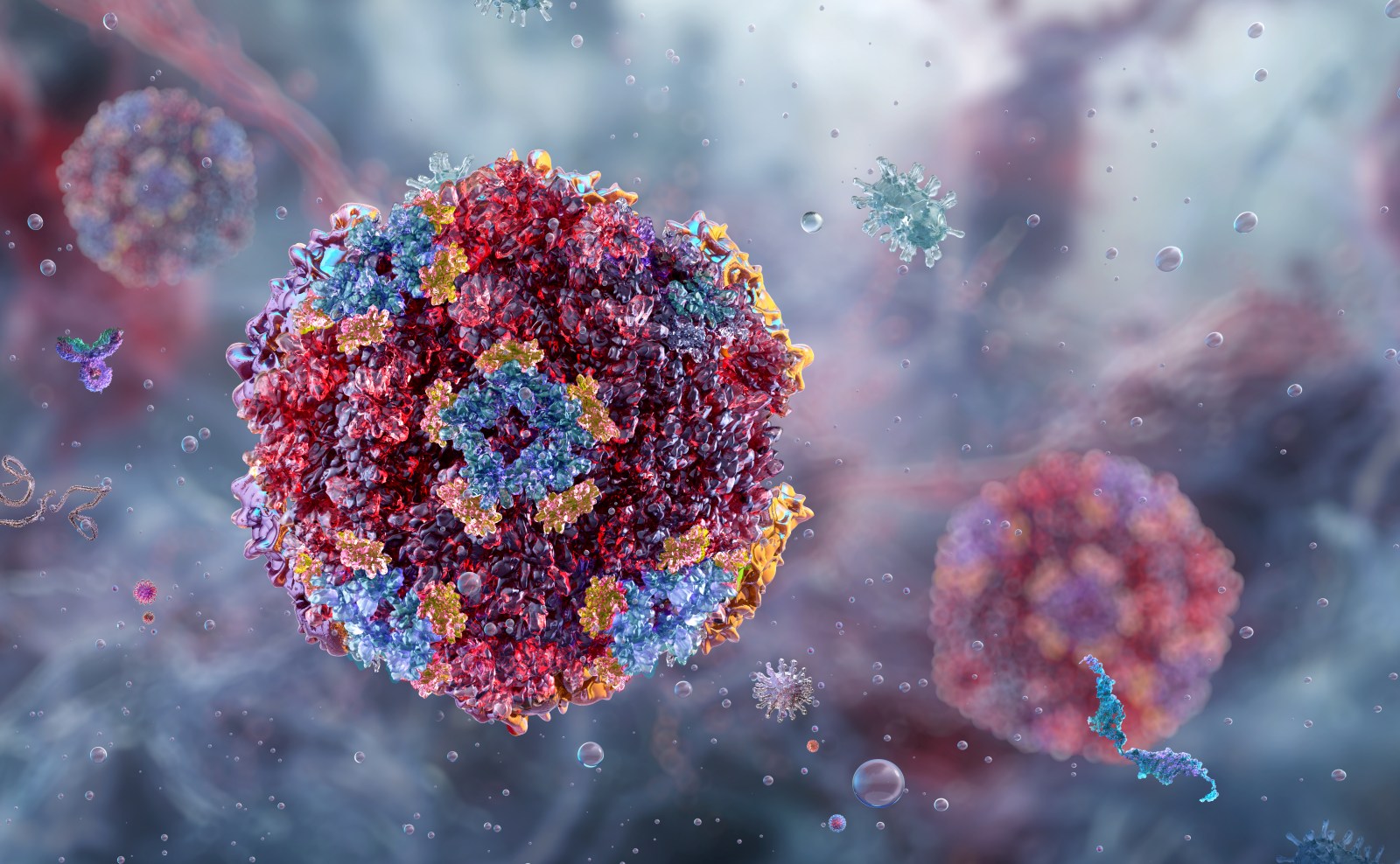
In one recent experiment, scientists used advanced genomic AI models to generate hundreds of potential bacteriophage genomes. After researchers synthesized and tested selected designs, 16 were found to produce functional viruses capable of infecting and killing E. coli bacteria.
The headline sounds alarming: AI created 16 new viruses.
But there is a crucial detail missing from that description.
These were not human viruses.
They were bacteriophages, viruses that infect bacteria. The experiment did not create a new human pathogen, and it does not demonstrate that AI can independently design a virus capable of causing a pandemic.
Nevertheless, the research represents an important milestone because it shows that AI is moving beyond analyzing biological information. It is beginning to design biological systems that can work in the real world.
And that creates both enormous scientific opportunities and difficult questions about safety.
AI Is Moving From Prediction to Creation
For years, artificial intelligence has been transforming biological research.
Machine-learning systems have helped scientists analyze DNA, predict protein structures, identify disease-related mutations and search for potential medicines.
But designing biology is much harder than simply recognizing patterns.
A biological system has to work as a coordinated whole. Thousands of genetic instructions can interact with one another, and a tiny change in one location can completely alter the behavior of an organism or virus.
The researchers behind the latest experiment used genomic language models designed to understand DNA sequences.
Instead of learning relationships between words, these models learn patterns within genetic code.
That means an AI system can be asked to generate DNA sequences that follow biological patterns it has learned.
Researchers used this capability to explore the design of bacteriophage genomes.
The goal was not simply to copy an existing virus.
The AI generated new genetic sequences that had not previously existed in nature.
Scientists then moved from the computer to the laboratory.
Selected DNA designs were synthesized and tested to determine whether they could actually form functional viruses.
Most designs did not necessarily succeed.
But a number of them did.
Sixteen AI-generated designs were shown to produce functional bacteriophages capable of infecting E. coli.
That is the critical achievement.
The AI wasn’t merely producing DNA that looked convincing on a screen.
Some of its designs worked as biological systems.
Why Bacteriophages Matter
Bacteriophages, commonly called phages, are viruses that attack bacteria.
They are fundamentally different from viruses that infect humans.
A phage can recognize a particular bacterial cell, attach itself to that cell and use the bacterial machinery to reproduce. Eventually, the infected bacterium can be destroyed.
This makes phages particularly interesting in the fight against antibiotic-resistant bacteria.
Antibiotic resistance has become one of the world’s major medical challenges.
Bacteria can evolve resistance to antibiotics, sometimes leaving doctors with fewer effective treatments. In severe cases, infections caused by resistant bacteria can become extremely difficult to control.
Phage therapy offers a different strategy.
Instead of using an antibiotic that broadly targets bacteria, researchers can use a virus specifically adapted to attack a bacterial pathogen.
The problem is finding the right phage.
Nature contains an enormous variety of bacteriophages, but discovering one that effectively targets a particular bacterial strain can be difficult.
This is where AI could potentially change the equation.
Instead of searching only through viruses already found in nature, scientists could use AI to generate new candidates.
A computer could explore enormous numbers of possible genetic designs, while laboratory researchers test the most promising candidates.
The process could eventually become a powerful combination:
AI searches. Biology tests. Scientists refine.
The recent experiment provides early evidence that such a workflow is possible.
A Potential New Tool Against Superbugs
One of the biggest potential advantages is speed.
Traditional biological discovery can take years.
Researchers may have to collect samples, isolate organisms, sequence their genomes, test their behavior and repeatedly modify promising candidates.
AI could potentially reduce the computational part of that search.
Instead of starting with a small collection of naturally occurring viruses, scientists could explore a much larger design space.
That does not mean AI can instantly produce a perfect medical treatment.
It cannot.
Every design still needs laboratory testing, safety evaluation and extensive validation.
But AI could help researchers identify promising candidates much faster.
In the future, this approach could potentially contribute to personalized treatments for difficult bacterial infections.
Imagine a situation in which a patient has a bacterial infection that does not respond to standard antibiotics.
Researchers could analyze the bacterial strain and search for phages capable of attacking it.
If naturally occurring options are unavailable, AI-designed candidates might eventually become another avenue for investigation.
That possibility remains experimental, but it illustrates why scientists are excited about the technology.
AI Could Also Help Us Discover New Biology
The potential benefits extend beyond fighting bacteria.
One of the most interesting features of generative AI is its ability to explore possibilities that humans may never have considered.
Evolution has produced an enormous variety of biological systems, but it has not necessarily explored every theoretically possible combination of genetic components.
AI can explore those possibilities computationally.
That means researchers can ask a new kind of question:
What biological systems could work even if we have never seen them before?
The successful phages suggest that at least some machine-generated solutions can function in living cells.
That could eventually have applications beyond viruses.
Similar AI-driven approaches may help researchers design proteins, enzymes, genetic circuits and other biological components.
In that sense, the experiment could represent something larger than the creation of 16 bacteriophages.
It could be an early demonstration of generative AI as a biological design tool.
And that is where the story becomes much more complicated.
The Biosecurity Concern
The same technology that could help scientists fight dangerous bacteria could theoretically be misused.
This is the central criticism surrounding biological AI.
Today, the experiment involved bacteriophages.
Tomorrow, more advanced systems could potentially become capable of designing increasingly complex biological systems.
That does not mean today’s technology can create a dangerous human virus.
There is no evidence from this experiment that it can.
But biosecurity experts are concerned about the direction of travel.
As AI systems become better at understanding biological sequences, they could potentially lower some of the barriers involved in biological design.
That creates a dual-use problem.
A technology can be extremely valuable for legitimate research while also presenting risks if used irresponsibly.
The same computational tools that help scientists search for useful biological systems could potentially be used by someone pursuing harmful objectives.
This is similar to other dual-use technologies.
The technology itself isn’t automatically good or bad.
Its consequences depend heavily on who has access to it, what safeguards exist and how it is used.
The “Human Virus” Headlines Go Too Far
This is where the public conversation needs some caution.
Saying “AI created 16 new viruses” is technically attention-grabbing, but it can create a misleading impression.
The experiment did not create 16 viruses capable of infecting humans.
It did not produce a new pandemic pathogen.
It did not demonstrate that an AI system can independently create a virus and release it into the world.
The viruses were bacteriophages designed to infect bacteria.
That distinction is extremely important.
Human viruses are biologically complicated.
They must interact with human cells, evade or manipulate immune responses, reproduce effectively and, in the case of transmissible diseases, successfully spread between people.
Designing a functioning bacteriophage is not equivalent to solving all of those problems.
There are also significant practical barriers between a computer-generated DNA sequence and a dangerous biological agent.
A sequence still has to be synthesized.
It has to be assembled correctly.
It has to function inside an appropriate biological environment.
Researchers need laboratory equipment, technical expertise and experimental capabilities.
AI does not eliminate those requirements.
So the idea that someone can simply type a request into an AI system and instantly produce a pandemic virus is an exaggeration of the current technology.
But That Doesn’t Mean the Risk Should Be Ignored
The fact that today’s experiment is limited does not eliminate the need for safeguards.
Technology develops.
Capabilities improve.
Models become more powerful.
And techniques developed for one purpose can eventually be adapted for another.
That is why researchers and policymakers are increasingly discussing safeguards around biological AI.
One challenge is DNA synthesis screening.
Companies that manufacture synthetic DNA can screen requested sequences for potentially dangerous genetic material.
But AI-generated biology introduces an interesting complication.
What happens when a potentially dangerous sequence is completely novel and does not closely resemble a known pathogen?
Traditional screening systems often depend, at least in part, on comparisons with existing biological information.
Novel AI-generated designs could make that process more difficult.
That doesn’t mean screening is useless.
It means the screening systems may also need to evolve.
Open Research vs. Security
Another debate involves how openly biological AI models should be released.
Open science has enormous advantages.
Researchers can examine models, reproduce experiments, identify weaknesses and improve the technology.
Keeping everything secret can slow legitimate scientific progress.
But biological AI isn’t exactly like an ordinary software application.
A powerful biological design system could potentially have consequences outside the digital world.
That raises a difficult question:
How open should biological AI become?
If researchers release increasingly powerful models without safeguards, they may accelerate beneficial discoveries.
They may also increase the number of people capable of experimenting with advanced biological design.
On the other hand, excessive restrictions could prevent legitimate researchers from using AI to develop new medicines, study diseases or fight antibiotic resistance.
There is no simple answer.
The likely solution will involve multiple layers of protection rather than relying on one rule.
That could include safer model architectures, monitoring, laboratory controls, DNA synthesis screening, responsible access policies and stronger international cooperation.
The Experiment’s Biggest Lesson
Perhaps the most important lesson from the research is not that AI created 16 viruses.
It is that AI is becoming capable of designing biological systems rather than merely studying them.
That represents a fundamental change.
For much of the history of computational biology, computers were used primarily as analytical tools.
Scientists gave computers biological information and asked them to find patterns.
Generative AI reverses part of that relationship.
Now scientists can ask computers to propose something new.
The computer generates.
The laboratory tests.
The results go back into the scientific process.
That feedback loop could dramatically accelerate parts of biological research.
But it also means that safety must become part of the design process itself.
Waiting until a technology becomes dangerous before developing safeguards would be a mistake.
A Breakthrough Worth Watching — Without the Panic
The 16 functional bacteriophages represent a genuine scientific achievement.
They demonstrate that AI-generated genetic designs can sometimes cross an important boundary: from digital code to functioning biology.
That could eventually help researchers tackle antibiotic resistance, discover new biological mechanisms and develop novel therapeutic approaches.
But the achievement also highlights a growing responsibility.
As AI becomes better at designing biology, researchers will need to think carefully about how those systems are trained, who can access them, how experiments are monitored and how potentially dangerous biological designs are detected.
The biggest danger would be treating the technology as either completely harmless or automatically catastrophic.
Neither view is supported by the evidence.
The reality is more complicated.
AI has not created 16 new human diseases.
It has created something more scientifically interesting—and potentially more consequential in the long term.
It has demonstrated that a machine-learning system can propose new viral genomes and that some of those designs can actually work.
That means the frontier of AI is no longer limited to text, images, code or mathematics.
It is moving into living systems.
And as that frontier expands, one question will become increasingly important:
Can our scientific imagination—and our safety systems—keep pace with what AI learns to design? When Will Google Assistant Stop Working on Your Android? | Maya