
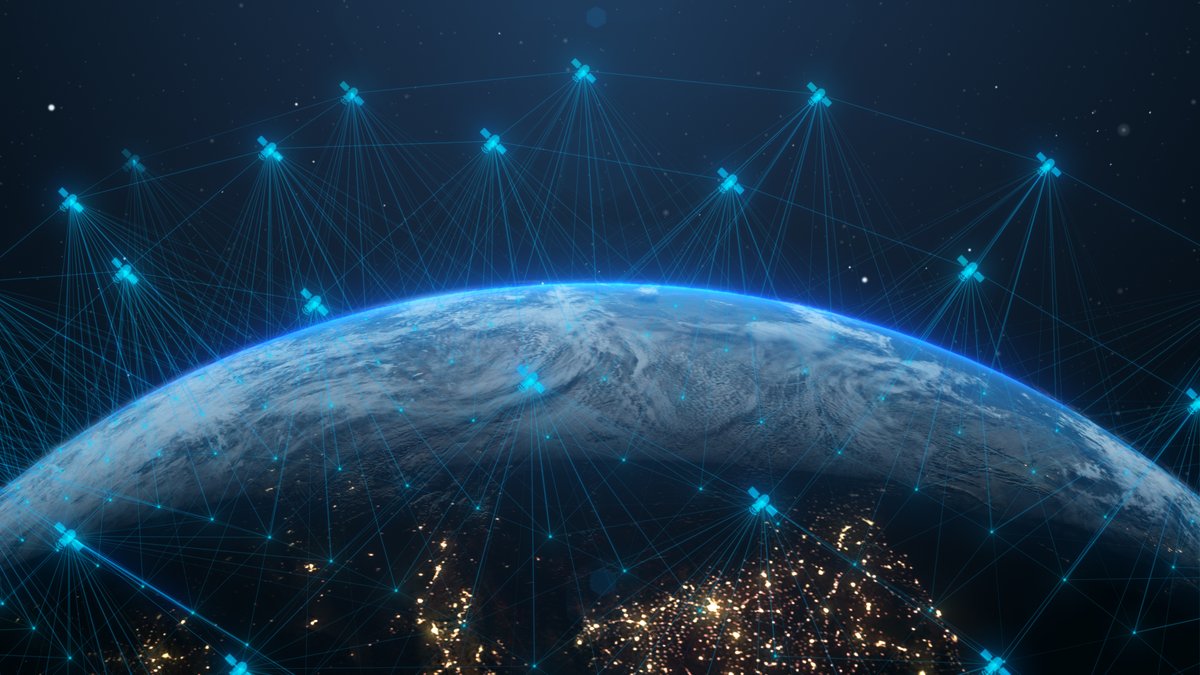
Artificial Intelligence in Orbit: The Environmental and Regulatory Dilemmas- The rapid expansion of Artificial Intelligence (AI) is reshaping the global technological landscape, creating an unprecedented demand for computing infrastructure, energy and digital connectivity. As conventional data centres face growing concerns over electricity consumption, water requirements and land availability, technology companies are exploring an unconventional frontier: space-based AI infrastructure. SpaceX’s proposed Starmind satellite constellation, involving up to one million satellites designed to perform AI computations in orbit, represents an ambitious vision of this emerging trend.
The proposal reflects the convergence of three major developments: the commercialisation of outer space, the global AI investment boom and the growing competition for technological dominance. However, it also raises fundamental questions about environmental sustainability, orbital security, international space governance and the limits of commercial expansion beyond Earth.
1. The Emergence of Space-Based AI Infrastructure
Traditionally, data centres have been located on Earth, where they rely on extensive electricity networks, cooling systems and physical infrastructure. Their growing energy and water requirements have raised concerns about their environmental footprint.
Space-based computing seeks to overcome some of these constraints by deploying solar-powered satellites equipped with AI processing capabilities. These satellites could potentially use uninterrupted solar energy in suitable orbits and communicate with terrestrial networks through high-speed communication links.
The proposed Starmind constellation represents a significant departure from conventional satellite networks. Unlike communication satellites that primarily transmit information, these spacecraft would function as distributed computing platforms in orbit.
Nevertheless, the technological ambition must be distinguished from demonstrated feasibility. Generating solar power in space does not automatically make computing infrastructure economical, efficient or environmentally sustainable.
2. Environmental Implications: A New Frontier of Pollution
The expansion of satellite infrastructure could create environmental consequences extending beyond Earth’s atmosphere.
A. Atmospheric pollution from satellite re-entry
Most satellites operating in low Earth orbit have limited operational lifetimes. Once they become obsolete, many are designed to re-enter the atmosphere, where they break apart and largely burn up.
A constellation of one million satellites, assuming an average operational lifetime of five years, would require the replacement of approximately 200,000 satellites annually, or around 550 per day.
This would create a substantial and recurring burden of atmospheric material deposition. Satellite components contain aluminium, copper, titanium and other materials that can enter the upper atmosphere during re-entry.
Scientists are increasingly investigating how these metallic particles may influence atmospheric chemistry. In particular, aluminium oxide particles could potentially affect ozone-related chemical processes.
However, the precise scale of these effects remains uncertain and requires further scientific investigation. The environmental consequences of repeated satellite re-entry should therefore be assessed before mega-constellations expand substantially.
B. The challenge of thermal management
Space may provide abundant solar energy, but it does not offer an unlimited cooling advantage.
On Earth, data centres use air-conditioning, liquid cooling and other technologies to remove heat generated by high-performance processors. In space, the absence of surrounding air means heat must primarily be dissipated through thermal radiation.
Consequently, large-scale orbital computing infrastructure would require sophisticated radiators and thermal management systems.
This creates an important engineering challenge: the greater the computing capacity, the greater the amount of waste heat that must be removed. Moving data centres into space does not eliminate the problem of energy consumption and heat generation; it changes the way these problems must be managed.
3. Orbital Congestion and the Threat of Space Debris
Earth’s orbital environment is increasingly crowded because of the expansion of commercial satellite constellations, national space programmes and private space ventures.
A million additional satellites could significantly intensify this congestion.
Satellites in low Earth orbit travel at speeds of approximately 7–8 kilometres per second. Even relatively small objects can cause serious damage during collisions.
The accumulation of debris creates the possibility of the Kessler Syndrome, a theoretical scenario in which successive collisions generate additional debris, increasing the likelihood of further collisions and potentially making certain orbital regions difficult to use.
Although satellite operators can undertake collision-avoidance manoeuvres, these systems depend on accurate tracking, reliable communication and functioning propulsion systems. Non-responsive satellites and fragments of destroyed spacecraft remain particularly difficult to manage.
Therefore, the expansion of mega-constellations requires stronger collision-avoidance mechanisms, improved space situational awareness and internationally coordinated debris-management standards.
4. Impact on Astronomy and the Night Sky
The growing satellite population also raises concerns about the preservation of the natural night sky.
Large satellite constellations can interfere with ground-based astronomical observations by producing bright trails in telescope images. Radio-frequency transmissions can also affect observations in protected astronomical frequency bands.
A substantially larger satellite population could increase these disturbances, affecting scientific research into distant galaxies, stars and other celestial phenomena.
Beyond scientific considerations, the night sky represents an important part of humanity’s shared natural and cultural heritage.
The commercial utilisation of outer space must therefore be balanced against the public interest in preserving dark skies and ensuring that astronomical research remains possible.
5. Regulatory Dilemmas: Who Governs the Expanding Space Economy?
The proposed expansion raises significant questions about the role of national regulators and international institutions.
In the United States, the Federal Communications Commission (FCC) regulates satellite communication authorisations and the use of radio frequencies. Other responsibilities, including launch licensing and environmental oversight, involve different government agencies.
The National Environmental Policy Act (NEPA) establishes requirements for environmental assessment of qualifying federal actions. However, the extent of environmental review applicable to satellite projects depends on the relevant legal framework and agency responsibilities.
A regulatory approach that does not adequately examine cumulative environmental effects could leave important risks insufficiently addressed.
The challenge is particularly significant because the environmental consequences of satellite constellations are not confined to the country authorising their operation.
Space is a shared domain, but the benefits and risks of its commercial exploitation extend across national boundaries.
At the international level, the United Nations Committee on the Peaceful Uses of Outer Space (UNCOPUOS) and the United Nations Office for Outer Space Affairs (UNOOSA) provide important platforms for developing principles and guidelines concerning responsible space activities.
The Outer Space Treaty of 1967 establishes foundational principles, including the peaceful use of outer space and state responsibility for national space activities.
However, existing international arrangements face challenges in addressing the unprecedented scale of commercial mega-constellations, cumulative atmospheric impacts and long-term orbital sustainability.
6. Economic Feasibility: Innovation versus Investment Risks
Beyond environmental and regulatory concerns, the economic viability of orbital AI infrastructure remains uncertain.
Launching, manufacturing, maintaining and replacing hundreds of thousands of satellites would require enormous capital investment. Additional costs would arise from communication infrastructure, thermal management, radiation protection and orbital manoeuvring.
Furthermore, AI computing in space would need to compete with increasingly efficient terrestrial data centres.
Although space-based solar power offers potential advantages, these must be weighed against launch costs, hardware limitations, maintenance challenges and the difficulty of transporting large volumes of data between Earth and orbit.
The project also emerges during a period of substantial investment in AI, when expectations of future demand and profitability remain uncertain.
The long-term success of space-based AI will depend not merely on technological breakthroughs but also on commercial viability and demonstrable economic advantages over Earth-based alternatives.
7. The Way Forward: Towards Sustainable Space Governance
The emerging challenges require a comprehensive framework that integrates technological innovation with environmental responsibility.
Some important measures include:
- Mandatory environmental assessments: Large satellite constellations should undergo comprehensive assessments covering atmospheric pollution, re-entry emissions and cumulative environmental impacts.
- Stronger space debris management: Satellite operators should demonstrate reliable end-of-life disposal arrangements, collision-avoidance capabilities and contingency plans for failed spacecraft.
- International coordination: Countries should strengthen cooperation through UNCOPUOS and other multilateral institutions to establish common standards for satellite deployment and orbital sustainability.
- Protection of astronomical observations: Internationally coordinated measures should minimise interference with optical and radio astronomy.
- Transparent satellite operations: Operators should share relevant orbital information and improve coordination with other satellite operators to reduce collision risks.
- Independent scientific research: Long-term monitoring of atmospheric changes caused by satellite re-entry should be encouraged to establish reliable environmental baselines.
For countries such as India, these developments also underline the importance of strengthening domestic space governance, debris-monitoring capabilities and international cooperation. India’s growing space ecosystem, including its commercial and scientific activities, will increasingly depend on a stable and sustainable orbital environment.
Reimagining the Future of Space
The prospect of deploying AI infrastructure in space represents an important technological possibility, potentially transforming how computing, communication and energy systems interact. However, the expansion of orbital infrastructure on an unprecedented scale could generate environmental, scientific, economic and geopolitical challenges.
The central issue is not whether technological innovation should extend into space, but whether such innovation can proceed without compromising the long-term sustainability of the orbital environment.
Outer space should not become an extension of Earth’s unsustainable patterns of resource exploitation and environmental neglect. A balanced approach based on scientific evidence, responsible regulation, international cooperation and corporate accountability is essential.
The future of AI may increasingly lie beyond Earth, but the responsibility to protect space must remain firmly rooted on Earth.