
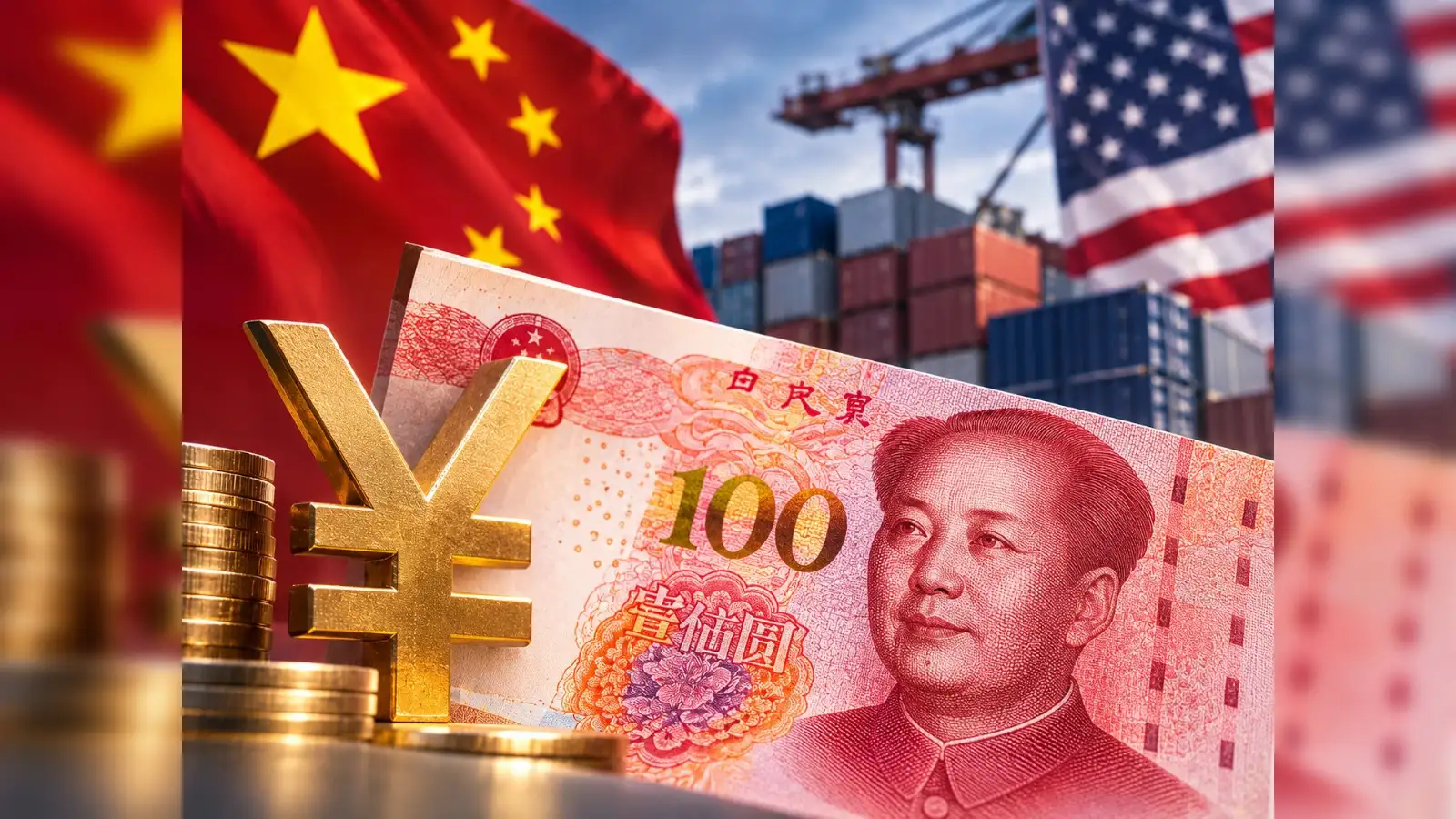
China, Japan and Others Push Back Against Trump’s Proposed Tariff Hikes: The global trade landscape is facing renewed uncertainty as China, Japan and several other major US trading partners challenge President Donald Trump’s latest tariff proposals. The new measures, announced on November 25, 2026, target 14 major economies, including India, South Korea, Singapore, Malaysia and several other Asian manufacturing hubs.
The United States Trade Representative (USTR), headed by Jamieson Greer, announced the outcome of investigations conducted under Section 301 of the Trade Act of 1974. Washington concluded that manufacturing-related practices in 14 economies were unreasonable and placed restrictions or burdens on American commerce.
The investigation examined several factors, including government support for manufacturers, industrial incentives, production policies, labour practices and other measures that could contribute to structural excess manufacturing capacity. The Trump administration believes such practices create an uneven competitive environment for American businesses.
The proposed tariff rates vary across the targeted economies. China faces an additional proposed rate of up to 20%, while Japan and South Korea could face duties of up to 15%. Singapore has been assigned a proposed rate of 20%, whereas Thailand and Indonesia could face additional duties of up to 18%.
India is also among the economies covered by the investigation, with proposed additional tariffs of up to 25%. However, the rate could be adjusted to 17% if New Delhi reaches a reciprocal trade agreement addressing Washington’s concerns.
These figures represent proposed tariff measures rather than duties already being collected. Their final implementation will depend on the investigation process, negotiations and applicable product exemptions.
China has strongly rejected Washington’s allegations, describing the concept of excess manufacturing capacity as a false premise. Chinese Foreign Ministry spokesperson Guo Jiakun criticised the use of overcapacity arguments as a justification for political manoeuvring and warned that tariff and trade wars do not benefit any country.
Beijing maintains that its industrial development policies are intended to strengthen domestic production, support employment and improve manufacturing capabilities. It argues that increased production should not automatically be treated as evidence of unfair competition.
The disagreement is particularly important because China and the United States have recently taken steps to stabilise their economic relationship. Both countries have extended their existing trade truce by two months, with the arrangement scheduled to expire on January 10, 2027. They have also agreed to reduce tariffs on reciprocal lists of non-sensitive products valued at approximately $60 billion.
The latest American proposals could introduce fresh uncertainty into these negotiations and complicate efforts to improve bilateral trade relations.
Japan has also formally protested against the proposed tariff measures. Chief Cabinet Secretary Minoru Kihara said Tokyo does not maintain non-market policies or structural excess manufacturing capacity. He expressed disappointment over Washington’s decision and confirmed that Japan had communicated its concerns to American officials.
The proposed duties are particularly relevant to Japan’s automotive, steel, semiconductor and advanced manufacturing industries, which depend significantly on international trade.
Singapore has similarly expressed disappointment over the proposed 20% tariff. Its Ministry of Energy, Trade and Industry stated that the country’s economic policies are not designed to protect domestic markets or subsidise manufacturing for export purposes.
Malaysia has also rejected the allegations, maintaining that its manufacturing sectors do not possess excess production capacity that distorts global markets. The government has indicated that it will continue discussions with Washington to resolve the disagreement.
India is another major economy facing potential consequences from the latest US trade initiative. The proposed additional tariffs could affect several important export industries, including textiles, pharmaceuticals, engineering goods, electronics, chemicals and automotive components.
The United States is India’s largest trading partner, making access to the American market particularly important for Indian businesses. Higher import duties could increase the cost of Indian products for American buyers and potentially affect export orders and manufacturers’ profit margins.
New Delhi’s priority will be to continue trade negotiations with Washington and secure favourable arrangements for Indian exporters. At the same time, India is seeking to strengthen its position as a global manufacturing destination. Companies diversifying their production networks could consider India as an alternative manufacturing base, although uncertainty over US tariffs may influence investment decisions.
Vietnam is also facing considerable pressure, with proposed additional US tariffs potentially reaching 35%. The rate could be reduced to 20% if Hanoi successfully concludes a trade agreement with Washington. Vietnam has been working to address American concerns involving manufacturing practices, forced labour, product origin and the movement of goods through third countries.
Taiwan is seeking to preserve favourable trade arrangements with Washington, particularly for its semiconductor and technology industries. Thailand, meanwhile, has indicated that the proposed tariff cap of 18% is more favourable than anticipated.
Thai government spokesperson Lalida Persvivatana said the country would continue negotiations to secure competitive tariff rates and additional exemptions for its exporters. Several affected governments are therefore prioritising diplomatic engagement rather than immediately responding with retaliatory measures.
The latest tariff initiative also has an important legal background. In February 2026, the US Supreme Court struck down most of Trump’s sweeping tariffs imposed under emergency economic powers. The ruling restricted the administration’s ability to rely on the International Emergency Economic Powers Act for its broad tariff programme.
However, the decision did not eliminate other legal mechanisms available to the US government. The latest investigation relies on Section 301 of the Trade Act of 1974, which allows Washington to investigate foreign policies and practices considered harmful to American commerce.
By pursuing this alternative legal route, the Trump administration is attempting to maintain its broader tariff agenda despite the earlier Supreme Court ruling.
The economic consequences could extend well beyond the countries directly targeted. Higher import duties may increase costs for American businesses that depend on overseas suppliers for raw materials, components and finished products. Some companies could pass these additional expenses on to consumers, creating further inflationary pressure.
Manufacturers may also reconsider their production locations and sourcing strategies to reduce exposure to higher US import duties. Countries offering favourable trade arrangements could attract additional investment, while businesses may diversify their supplier networks to minimise disruptions.
Economists have also raised concerns about the potential impact on American inflation. Stephen Brown, chief economist at Capital Economics, has argued that the latest measures largely replace earlier announced tariffs rather than simply adding another layer of duties. Nevertheless, he expects the changes to help keep US core goods inflation elevated into 2027.
The proposed measures are now moving towards further consultation and investigation. The USTR has invited public comments until January 5, 2027, with hearings scheduled to begin on January 25, 2027. Businesses, industry associations and other stakeholders will have an opportunity to present their views on the potential economic consequences.
For China, the immediate challenge will be preserving the existing trade truce while avoiding another escalation. Japan, Singapore and Malaysia will seek to protect their manufacturing and export interests, while India will focus on advancing negotiations and securing favourable trade arrangements.
Trump’s latest tariff proposals have reopened a major debate over manufacturing competitiveness, industrial subsidies and international trade rules. While Washington argues that foreign industrial policies undermine American manufacturers, the affected economies maintain that their manufacturing strategies are legitimate components of economic development.
For India and other Asian economies, the immediate priority will be to protect export competitiveness, maintain access to the American market and secure predictable trade arrangements. Whether the latest developments lead to a wider trade confrontation or encourage new bilateral agreements will depend largely on the outcome of negotiations in the coming weeks.
Editorial note: The article reflects the developments and proposed measures described as of November 26, 2026. Tariff proposals should not be confused with duties already implemented. GTA 6 Performance Shock: Xbox Series X Beats Standard PS5 | Maya


