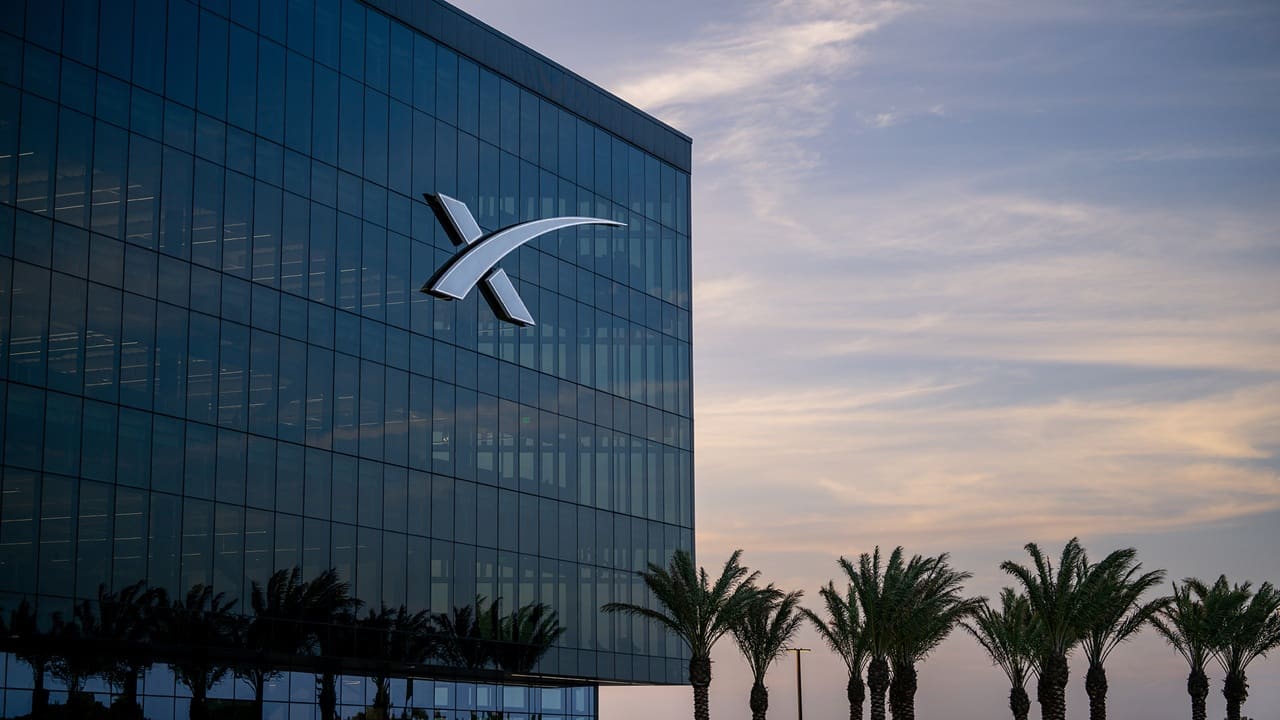
How a $30 Billion Google Deal Is Transforming SpaceX Into an AI Infrastructure Powerhouse: For most of its existence, SpaceX has been synonymous with rockets, satellites, and ambitious plans to make humanity a multi-planetary species. But a landmark $30 billion computing agreement with Google is signaling a dramatic expansion of the company’s ambitions—one that could redefine SpaceX as a major player in the global artificial intelligence infrastructure market.
The deal, reportedly worth approximately $30 billion over nearly three years, will see Google secure massive AI computing capacity from SpaceX beginning in late 2026. The agreement underscores a growing reality in the technology sector: in the age of artificial intelligence, access to computing power has become as strategically important as access to oil was during the industrial era.
The AI Compute Race Intensifies
The rapid rise of generative AI has triggered an unprecedented demand for advanced computing resources. Training and operating large language models requires vast clusters of high-performance graphics processing units (GPUs), enormous amounts of electricity, sophisticated cooling systems, and reliable data center infrastructure.
Technology giants such as Google, Microsoft, Amazon, and Meta are investing hundreds of billions of dollars to secure the computational resources needed to support next-generation AI systems. However, demand for advanced chips and data center capacity continues to outpace supply.
This shortage has created opportunities for companies capable of delivering large-scale computing infrastructure—and SpaceX appears determined to capitalize on it.
What the Google Deal Includes
Under the agreement, Google will gain access to a massive pool of AI computing resources reportedly consisting of roughly 110,000 Nvidia GPUs, alongside the CPUs, networking equipment, memory, storage, and supporting infrastructure required to run large-scale AI workloads.
The contract is estimated to generate approximately $920 million in monthly revenue for SpaceX over the duration of the deal.
For Google, the arrangement provides a significant boost to its AI capabilities as it competes aggressively in the race to develop and deploy advanced AI systems, including its Gemini family of models. Securing additional computing capacity allows Google to accelerate model training, improve AI services, and support growing enterprise demand.
Why SpaceX Is Entering the AI Infrastructure Business
At first glance, SpaceX may seem like an unlikely candidate to become a major AI infrastructure provider. However, the company possesses several strategic advantages that make the move logical.
Massive Capital Resources
SpaceX has become one of the world’s most valuable private companies, attracting substantial investment and generating revenue from launch services, government contracts, and its Starlink satellite internet network.
These financial resources enable the company to make long-term investments in data centers and computing infrastructure.
Expertise in Large-Scale Engineering
Building and operating rocket launch facilities, satellite constellations, and global communications networks requires engineering expertise on a scale few companies possess.
The same operational discipline needed for space infrastructure can be applied to building AI supercomputing facilities.
Access to Power and Infrastructure
One of the biggest constraints in AI development is not simply acquiring chips but securing enough electrical power to operate them.
Companies with the ability to build power-intensive facilities quickly are increasingly valuable in the AI economy. SpaceX’s experience developing large industrial sites gives it a competitive advantage in this area.
Beyond Rockets and Satellites
The Google agreement is not an isolated event. SpaceX has reportedly pursued multiple large-scale AI computing partnerships, suggesting a broader strategy rather than a one-off contract.
The company appears to be positioning itself as a provider of AI infrastructure—similar to how cloud providers supply computing resources to businesses today.
If successful, this could create an entirely new revenue stream that complements SpaceX’s traditional aerospace operations.
The shift is significant because AI infrastructure businesses can generate recurring revenue at a scale that rivals or even exceeds many traditional technology sectors.
What This Means for Google
For Google, the agreement represents more than a simple outsourcing arrangement.
The company is facing intense competition from OpenAI, Microsoft, Anthropic, Meta, and numerous emerging AI startups. Demand for computing power has become a critical bottleneck in AI development.
By securing dedicated capacity from SpaceX, Google gains greater flexibility and reduces the risk of infrastructure shortages slowing its AI roadmap.
The deal also highlights how major technology companies are increasingly willing to source computing resources from external providers rather than relying solely on their own data centers.
A New Category of AI Infrastructure Giants
The broader significance of the deal extends beyond Google and SpaceX.
Artificial intelligence is creating a new class of strategic companies focused on supplying the essential ingredients of AI development:
- Advanced semiconductors
- Data centers
- Energy infrastructure
- High-speed networking
- Cloud computing platforms
Historically, SpaceX’s competitive advantage was its ability to reduce the cost of accessing space. In the emerging AI economy, the company’s advantage may become its ability to provide access to massive computing resources at scale. Quantinuum Debuts on Nasdaq With $15.7 Billion Valuation as Quantum Computing Gains Momentum | Maya
Looking Ahead
As SpaceX moves closer to a potential public offering, the Google agreement strengthens its position as more than an aerospace company. Investors increasingly view AI infrastructure as one of the fastest-growing segments of the global technology market, and SpaceX now appears determined to participate in that opportunity.
The company’s future may involve launching rockets and satellites while simultaneously powering some of the world’s most advanced AI systems.
If the Google partnership proves successful, the deal could be remembered as the moment SpaceX evolved from a space transportation pioneer into one of the most important infrastructure providers of the AI era.