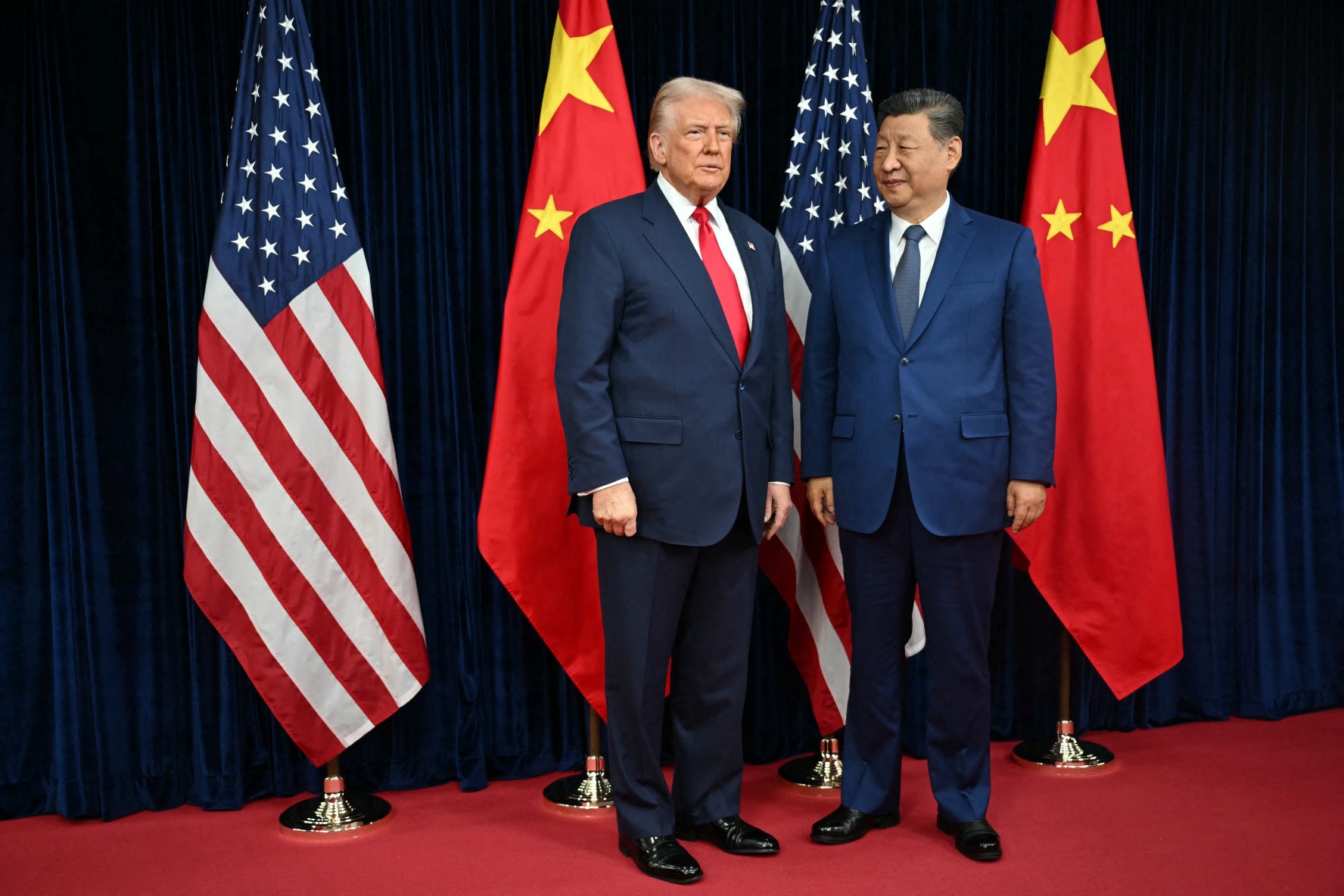
Is Trump About to Reset America’s Relationship With China? The arrival of Donald Trump in China this week has instantly become one of the most important political and economic stories in the world. At a time when tensions between Washington and Beijing remain high, the visit is being seen as more than a diplomatic event — it could become a defining moment for the future of global trade, international politics, and economic stability.
For years, the relationship between the United States and China has been dominated by conflict. Trade disputes, technology restrictions, sanctions, and political disagreements pushed the two superpowers into an intense rivalry that affected countries far beyond their borders. Markets reacted to every tariff announcement, businesses struggled with uncertainty, and fears grew that the world economy was becoming increasingly divided.
Now, Trump’s visit has raised a critical question: are the world’s two largest economies finally looking for a way to reduce tensions before the rivalry causes even greater damage?
A Relationship Built on Competition
The tension between the United States and China did not appear overnight. For decades, both countries depended heavily on each other economically. American companies benefited from China’s manufacturing power and huge consumer market, while China relied on American investment, technology, and access to global markets.
But as China’s economic and military influence expanded, Washington began to view Beijing less as a trading partner and more as a strategic competitor. Concerns grew over trade imbalances, intellectual property disputes, cybersecurity, and China’s ambitions in advanced industries such as artificial intelligence and semiconductor production.
Trump became one of the loudest voices challenging China’s economic practices. During his presidency, the United States imposed heavy tariffs on Chinese imports, accusing Beijing of unfair competition and harmful trade policies. China responded with its own tariffs, triggering a trade war that shook international markets and disrupted global supply chains.
Although both sides eventually reached temporary agreements, distrust continued to grow.
Why This Visit Matters Now
Today, the global economic situation looks very different from when the trade war first began. China is facing slower growth, declining investor confidence, and mounting pressure in its property sector. Youth unemployment and weak domestic demand have added further challenges for Beijing’s leadership.
The United States also faces economic uncertainty. Inflation concerns, manufacturing pressures, and fears of slowing global growth have increased worries about the long-term impact of continued economic confrontation with China.
Against this backdrop, Trump’s visit comes at a crucial moment. While neither side is expected to abandon its national interests, both governments understand that a completely broken relationship could create serious consequences for the global economy.
For businesses, the stakes are enormous. Many American corporations still rely heavily on Chinese factories, supply chains, and consumers. At the same time, China remains dependent on access to foreign markets and international investment. A worsening economic conflict would likely hurt companies and consumers in both countries.
That is why global investors are watching every development from the meetings in Beijing.
Can Trump Change the Tone?
One reason this visit is attracting so much attention is Trump’s own political image. He built his reputation partly on confronting China aggressively, promising to protect American industries and reduce what he described as unfair trade practices.
Because of that reputation, some analysts believe Trump may actually have greater negotiating leverage than many other American leaders. Chinese officials know he is willing to use tariffs and economic pressure as bargaining tools, which could push both sides toward compromise in order to avoid another damaging trade war.
However, changing the overall relationship between Washington and Beijing will not be easy.
Major disagreements remain unresolved. The two countries continue to clash over Taiwan, military activity in the Indo-Pacific region, technology restrictions, cybersecurity, and geopolitical influence. Competition in artificial intelligence and semiconductor development has become especially intense, with both nations viewing technological dominance as a matter of national security.
These issues go far beyond trade deals and tariffs.
Trust also remains limited. Years of hostile rhetoric and economic retaliation have created deep skepticism on both sides. Even if new agreements emerge from the visit, many observers will question whether they can survive future political changes.
Still, diplomacy itself sends an important message. Direct talks between the leaders of the world’s two biggest economies reduce the risk of misunderstandings and open the door for future cooperation.
The World Is Watching
The outcome of Trump’s China visit will affect more than just Washington and Beijing. Countries around the world are closely following the meetings because the US-China relationship influences nearly every part of the global economy.
If tensions begin to ease, international markets could respond positively. Businesses may regain confidence, investment activity could improve, and fears of another large-scale trade war might temporarily decline.
On the other hand, if the talks end badly or produce new conflicts, concerns about a deeper global economic divide could grow even stronger. Companies may accelerate efforts to move manufacturing away from China, while governments could increasingly align themselves with competing economic blocs led by either Washington or Beijing.
Such a shift would reshape global trade for years to come.
A Critical Turning Point
Trump’s visit to China may not solve every dispute between the two nations, but it could mark the beginning of a new phase in their relationship. Both countries understand that the rivalry between them is likely to continue for decades. The real challenge is determining whether that competition can remain controlled — or whether it will spiral into deeper economic and political confrontation.
For now, the world is waiting to see whether this high-profile visit produces meaningful progress or simply another temporary pause in an increasingly complex rivalry.
One thing is certain: when the United States and China sit down at the negotiating table, the consequences extend far beyond their own borders.