Russia Intensifies Attacks on Ukraine as Zelenskyy Warns of Escalation; Serbia and France Also in Focus- Tuesday, 27 October 2026
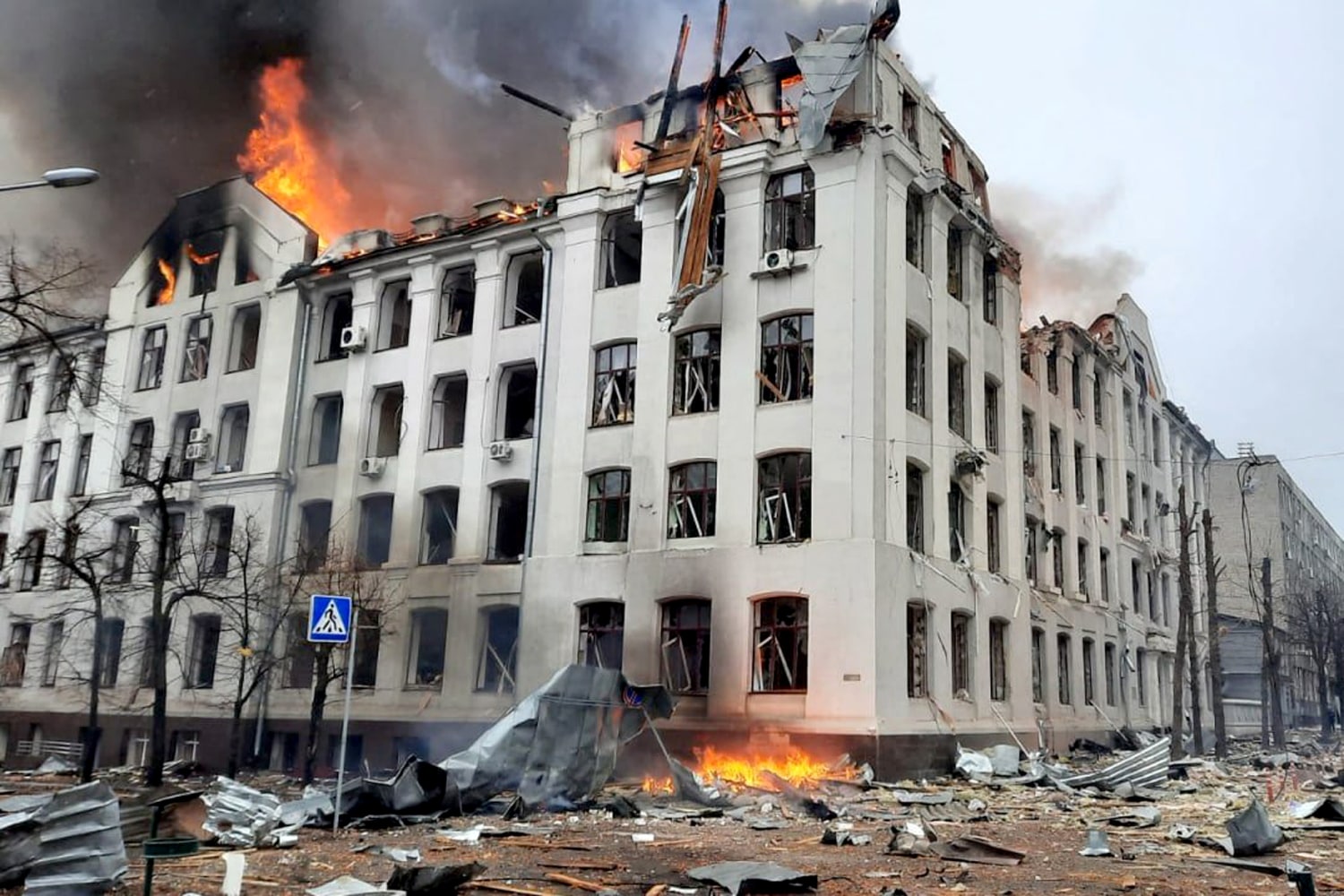
Russia has intensified its assault on Ukraine, launching 16 ballistic missiles and more than 280 drones overnight, injuring at least 15 people in Kyiv and causing fresh concern over the security of critical infrastructure across the country. The latest barrage has heightened fears of further escalation as Ukrainian authorities report attacks across multiple regions, targeting energy facilities, transport links and urban infrastructure.
Ukraine’s President Volodymyr Zelenskyy described the latest wave of strikes as a serious escalation in Russia’s campaign against Ukrainian logistics, accusing Moscow of deliberately targeting the systems and services essential to keeping the country functioning during the war.
The attacks were reported in Kyiv and the regions of Chernihiv, Chernivtsi, Dnipro, Donetsk, Kharkiv, Kherson, Odesa, Sumy, Vinnytsia and Zaporizhzhia. The widespread geographical reach of the strikes underscores the continuing pressure on Ukraine’s air defences and emergency response services.
Zelenskyy warns of growing pressure on critical infrastructure
In his latest remarks, Zelenskyy said Russia had concentrated its attacks on the energy sector, logistics networks and ordinary urban infrastructure. These targets are crucial not only to Ukraine’s economy but also to the movement of essential supplies, the delivery of humanitarian assistance and the maintenance of everyday life for civilians.
The Ukrainian president also renewed his criticism of delays in the delivery of air-defence interceptor packages for the American-made Patriot and NASAMS systems. He argued that prolonged delays in supplying these capabilities were giving Russia additional opportunities to carry out attacks.
According to Zelenskyy, every delay in the delivery of interceptors risks enabling another Russian strike against Ukrainian facilities. He warned that the frequency of attacks demonstrated Moscow’s willingness to continue escalating its campaign.
The remarks highlight Kyiv’s continuing dependence on international military assistance, particularly advanced air-defence systems capable of countering ballistic missiles and other aerial threats. Ukraine has repeatedly called on its partners to accelerate deliveries and ensure that promised equipment reaches the battlefield without unnecessary delays.
The latest barrage also raises questions about the resilience of Ukraine’s energy infrastructure as the country faces sustained attacks. Damage to power facilities and transport networks can have consequences well beyond the immediate impact of a strike, disrupting essential services and increasing the burden on local authorities and emergency workers.
Serbia faces political uncertainty after parliamentary elections
Attention is also turning to Serbia following Sunday’s parliamentary elections, with the latest developments expected to shape the country’s domestic political landscape.
The post-election period will be closely watched for indications of how political parties respond to the results, whether negotiations over government formation become necessary and what the outcome could mean for Serbia’s policy direction.
Serbia remains an important country in the Western Balkans, where relations with the European Union, regional stability and the country’s position between Western institutions and Russia continue to attract international attention.
The coming days will be important in determining the political implications of the vote, particularly as parties assess their electoral performance and consider their next steps.
France looks for a way forward amid student protests
In France, attention is focused on proposals presented on Monday night aimed at ending ongoing student protests. The proposals come as authorities face pressure to find a way out of the confrontation and restore normality while addressing the concerns driving demonstrations.
The response from students and other groups involved in the protests will be central to determining whether the proposed measures can ease tensions or whether further demonstrations are likely.
The situation presents a challenge for French authorities, who must balance the need to maintain public order with the demands of students seeking changes to the policies or conditions at the centre of the dispute.
Whether the proposals can secure meaningful support from protesters remains a key question as the government seeks to prevent the unrest from continuing.
A wider European picture
From Russia’s continuing attacks on Ukraine to political uncertainty in Serbia and demonstrations in France, Tuesday’s developments reflect the range of challenges facing Europe.
In Ukraine, the immediate priority remains protecting civilians, maintaining essential infrastructure and securing the air-defence capabilities needed to limit further damage. In Serbia, political developments following the election will help determine the country’s next steps, while France faces the task of finding a workable resolution to student unrest.
The central developments to watch today are the scale of damage from Russia’s latest attacks, the speed of international military support for Kyiv, the political fallout from Serbia’s elections and the response to France’s proposals. Together, these stories will help shape the European news agenda as the day unfolds.