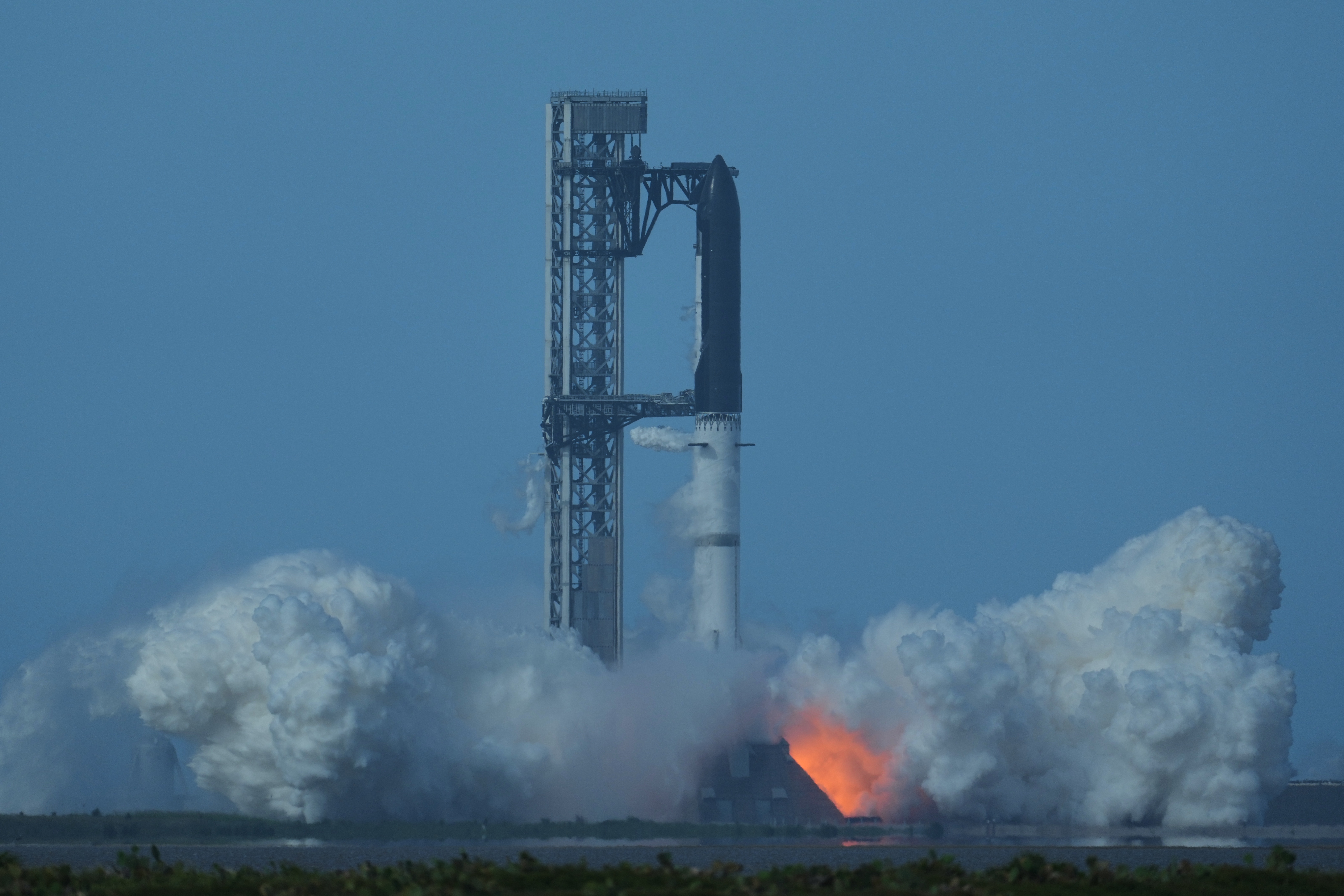
Starship Launch Halted Seconds Before Liftoff Due to Engine Issue: SpaceX was forced to abort the second launch attempt of its upgraded Starship rocket just seconds before liftoff on Thursday, after an issue with the rocket’s engines triggered an automatic safety shutdown at the company’s Starbase launch facility in South Texas.
The highly anticipated mission came to an abrupt halt during the final moments of the countdown. As the clock reached zero, the launch pad’s water deluge system activated and the Super Heavy booster began its engine ignition sequence. However, the rocket never left the launch pad after multiple Raptor engines failed to ignite properly, prompting the onboard computer to automatically cancel the launch.
The automated abort system is designed to prevent launches whenever critical systems fail to perform as expected, ensuring the safety of both personnel and the launch vehicle. The shutdown occurred before the rocket lifted off, avoiding a potentially more serious in-flight failure.
SpaceX CEO Elon Musk later confirmed the cause of the aborted launch in a post on X, stating that several engines did not start during ignition. According to Musk, the company will replace two engines before preparing the vehicle for another launch attempt. He added that SpaceX is targeting next week for its next opportunity, provided engineers complete the required inspections and repairs.
The mission was expected to be another important step in the development of Starship, the world’s largest and most powerful rocket system. SpaceX had planned to use the flight to deploy the first third-generation Starlink satellites, which feature upgraded communications capabilities and are expected to play a major role in expanding the company’s global satellite internet service.
Although the satellites were scheduled for deployment, they were not expected to remain in orbit permanently. Because Starship has not yet demonstrated a fully operational orbital mission, the satellites were planned to re-enter Earth’s atmosphere and burn up roughly 20 minutes after deployment. The primary objective of the mission was to validate the rocket’s performance rather than establish a long-term satellite constellation.
Thursday’s launch attempt also carried added significance because it marked SpaceX’s first Starship mission since the company’s historic public debut in June. The aerospace company raised more than $85 billion in what became the largest initial public offering in history, briefly reaching a market valuation comparable to some of the world’s biggest technology companies.
However, investor enthusiasm has cooled in recent weeks. SpaceX shares closed below their IPO price of $135 on Thursday and dropped more than 4% in after-hours trading following news of the aborted launch. While test-flight delays are common in the space industry, investors continue to closely monitor Starship’s progress because of its importance to the company’s long-term business strategy.
The latest attempt came only weeks after the first flight of Starship V3, which delivered mixed results. That mission successfully lifted off and reached several planned milestones, including deploying a number of Starlink simulator payloads. However, technical problems emerged during the flight.
The Super Heavy booster experienced a failure before it could complete its planned simulated landing in the Gulf of Mexico, prompting an investigation by the U.S. Federal Aviation Administration (FAA). The Starship upper stage also suffered the loss of one engine while en route to deploying its payloads. Despite the engine issue, the upper stage successfully completed its planned splashdown over the ocean.
Following its investigation, the FAA recently cleared SpaceX to resume Starship flight testing after identifying several contributing factors behind the booster failure and reviewing the corrective measures implemented by the company. That approval paved the way for Thursday’s launch attempt.
After the automatic abort, SpaceX engineers must now safely remove the cryogenic propellants from both the Super Heavy booster and the Starship upper stage before conducting a detailed inspection. The team will analyze engine data, inspect the affected hardware, and determine precisely why the ignition sequence failed.
Although the delay represents another setback for the ambitious Starship program, automatic launch aborts are considered an essential part of modern rocket safety systems. Detecting problems before liftoff helps prevent more serious failures that could damage launch infrastructure or destroy the vehicle.
Starship remains central to SpaceX’s long-term vision, serving as the company’s next-generation launch system for Starlink deployments, lunar missions under NASA’s Artemis program, future commercial space operations, and eventual human missions to Mars. Each test flight provides valuable engineering data, even when missions do not proceed as planned.
With engine replacements now underway and engineers reviewing Thursday’s aborted launch, SpaceX is expected to make another attempt as early as next week, continuing the rapid testing approach that has defined the development of the Starship program.