
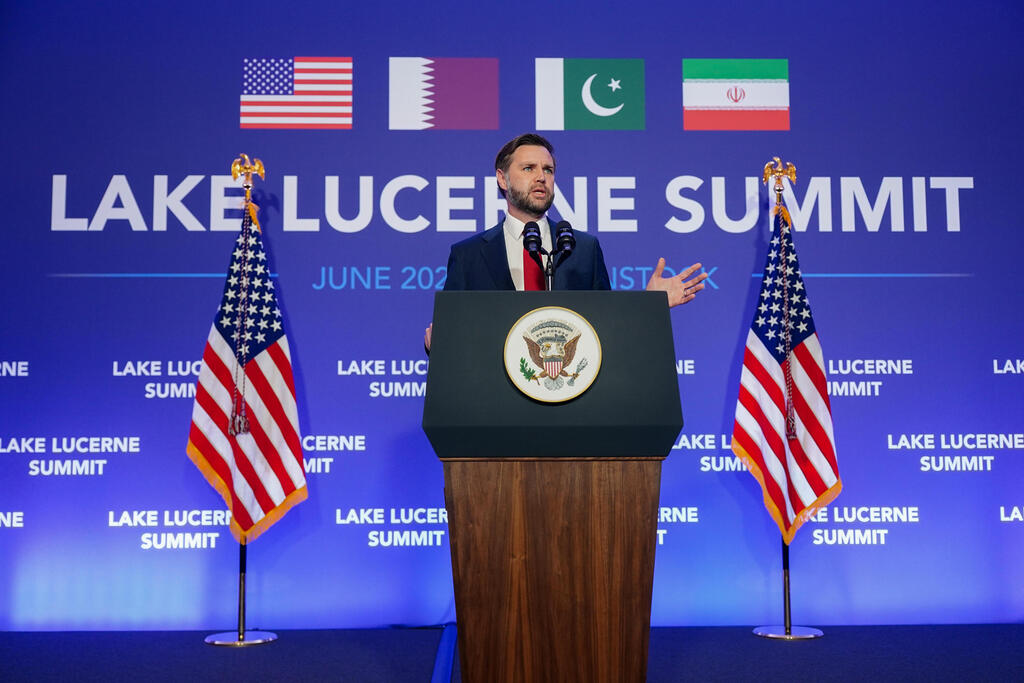
Tehran Denies Nuclear Inspection Deal Despite US Sanctions Waiver- The diplomatic atmosphere at the serene Swiss resort of Bürgenstock overlooking Lake Lucerne has quickly shifted from cautious optimism to a familiar pattern of strategic pushback. Following a marathon weekend of direct negotiations mediated by Qatar and Pakistan, United States Vice President JD Vance announced a major milestone to reporters on June 22, 2026: Iran had purportedly agreed to readmit International Atomic Energy Agency (IAEA) nuclear inspectors into the country.
The proclamation was designed to signal a massive win for the American administration’s regional strategy. To solidify the breakthrough, the US Treasury rapidly backed the claim with tangible economic relief, issuing a temporary, 60-day sanctions waiver allowing Iran to sell and transport crude oil and petrochemicals using US dollars through August 21, 2026.
However, before the ink could even dry on the framework agreements, Tehran aggressively upended Washington’s triumphalist narrative. Iranian Foreign Ministry spokesperson Esmaeil Baghaei flatly refuted the Vice President’s claims, stating that Iran had accepted no new commitments regarding its nuclear program during the talks. State media and semi-official channels went a step further, labeling Vance’s assertions as outright false.
This immediate divergence in narratives exposes the deep geopolitical fractures underlying what is being called the Islamabad Memorandum of Understanding (MoU) framework. While both sides have managed to agree on a 60-day technical roadmap to de-escalate the broader war plaguing West Asia, the fundamental deadlock over nuclear sovereignty, economic leverage, and regional proxy dynamics remains entirely unresolved.
The US Narrative: A Framework Built on Verification
For Washington, the Bürgenstock summit represents a high-stakes effort to engineer a comprehensive peace deal under an administration anxious to demonstrate decisive global leadership. Speaking to the press, Vice President JD Vance described the initial round of talks as a critical foundation.
The administration noted that while a final, permanent agreement has not yet been fully constructed, a successful groundwork has been established to guide both nations toward a productive resolution. Central to this foundation was the purported return of UN nuclear watchdogs. Iran had systematically barred IAEA inspectors from its most sensitive sites following devastating military strikes on its nuclear infrastructure in June 2025. In the American view, reversing this blackout was the non-negotiable first step toward permanently neutralizing Tehran’s nuclear weapons ambitions.
To incentivize this concession and keep the broader regional peace track alive, Treasury Secretary Scott Bessent authorized a sweeping general license. The 60-day waiver essentially opens a critical financial valve for Iran, permitting the exportation of Iranian-origin crude oil and petroleum products to the West and freeing up previously frozen assets in Qatari bank accounts.
Crucially, Vance explicitly tied this economic relief to two Iranian behavioral adjustments:
1. Re-admitting the IAEA inspectors within the week.
2. Complying with free and open transit protocols to ensure safe navigation across the volatile Strait of Hormuz.
Furthermore, Vance framed the release of frozen assets as a transaction that would directly benefit the American heartland, stipulating that the un-liquidated capital must be utilized by Tehran to purchase agricultural commodities—specifically soybeans—produced by US farmers.
The Iranian Defiance: Safeguarding Strategic Ambiguity
Tehran’s swift, public rejection of Vance’s claims demonstrates that Iran’s negotiating team, led by Foreign Minister Abbas Araghchi, has no intention of being cornered into looking like they surrendered their nuclear leverage for temporary cash flow.
According to spokesperson Esmaeil Baghaei, any ongoing or future interaction with the IAEA will strictly follow pre-existing Safeguards Agreements and domestic legislation passed by the Iranian parliament. Tehran’s legal posture is dictated by strict national security mandates that prevent routine external auditing of facilities currently undergoing reconstruction after last year’s airstrikes.
Iranian officials familiar with the Bürgenstock sessions clarified that while the American delegation presented its aggressive positions on the nuclear issue, it was merely a brief exchange. Sources within the Iranian diplomatic corps conveyed to domestic media that the brief conversations lacked any granular detail, emphasizing that comprehensive negotiations over the core nuclear dispute have not truly commenced.
From Iran’s perspective, the 60-day oil waiver is not a reward for nuclear submission, but rather a structural component of the pre-agreed 14-point MoU aimed at ending the active regional war. For Tehran, maintaining a state of nuclear ambiguity is their most powerful deterrent against both Western pressure and regional adversaries. They view the premature reintroduction of highly intrusive IAEA monitoring as a vulnerability rather than a milestone.
The Broader Geopolitical Stakes: Lebanon and the 60-Day Clock
Despite the fiery rhetoric and public contradictions over the nuclear file, the diplomatic track has not imploded. The true substance of the Bürgenstock breakthrough lies in regional conflict de-escalation, specifically regarding the devastating war in Lebanon.
The joint statement issued by Pakistan and Qatar outlined a series of concrete implementation mechanisms that are currently being hammered out by lower-level technical experts remaining in Switzerland:
The establishment of the Lebanon de-confliction cell is particularly notable. American officials pointed out that broader conflicts are frequently ignited by rogue, low-level operators deploying drones without explicit authorization from senior command, which inadvertently triggers massive military counter-offensives. The new mechanism aims to place localized clashes within the context of an ongoing, managed conversation between international and regional partners to avoid full-scale escalation.
A Fragile Path Forward
The fundamental paradox of the current US-Iran talks is that both sides are operating on entirely different timelines and political pressures. The US administration needs immediate, headline-grabbing concessions on denuclearization to justify the lifting of secondary oil sanctions to an intensely divided Congress—which is currently being asked by the Pentagon for roughly $80 billion in additional contingency funding.
Conversely, Iran is fighting an economic war of attrition. The 60-day waiver provides its central bank a vital window to sell crude oil to its primary customer, China, and generate liquid capital to suppress runaway inflation at home. Yet, Iranian Foreign Minister Araghchi has made it clear that the ultimate viability of this entire diplomatic roadmap depends on the permanent cessation of external military operations against their regional allies.
As technical experts continue their quiet deliberations in Switzerland ahead of the final August 16 deadline, the public clash over inspectors reveals the inherent instability of the process. Washington is attempting to build a comprehensive framework of regional stability using oil waivers as a carrot, while Tehran is determined to pocket the economic relief while keeping its nuclear shield completely intact.

