Tesla Goes All-In on AI with Multi-Billion Dollar Spending Surge
Tesla is preparing for one of the most aggressive investment cycles in its history, signaling a decisive shift from its roots as an electric vehicle leader toward a broader ambition in artificial intelligence and robotics. The company has outlined plans for capital expenditures exceeding $25 billion in 2026, a dramatic increase that underscores the scale of its long-term technological bets.
The figure represents roughly three times Tesla’s spending from the previous year, and even surpasses earlier projections of around $20 billion. The revised outlook highlights how quickly the company is ramping up infrastructure, research, and development to support its next phase of growth.
At the center of this strategy is Elon Musk’s vision of transforming Tesla into a hybrid technology powerhouse—one that extends far beyond car manufacturing. During a recent earnings call, Musk emphasized that investors should expect a “very significant increase in capital expenditure,” reinforcing that the company is entering a period of heavy reinvestment rather than short-term profitability focus.
A Strategic Shift Beyond Electric Vehicles
For years, Tesla built its identity around electric cars, battery systems, and energy storage. While those segments remain core to its business, the company is now clearly repositioning itself around AI-driven technologies.
The expanded spending is expected to support several high-priority areas:
- Artificial intelligence development, including machine learning models used in autonomous driving systems
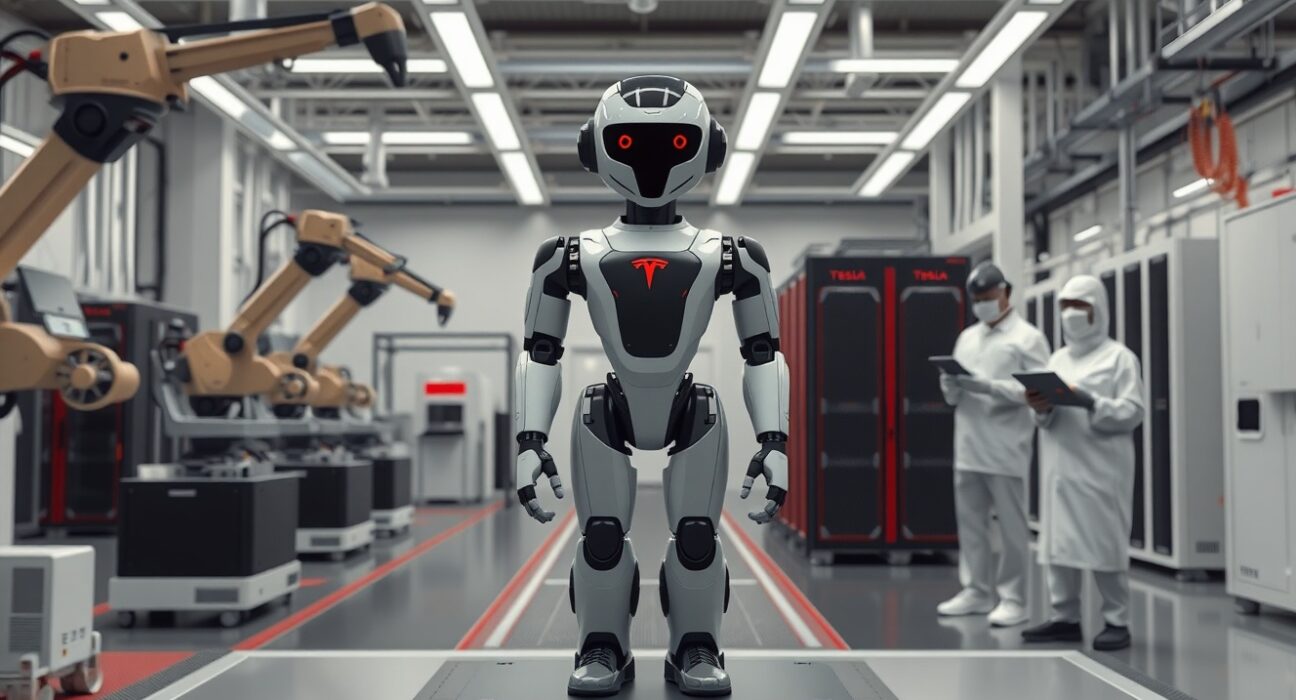
- Robotics initiatives, particularly humanoid robot development and automation technologies
- Advanced computing infrastructure, such as AI training clusters and data centers
- Manufacturing expansion, aimed at scaling next-generation hardware production
This shift suggests Tesla is attempting to become not just a vehicle manufacturer, but a vertically integrated AI company capable of building both the hardware and software for future automation systems.
Investor Reaction Reflects Mixed Sentiment
Despite the ambitious outlook, financial markets responded cautiously. Tesla’s shares initially showed strength after the announcement but quickly reversed course. The stock fell as much as 3.6% in pre-market trading, reflecting investor concerns about rising costs and execution risk.
The reaction highlights a familiar tension: while Tesla’s long-term vision often excites investors, the scale of investment required to achieve it can weigh heavily on short-term valuations. Higher capital expenditures typically reduce near-term free cash flow and profitability, even if they are intended to fuel future growth.
The High-Stakes AI Bet
Tesla’s strategy places it in direct competition with some of the largest technology firms investing in artificial intelligence infrastructure. However, unlike many of its peers, Tesla is attempting to integrate AI deeply into physical systems—cars, robots, and energy products—rather than focusing solely on software or cloud services.
This makes its investment plan particularly capital intensive. Building autonomous driving systems and robotics platforms requires not only advanced algorithms, but also real-world testing, specialized hardware, and large-scale manufacturing capabilities.
The company’s bet is that these investments will eventually converge into a unified ecosystem where AI systems power transportation, logistics, and domestic automation.
Execution Will Be the Key Challenge
While the vision is expansive, the challenge lies in execution. Scaling AI systems reliably, commercializing robotics, and maintaining leadership in electric vehicles simultaneously will require sustained operational discipline.
Tesla’s ability to convert this $25+ billion annual investment cycle into tangible products and revenue streams will likely determine how investors view this transition. If successful, it could redefine the company’s role in the global tech landscape. If not, it may raise further questions about capital efficiency and strategic focus.
For now, Tesla is signaling that it is fully committed to the AI and robotics path—even if it comes at the cost of higher spending and increased market volatility in the near term.
Microsoft Weighs Entry Into Cursor Acquisition Talks, Sources Say | Maya