Top 10 Movie Sequels That Are Better Than the Original- A deliberately opinionated ranking, scored round by round. Prepare to disagree with me.
Let me start with a confession: I am suspicious of sequels. Most of them exist because a studio did the math, not because a filmmaker had something left to say. We all know the pattern. The first movie surprises us, the second one repeats the jokes, and the third one sends everyone home early.
But every so often, a sequel does something rare. It takes everything that worked, fixes what did not, and goes somewhere the first film never dared. These are the movies that made me say, out loud and a little embarrassed, “Wait, this one is actually better.”
Here is how this works. For each pick, I score what the original did better, what the sequel did better, and then I give a verdict. I have ranked them from 10 to 1, so the real fight happens at the end. Spoilers are minimal, and arguments are encouraged.
10. Evil Dead II (1987)
Original wins at: Raw, claustrophobic dread. Sequel wins at: Everything else, especially confidence.
Sam Raimi’s first Evil Dead was a scrappy, genuinely frightening cult hit made on almost no money. The follow-up is half remake and half reinvention, and it discovers something the original barely hinted at: horror and slapstick are close cousins.
Bruce Campbell stops being a victim and becomes a one-man cartoon, wrestling his own possessed hand and laughing maniacally in a cabin that seems determined to destroy him. The camera moves like it has a mind of its own, and the gore feels more like a circus act than a nightmare.
Verdict: The first film is scarier. The second is more fun, more inventive, and far more rewatchable. Sequel by a hair.
9. Paddington 2 (2017)
Original wins at: Introducing the character with charm. Sequel wins at: Plot, villain, and emotional payoff.
I know. A family film about a talking bear in a blue coat. But Paddington 2 is one of the most purely joyful movies of its decade. For a long stretch, it held a perfect Rotten Tomatoes score, a rare feat that critics took delight in pointing out.
The story sends our polite hero to prison after a theft he did not commit, and somehow the film turns a cell block into a place of marmalade-fueled friendship. Hugh Grant is wonderfully vain as the villain, and the pop-up book sequences are small works of art.
Verdict: The original is lovely. The sequel is nearly flawless. I will not be taking questions.
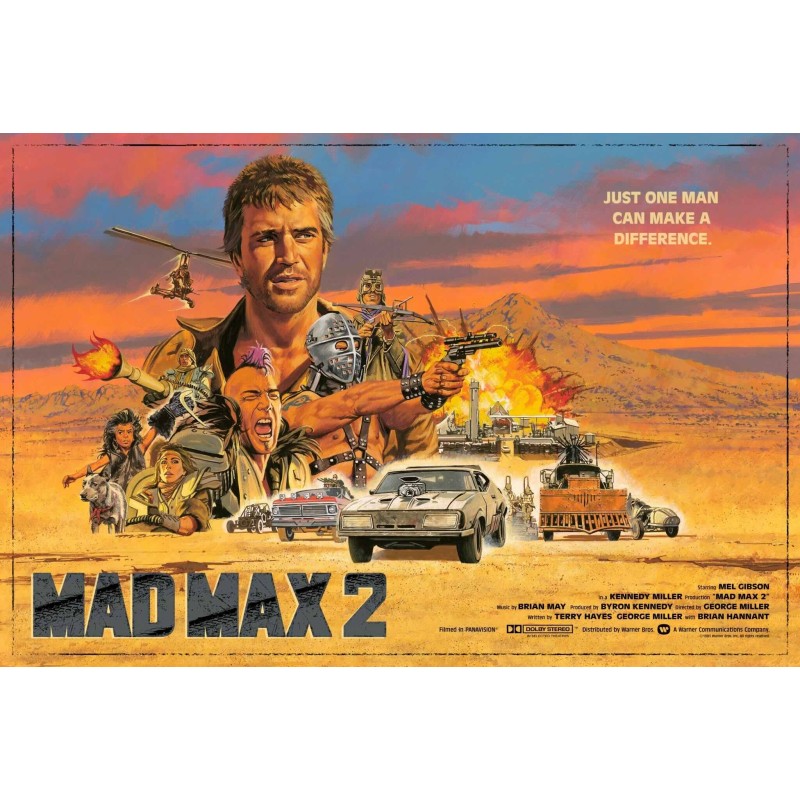
8. Mad Max 2: The Road Warrior (1981)
Original wins at: Gritty, low-budget revenge story. Sequel wins at: World-building, action, and pure momentum.
The first Mad Max (1979) was a small Australian thriller. Director George Miller then looked at what he had and thought bigger. The Road Warrior drops the revenge plot and replaces it with a stripped-down siege: a band of settlers, a tanker of precious fuel, and a horde of marauders.
Max barely speaks, and he does not need to. The stunt work is astonishing, the final chase still feels dangerous, and the film essentially wrote the visual rulebook for post-apocalyptic cinema. Nearly every wasteland movie since owes it a debt.
Verdict: The sequel did not just beat the original. It outgrew it.
7. Spider-Man 2 (2004)
Original wins at: Origin story and sheer novelty. Sequel wins at: Emotional depth, villain, and set pieces.
Sam Raimi’s first Spider-Man did the hard job of introducing the hero. The sequel got to do the interesting job of testing him. Peter Parker is exhausted, broke, and ready to quit, which makes his struggle feel more human than any cape-and-cowl fantasy.
Alfred Molina’s Doctor Octopus is a tragic villain rather than a cartoon one, and the subway train sequence remains one of the great action scenes in superhero history. The film earned the Oscar for Best Visual Effects, and it deserved it.
Verdict: The original started a franchise. The sequel perfected the genre.
6. Toy Story 2 (1999)
Original wins at: Groundbreaking novelty as the first fully computer-animated feature. Sequel wins at: Depth, stakes, and heart.
Here is a fun piece of movie history: this film was originally planned as a direct-to-video release. When Pixar saw the early results, the team decided they could do better, and the film was reworked on a famously punishing schedule.
It shows in the best way. Woody’s choice between a life as a collectible and a life as a beloved toy gives the story real weight, and the film asks surprisingly grown-up questions about aging, purpose, and being loved. Jessie’s flashback song is the moment that quietly breaks everyone.
Verdict: The first film proved the technology. The second proved the studio’s soul.
5. Aliens (1986)
Original wins at: Atmosphere and slow-burn terror. Sequel wins at: Scale, characters, and sheer adrenaline.
Ridley Scott’s Alien is a haunted house in space, and it is brilliant. James Cameron made a different movie entirely. Aliens turns the story into a war film, trading one stalking creature for an entire nest and one doomed crew for a squad of loud, memorable marines.
Sigourney Weaver’s Ripley transforms from survivor to fierce protector, and her performance earned an Oscar nomination, a rarity for a science fiction action film. The relationship between Ripley and a young survivor gives the movie its real emotional engine.
Verdict: Two different kinds of excellence. I enjoy the sequel more, and that is my right as the person writing this.
4. Terminator 2: Judgment Day (1991)
Original wins at: Lean, relentless thriller construction. Sequel wins at: Technology, emotion, and sheer spectacle.
The original Terminator is a tight, dark chase movie. Cameron returned with a much bigger budget and flipped the formula: Arnold Schwarzenegger’s machine is now the protector, and the new threat is a shape-shifting liquid-metal killer.
The visual effects were revolutionary for their time and helped the film win four Oscars. But what lingers is the surprising tenderness. A machine learning why people cry gives the film a heart that the first never aimed for.
Verdict: The first is a classic. The second is a landmark.
3. The Dark Knight (2008)
Original wins at: Origin and tone-setting. Sequel wins at: Villain, ambition, and moral complexity.
Christopher Nolan’s Batman Begins rebooted the character with intelligence and seriousness. The Dark Knight turned a superhero movie into a crime epic about chaos, trust, and the limits of heroism.
Heath Ledger’s Joker is one of the great screen performances, and it earned him a posthumous Academy Award for Best Supporting Actor. But the film also works as an argument, one that keeps both Batman and Gotham in genuine moral danger.
Verdict: Batman Begins is excellent. The Dark Knight changed what a comic book movie could be.
2. The Empire Strikes Back (1980)
Original wins at: Pure wonder and the thrill of discovery. Sequel wins at: Darkness, character, and storytelling risk.
The first Star Wars was a joyful adventure with clear heroes and villains. The Empire Strikes Back is messier, sadder, and far more daring. Our heroes are scattered, defeated, and forced to confront their weaknesses.
It introduces Yoda, deepens the romance between Han and Leia, and delivers the most famous twist in blockbuster history. And it ends on a cliffhanger, trusting the audience to wait. That confidence is exactly what separates a great sequel from a safe one.
Verdict: Many fans would say this is the best of the saga. I will not argue.
1. The Godfather Part II (1974)
Original wins at: Marlon Brando’s presence and the film’s cultural shock. Sequel wins at: Structure, scope, and tragic weight.
This is the pick that starts bar fights. The Godfather is one of cinema’s towering achievements, and I will not pretend otherwise. But Part II does something almost impossible: it expands the story in two directions at once.
One timeline follows young Vito Corleone’s rise in early twentieth-century New York, with Robert De Niro winning an Oscar for the role. The other follows Michael’s grip on power and the cost of holding it. The film became the first sequel to win Best Picture, and its final shots are among the coldest, most devastating in American film.
Verdict: It is the rare case where a sequel and an original are equals, and I give the edge to the second because of its ambition.
Honorable Mentions
A few films just missed the cut. Star Trek II: The Wrath of Khan (1982) outshines the stately first movie with a great villain and real emotion. Captain America: The Winter Soldier (2014) turned a superhero origin into a political thriller. Creed (2015) honored Rocky while carving out its own identity, and Before Sunset (2004) quietly improved on a romance that was already beloved.
What These Sequels Have in Common
Looking over the list, I noticed a pattern. The best sequels do not repeat. They change the genre (Aliens), flip a character (Terminator 2), or raise the stakes emotionally (The Empire Strikes Back). They also benefit from a simple advantage: the first film did the hard work of introducing the world, leaving the sequel free to take risks.
Time and money help too. Many of these directors returned with bigger budgets and more trust from their studios, and they used both wisely.
Your Turn
I am sure I have forgotten something you consider obvious, and I am just as sure someone will say that the original is always better. They are welcome to be wrong. Tell me which sequel you would add, which one you would remove, and whether The Godfather Part II deserves the top spot. The ranking is mine. The arguments are yours.