
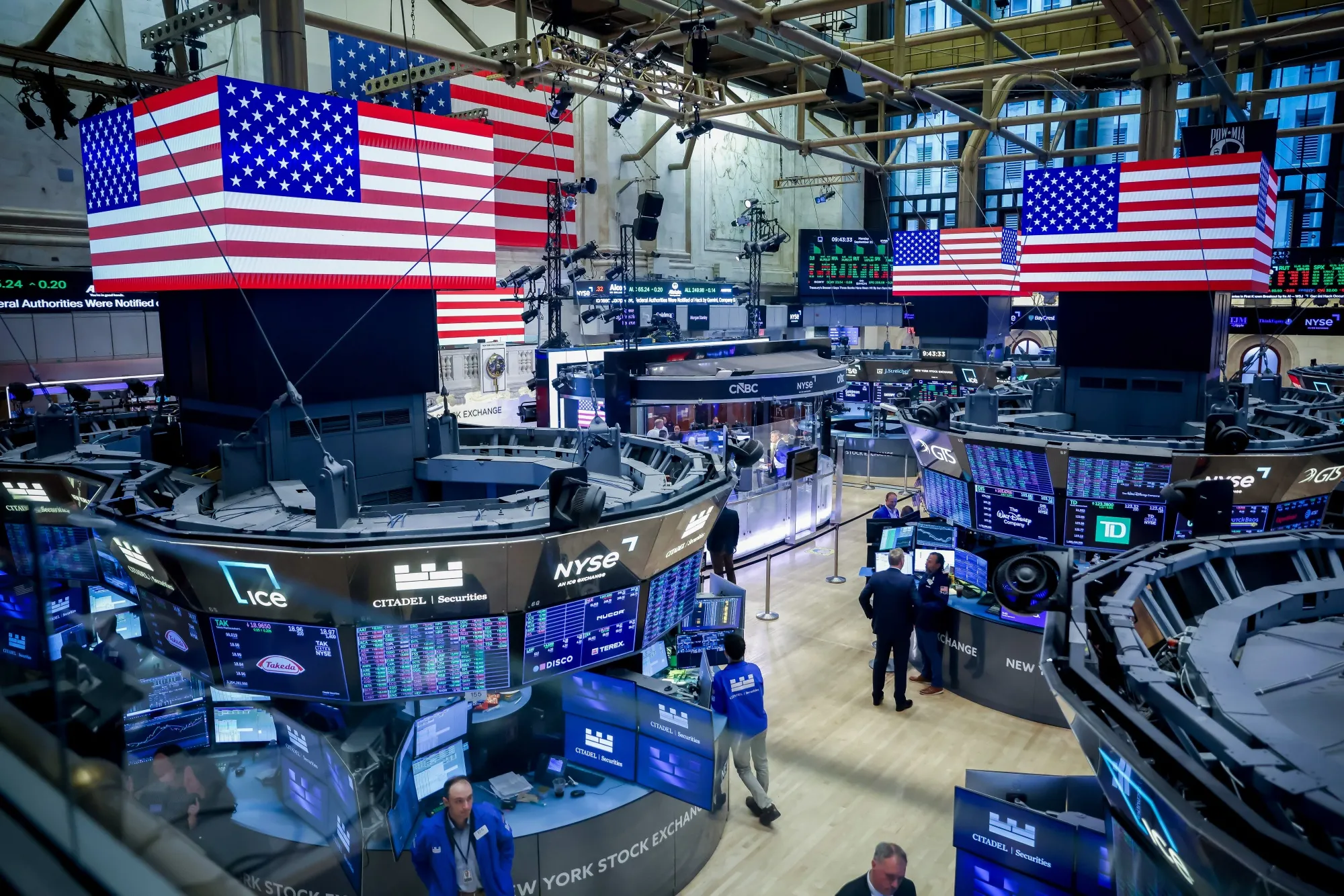
Wall Street Rallies After Democrats Sweep US Midterm Elections as Investors Welcome Political Stability: Wall Street staged a strong rally on Wednesday, November 4, as investors responded to the Democrats’ sweeping victories in the US midterm elections, which handed the party control of both the House of Representatives and the Senate. The unexpected scale of the political shift initially created uncertainty across financial markets, but President Donald Trump’s acceptance of the election results helped ease concerns about a prolonged political confrontation in Washington.
Major US stock indexes moved sharply higher as trading progressed, with investors assessing what a Democrat-controlled Congress could mean for the country’s economic policies, corporate regulations and government spending. The Dow Jones Industrial Average, S&P 500 and Nasdaq Composite all recorded significant gains, reflecting renewed confidence among investors following the election outcome.
According to market data reported on Wednesday, the Dow was up approximately 2.3%, while the S&P 500 gained 1.72% and the Nasdaq advanced 2.13%. The recovery followed an initial period of nervous trading, when investors struggled to assess the implications of a Democratic victory in both congressional chambers.
The election marked a major political setback for Trump, whose Republican Party had controlled Congress before the vote. Democrats made substantial gains in several traditionally Republican states, turning the midterms into a broader rejection of the president’s political agenda.
However, financial markets appeared to find some reassurance in the prospect of a divided government, where neither the White House nor Congress would have complete control over policymaking.
One of the immediate factors supporting investor confidence was Trump’s response to the results. Rather than escalating tensions over the Democratic victories, the president indicated that he would accept the outcome and work with the opposition. That response helped reduce concerns about a prolonged political dispute that could have added further uncertainty to the markets.
Investors generally prefer predictable political and economic conditions because sudden changes in taxation, regulation, government spending and trade policy can affect corporate earnings and investment decisions. With Democrats controlling Congress and Trump remaining in the White House, markets may now face a period in which major policy changes become more difficult to implement.
The prospect of political gridlock, which could create challenges for lawmakers, is being viewed by some investors as a potential advantage for financial markets. A divided government could restrict sweeping legislative changes, limit additional government spending and reduce the likelihood of sudden policy shifts affecting businesses.
The election outcome could also influence the administration’s economic priorities during the remaining two years of Trump’s presidency. Democrats are expected to scrutinise federal spending, challenge certain tax proposals and seek greater oversight of major industries, including technology, healthcare and financial services.
Technology companies are among the businesses facing an uncertain regulatory environment. Democratic control of Congress could increase pressure for stricter oversight of artificial intelligence, cryptocurrency and large technology platforms. Investors are particularly concerned about how potential restrictions on artificial intelligence infrastructure and data-centre development could affect companies investing billions of dollars in the sector.
Shares of some data-centre operators and AI infrastructure businesses came under pressure as investors considered the possibility of tighter regulations. However, gains in other major technology companies helped support the broader market recovery.
The semiconductor sector also attracted attention following strong corporate earnings and growth expectations. Advanced Micro Devices gained investor interest after delivering better-than-expected financial results and presenting an encouraging outlook for demand in 2027. The company’s performance offered some reassurance to investors concerned about slowing growth in the technology industry.
Meanwhile, the broader market rally was accompanied by movements in other financial assets. The US dollar weakened, while gold prices advanced as investors reassessed the political and economic outlook. Oil prices also declined, partly reflecting changing expectations surrounding the future direction of US policy towards Iran and the wider Middle East.
The energy market remains particularly sensitive to developments in the region because the conflict has created uncertainty around international oil supplies and shipping through the strategically important Strait of Hormuz. Any indication of reduced military escalation could influence crude prices and ease some concerns about inflation.
The election results have therefore created a complicated picture for investors. While the prospect of political gridlock has encouraged buying in several parts of the stock market, uncertainty surrounding technology regulation, defence spending and America’s fiscal position remains.
Another important question concerns the relationship between Congress and the White House over government borrowing and federal spending. Democratic lawmakers could use their new majority to challenge Republican spending priorities, potentially creating difficult negotiations over budgets and future debt-ceiling arrangements.
For now, Wall Street appears to be focusing on the immediate reduction in election-related uncertainty rather than the longer-term political disagreements that may emerge.
The Democratic victory has changed the balance of power in Washington, but its ultimate impact on corporate America, financial regulation and the US economy will depend on how both parties respond over the coming months.
The market rally suggests that investors are welcoming the clarity provided by the election outcome, even as they prepare for a more complicated political relationship between the White House and Congress.