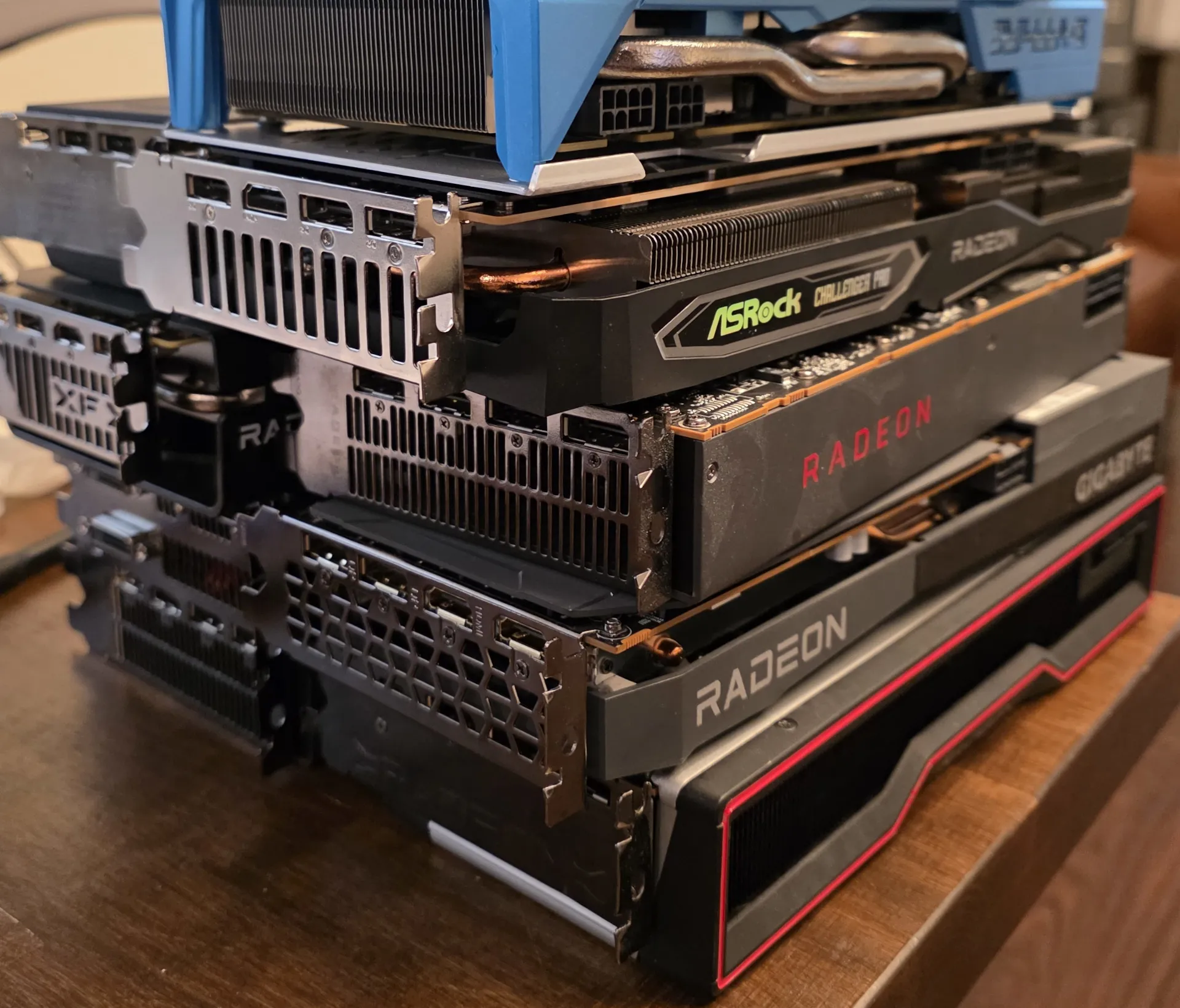
Why Is AMD Losing Ground to Nvidia Despite Making Powerful Chips? The artificial intelligence boom has reshaped the semiconductor industry, turning graphics processing units (GPUs) into essential tools for modern computing. Nvidia has emerged as a leading supplier of AI hardware, powering data centres, cloud platforms and systems used to train and operate advanced AI models. AMD, despite developing powerful competing processors, continues to face difficulties converting its technological capabilities into comparable market influence.
At first glance, the situation appears surprising. Advanced Micro Devices (AMD) has decades of experience designing high-performance processors and has introduced its Instinct accelerator family specifically for demanding AI workloads. These products offer substantial computing capabilities and high-bandwidth memory, making them attractive alternatives for certain applications.
However, building a powerful processor is only one part of succeeding in the AI industry. Customers also need dependable software, efficient networking, reliable performance and infrastructure that can be deployed without excessive complexity. Nvidia has spent years developing these capabilities, creating an ecosystem that extends well beyond its chips.
AMD is working to close the gap, but its biggest challenge is convincing businesses to adopt an alternative platform in a market where software compatibility and established infrastructure can be just as important as raw computing power.
Nvidia’s Software Advantage Gives It a Head Start
One of Nvidia’s most important competitive advantages is CUDA, its parallel computing platform introduced in 2006. The technology enables developers to use Nvidia GPUs for applications ranging from scientific research and engineering simulations to machine learning and artificial intelligence.
Over the years, developers have created libraries, programming tools and specialised applications designed to work with CUDA. When generative AI became a major industry, Nvidia already had a mature software foundation that developers could use to build and deploy their models.
AMD offers its own alternative, ROCm, which supports popular AI frameworks and provides tools for running workloads on its accelerators. The company has continued improving its software platform, but gaining widespread adoption takes time.
The problem is that software ecosystems become more valuable as more developers use them. Engineers tend to build applications around familiar tools, while businesses often prefer technologies that have already been tested in demanding production environments.
Moving an AI workload from Nvidia to AMD may require code modifications, additional testing and performance optimisation. For organisations operating thousands of accelerators, even minor compatibility problems can increase costs and delay projects.
This means AMD must offer more than competitive hardware. It needs to make its software platform sufficiently mature, accessible and reliable to persuade developers that switching is worthwhile.
Powerful Chips Do Not Always Deliver Better Results
AMD’s Instinct accelerators demonstrate that the company can compete in high-performance computing. Its MI300X and MI350 families target demanding workloads such as large language model training, AI inference and scientific computing.
One potential advantage is memory capacity. Large AI models require substantial memory to store their parameters and process information efficiently. Accelerators with more high-bandwidth memory can sometimes accommodate larger models or reduce the need to distribute workloads across multiple devices.
However, technical specifications alone do not determine real-world performance.
The actual speed of an AI workload depends on computing throughput, memory bandwidth, software optimisation, power consumption and communication between processors. Results can vary significantly depending on the model being used and the type of calculations it requires.
A processor might perform exceptionally well in a particular benchmark but deliver less impressive results when running a different model in a commercial environment.
Businesses therefore evaluate the total cost of operating an AI system, including hardware purchases, electricity, cooling, networking and engineering support.
AMD can produce competitive results in selected applications, but it must demonstrate consistent performance across a broader range of workloads to attract large-scale customers.
Nvidia Sells an Entire AI Infrastructure Platform
Nvidia’s business extends far beyond GPUs. The company supplies networking equipment, interconnect technologies, software and integrated computing systems designed to connect large numbers of accelerators.
Training advanced AI models requires thousands of processors to exchange information rapidly. If communication between those processors becomes a bottleneck, much of their computing capacity can go unused.
This makes networking, memory access, cooling and system design essential components of AI infrastructure.
Nvidia has invested heavily in integrating these technologies into complete systems, allowing customers to deploy large computing clusters without designing every component independently.
AMD is pursuing a similar strategy through its Helios rack-scale infrastructure plans, which combine Instinct accelerators, EPYC server processors and networking technologies.
Nevertheless, AMD must prove that its complete systems can deliver dependable performance, efficient operation and straightforward deployment at scale. Matching individual chip specifications is not enough when customers are purchasing entire data-centre solutions.
Why Customers Continue Choosing Nvidia
Another major obstacle is customer familiarity. Nvidia hardware is widely used across AI research, software development and cloud computing. Developers can access established tools, documentation and optimised libraries, making it easier to begin projects and move them into production.
Once an organisation has built its infrastructure around a particular platform, changing suppliers becomes complicated.
Businesses may need to modify software, retrain engineers, validate performance and ensure that existing applications continue operating correctly. These changes require time and money, even when an alternative processor offers an attractive purchase price.
Nvidia also benefits from a reinforcing cycle: its large customer base encourages further software development, improved software attracts additional customers, and wider adoption creates more opportunities for optimisation.
AMD must make switching platforms economically attractive, not merely technically possible.
Lower hardware prices could help the company win customers, particularly those running AI inference workloads at enormous scale. However, savings on processors may be offset by additional software development or operational expenses.
Large cloud providers may also want multiple suppliers to reduce their dependence on a single company. This creates an opportunity for AMD, although initial testing and limited deployments do not necessarily translate into sustained, large-scale purchases.
Manufacturing and Supply Constraints Matter Too
Producing advanced AI accelerators requires sophisticated manufacturing processes, advanced packaging and substantial supplies of high-bandwidth memory.
These components cannot be produced or delivered in unlimited quantities. Manufacturers must coordinate with multiple suppliers to ensure that finished processors arrive when customers need them.
AMD has been expanding its product portfolio and working to strengthen its supply arrangements as demand for AI computing increases. However, its ability to compete also depends on delivering enough hardware to support large deployments.
Nvidia faces manufacturing constraints as well, but its established relationships with major customers and infrastructure partners help support its position in the market.
A competitive chip has limited commercial value if a company cannot supply it reliably and support customers after deployment.
Can AMD Close the Gap?
AMD still has opportunities to increase its presence in the AI industry, particularly as demand for computing capacity continues to grow.
One promising area is AI inference, the process through which trained models generate answers, produce content and perform tasks. As AI services attract more users, inference becomes an increasingly important part of the computing market.
For these workloads, companies may prioritise cost per generated token, memory capacity, energy efficiency and consistent performance. AMD could gain ground if its accelerators deliver attractive operating economics for specific applications.
Supplier diversification also creates an opportunity. Major cloud providers and AI developers may prefer to use multiple hardware vendors rather than depend entirely on Nvidia. A credible alternative can offer greater flexibility in purchasing, capacity planning and infrastructure management.
AMD’s wider portfolio is another potential advantage. By combining server processors, AI accelerators and networking technologies, the company can provide components for several parts of a data centre.
However, long-term success will depend on repeat orders, reliable production deployments and stronger developer adoption, rather than product announcements alone.
To compete effectively, AMD must continue improving ROCm, demonstrate dependable performance on real-world workloads, strengthen its integrated systems and provide customers with reliable technical support.
Final Thoughts
AMD’s struggle against Nvidia is not simply a battle over which company makes the fastest AI chip. It is a competition between two technology platforms, each offering hardware, software and infrastructure for an expanding AI industry.
Nvidia benefits from its established CUDA ecosystem, extensive customer relationships, integrated systems and years of developer adoption. AMD has competitive hardware and is investing in the software and infrastructure needed to challenge that position, but overcoming an established ecosystem takes time.
AMD does not necessarily need to replace Nvidia across the entire market to become more successful. Winning selected workloads, securing major cloud customers and making its software easier to use could allow it to expand its market presence.
Ultimately, the decisive question is whether AMD can turn its capable processors into a complete, reliable and cost-effective AI platform. Until it demonstrates that advantage consistently, Nvidia’s established ecosystem will remain one of the biggest obstacles to AMD‘s ambitions. GTA 6 Leak Threat: Cyberleek Claims to Have a Playable Build | Maya