
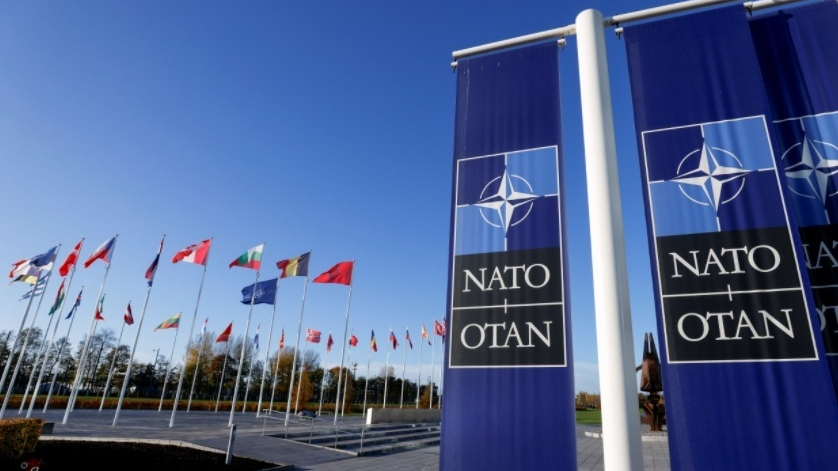
Why Is NATO Warning Russia After the Romania Attack? NATO has issued a strong warning to Russia after a drone linked to Moscow’s overnight assault on Ukraine reportedly crashed into a residential building in Romania, raising fears that the ongoing war could spill beyond Ukrainian territory and threaten regional stability.
The incident occurred in Galați, a Romanian city located near the Ukrainian border, where authorities said debris from a Russian drone strike damaged an apartment block and injured two civilians. Emergency teams rushed to the site soon after the explosion, while officials began investigating how the drone entered Romanian airspace.
The development immediately triggered concern because Romania is a member of NATO, meaning any attack or military intrusion on its territory is viewed with extreme seriousness by the alliance. While NATO has stopped short of calling the strike intentional, leaders across Europe have condemned the incident and warned Moscow against further reckless actions near alliance borders.
NATO Secretary General Mark Rutte responded firmly following discussions with Romanian President Nicuşor Dan. In a public statement, Rutte said Russia’s actions posed a danger to regional security and stressed that NATO is “ready to defend every inch” of allied territory. The phrase is frequently used by NATO officials to reinforce the alliance’s commitment to collective defense under Article 5, which states that an attack on one member is considered an attack on all.
Although the alliance has not suggested it is preparing for direct military action, the warning highlights growing anxiety within NATO over the increasing number of security incidents involving Russian drones and missiles close to member states.
Romania’s government also reacted swiftly. President Dan convened an emergency meeting of the country’s supreme council of national defence to evaluate the situation and discuss possible responses. Meanwhile, Romania’s foreign ministry summoned Russia’s ambassador and demanded explanations regarding the drone strike.
Romanian Foreign Minister Oana Țoiu warned that the incident could affect diplomatic relations between Bucharest and Moscow. She also indicated that Romania may support additional European sanctions against Russia if such incidents continue to occur.
The latest episode has intensified concerns that the war in Ukraine is becoming increasingly unpredictable along NATO’s eastern flank. Since Russia launched its full-scale invasion in 2022, several drones, missiles, and fragments of military equipment connected to attacks in Ukraine have landed inside neighboring countries, particularly Romania and Poland.
Most of these incidents were treated as accidental spillovers rather than deliberate attacks. However, each event has increased pressure on NATO to improve air defense systems and strengthen surveillance along its borders with Ukraine and Russia.
Security experts believe NATO’s latest warning serves multiple strategic purposes. First, it reassures member nations in Eastern Europe that the alliance remains fully committed to protecting them from any external threat. Countries bordering Ukraine have repeatedly expressed concern over the possibility of the conflict expanding beyond Ukrainian territory.
Second, the statement sends a direct message to Moscow that NATO is closely monitoring developments and will not tolerate repeated violations near alliance territory. By publicly emphasizing collective defense, NATO aims to deter Russia from actions that could further destabilize the region.
At the same time, NATO leaders continue to avoid steps that could trigger a wider military confrontation with Russia. Since the war began, the alliance has carefully balanced military support for Ukraine with diplomatic caution to prevent escalation between nuclear powers.
This balancing act has become increasingly difficult as Russia intensifies drone and missile attacks near border regions. Areas around the Black Sea and western Ukraine have become especially sensitive because they are close to NATO member states and major trade corridors.
Romania holds strategic importance for both NATO and the European Union. The country hosts alliance troops, contributes to regional defense operations, and plays a major role in facilitating Ukrainian grain exports through Black Sea and Danube routes. Because of this, any security breach involving Romanian territory immediately attracts international attention.
Military analysts say the incident in Galați could push NATO to further strengthen air defenses in Eastern Europe. Additional radar systems, surveillance missions, and rapid-response measures may be considered if attacks near alliance borders continue.
Despite the sharp language used by NATO officials, diplomats are expected to proceed cautiously while investigations continue. Western governments remain determined to support Ukraine without allowing the conflict to evolve into a direct NATO-Russia war.
Still, the Romania incident serves as another reminder of how fragile security conditions have become in Eastern Europe. As the war drags on, even unintended strikes carry the risk of escalating tensions between Russia and NATO, making border incidents increasingly dangerous for regional and global stability.
For now, NATO’s warning appears designed to achieve two goals simultaneously — to reassure its allies and to caution Russia that any threat to alliance territory will be taken seriously. Whether Moscow changes its approach remains uncertain, but the latest incident has once again highlighted how easily the conflict in Ukraine can create wider international consequences. How Did Anthropic Reach a $965 Billion Valuation So Quickly? | Maya

