Why Lee Sung Jin Believes Great Art Comes From Contradiction- Lee Sung Jin isn’t the kind of creator who walks into a room radiating certainty. If anything, the mind behind Beef operates from a place that’s far more introspective—often defined by self-doubt rather than bravado.
At 44, Lee has built a reputation for storytelling that feels raw, grounded, and uncomfortably real. But that authenticity doesn’t come from an overflowing imagination in the traditional sense. Instead, he has openly described his creative process as reactive rather than inventive. Ideas don’t arrive fully formed from within him; they emerge from real-life encounters, observations, and moments that linger longer than they should. In his own dry, understated way, he has joked that his imagination is limited, and that he relies on the world around him to spark something meaningful.
This perspective sets him apart in an industry that often celebrates bold visionaries who claim to build entire worlds from scratch. Lee’s approach is almost the opposite. He watches, absorbs, and waits—trusting that reality itself will eventually present material worth exploring. It’s a quieter kind of creativity, but one that has proven incredibly effective.
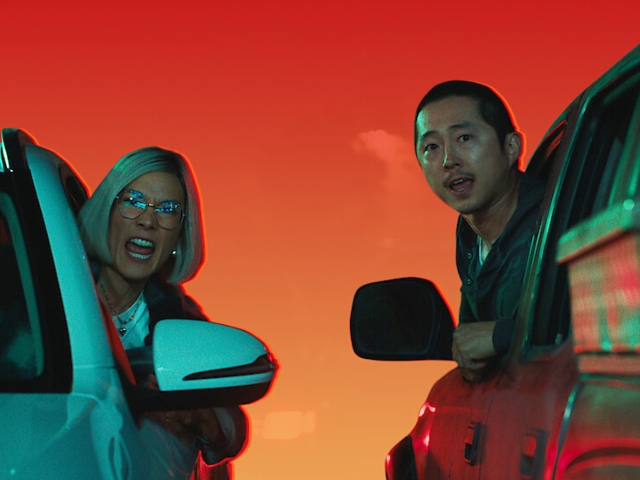
That philosophy was central to the success of Beef, the Netflix anthology that became both a critical and cultural phenomenon. The show didn’t rely on high-concept spectacle or elaborate world-building. Instead, it zoomed in on something deceptively simple: human conflict, frustration, and the emotional fallout of seemingly small moments. The result was a story that resonated deeply with audiences, earning eight Emmy wins and 13 nominations in 2023, and cementing Lee’s place as a distinctive voice in modern television.
What makes his work stand out is the tension embedded within it—a tension that mirrors his own internal contradictions. Reflecting on his experience creating the first season, Lee once pointed to a meme that perfectly captured his mindset. It was a Venn diagram with two overlapping circles. One read “crippling self-doubt.” The other read “absolute narcissism.” Where they met in the middle was a single word: “art.”
That image, while humorous on the surface, reveals something deeper about how Lee understands creativity. Art, in his view, isn’t born from pure confidence or pure insecurity, but from the friction between the two. On one hand, there’s the nagging voice that questions every decision, every idea, every line of dialogue. On the other, there’s the belief—however small or fleeting—that what you’re making matters enough to be seen.
For Lee, that balance isn’t something he has mastered; it’s something he continues to navigate. His tendency toward self-deprecation isn’t just a personality trait—it’s part of the engine that drives his work. Doubt pushes him to refine, to question, to dig deeper into the emotional truth of a scene. At the same time, a certain degree of confidence is necessary to bring those ideas into the world at all.
This duality is evident throughout Beef. The characters are flawed, often contradictory, and sometimes difficult to like. Yet they feel real because they reflect the same push and pull that exists within the creator himself. Moments of vulnerability collide with bursts of ego, insecurity clashes with the desire to be understood—and in that collision, something honest emerges.
In a creative landscape that often rewards certainty and bold declarations, Lee Sung Jin’s approach feels refreshingly different. He doesn’t position himself as someone with all the answers. Instead, he embraces uncertainty as part of the process. He allows discomfort, awkwardness, and imperfection to shape his storytelling, rather than smoothing them out.
Ultimately, his work suggests that creativity doesn’t require endless imagination or unwavering confidence. Sometimes, it’s enough to pay attention—to notice what feels true, what feels unresolved, what refuses to be ignored. And in that space between doubt and belief, between observation and expression, Lee continues to find his voice.
Hollywood Pushes Back Against $111bn Paramount–Warner Bros Discovery Mega Merger | Maya