
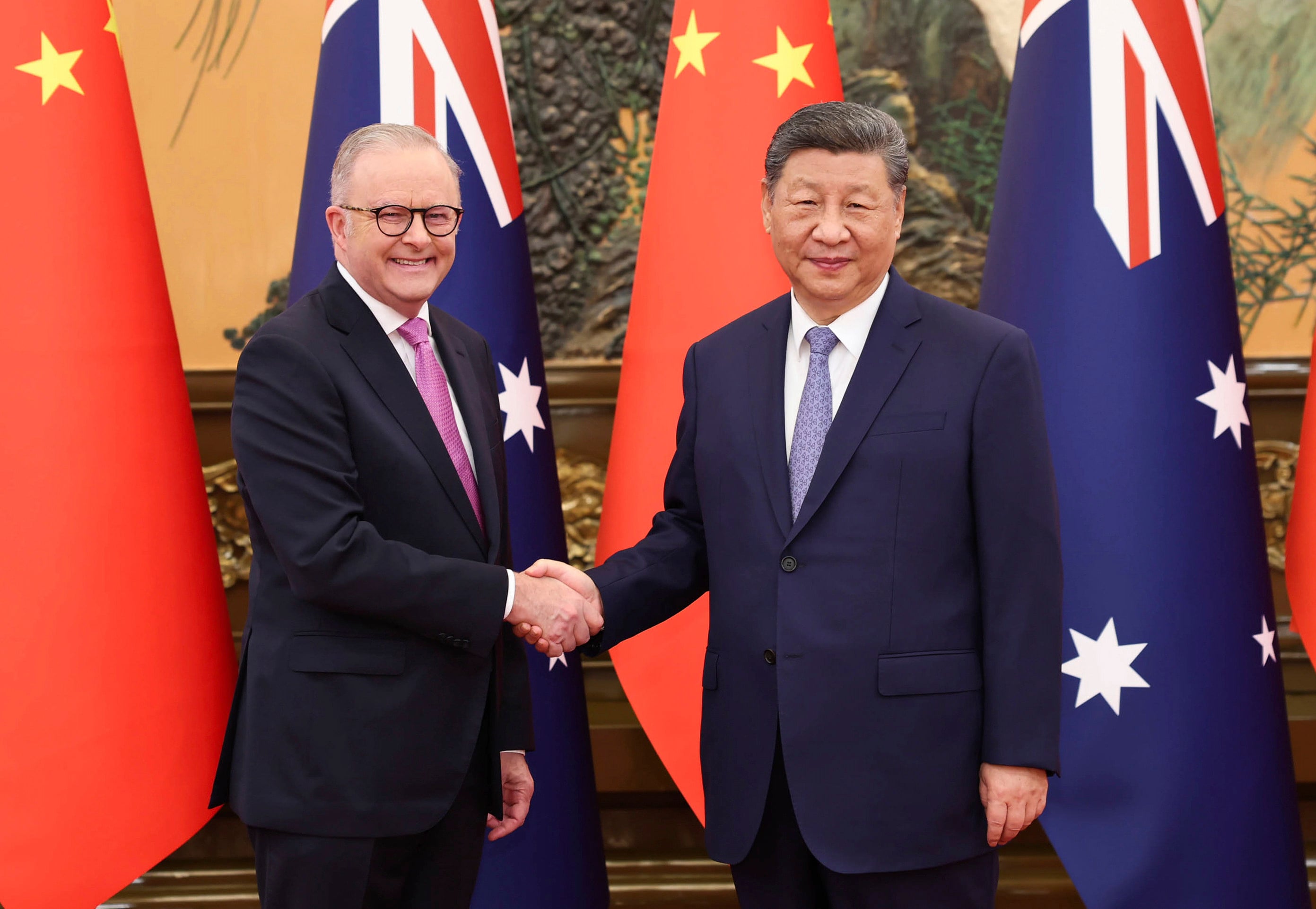
Xi Jinping Signals New Chapter in China-Australia Relations at APEC Summit: Chinese President Xi Jinping has signalled a renewed phase of diplomatic engagement between Beijing and Canberra, declaring that relations between China and Australia have undergone a “full turnaround” after several years of political and diplomatic differences. His remarks came during a meeting with Australian Prime Minister Anthony Albanese on the sidelines of the Asia-Pacific Economic Cooperation (APEC) summit in Shenzhen, highlighting growing efforts by both governments to strengthen bilateral ties and expand cooperation.
The meeting marks another significant moment in the evolving relationship between the two countries, which experienced considerable strain in previous years over trade restrictions, security concerns and disagreements on regional and international issues. However, recent diplomatic engagement has created opportunities for dialogue, with both sides seeking to move beyond earlier tensions and restore stability to their partnership.
Xi described the improvement in bilateral relations as a shared achievement, crediting both governments with working towards rebuilding trust and expanding cooperation across different sectors.
“We have jointly promoted the full turnaround of China-Australia relations, and exchanges and cooperation in various fields between our two countries have continued to deepen,” Xi said during the opening remarks of his meeting with Albanese.
The Chinese president also emphasised that differences between the two countries should not prevent them from pursuing areas of common interest. He called for continued engagement based on equality, mutual respect and practical cooperation, suggesting that Beijing wants to maintain the positive momentum in its relationship with Canberra.
“I will work with you in the spirit of equality, seeking common ground despite differences, and mutually beneficial cooperation to take forward the China-Australia Comprehensive Strategic Partnership,” Xi said.
The remarks reflect China’s interest in strengthening its diplomatic and economic engagement with Australia, an important regional partner with significant influence in the Indo-Pacific. Australia, meanwhile, has sought to maintain constructive relations with Beijing while continuing to protect its national security interests and strategic partnerships.
Relations between the two countries deteriorated considerably in the years before Albanese took office in 2022. Trade disputes, political disagreements and concerns over foreign interference and regional security contributed to a period of strained diplomatic engagement. Australian exports, including agricultural products, wine and other commodities, faced restrictions and trade barriers during the difficult period.
The change in diplomatic tone under Albanese’s government has helped reopen channels of communication between the two capitals. High-level meetings and renewed economic engagement have formed an important part of efforts to stabilise the relationship.
Trade remains one of the central pillars of China-Australia relations. China is Australia’s largest trading partner, making economic cooperation particularly important for Australian exporters and businesses. Improved diplomatic relations can provide greater certainty for industries dependent on access to Chinese markets, although differences over trade policy and national interests remain relevant.
Beyond commerce, both governments have reasons to maintain regular communication on regional stability, international security and broader economic developments. Their relationship carries significance for the Indo-Pacific, where competition among major powers has increasingly influenced diplomatic and security calculations.
For Canberra, maintaining a working relationship with Beijing involves balancing economic opportunities with its security commitments and partnerships, particularly with the United States and other regional allies. Australia has consistently emphasised the importance of a stable Indo-Pacific order while continuing to engage with China on issues of mutual interest.
For Beijing, improved relations with Canberra offer an opportunity to strengthen engagement with an influential regional country and maintain economic and diplomatic links across the Asia-Pacific.
Xi’s call to seek common ground despite differences suggests that both sides recognise the importance of managing disagreements without allowing them to dominate the entire relationship. However, a warmer diplomatic atmosphere does not necessarily mean that all underlying disputes have been resolved. Issues involving regional security, strategic competition, foreign policy and economic interests could continue to test bilateral ties.
The meeting at the APEC summit also provides an opportunity for the two leaders to discuss how their governments can sustain the recent improvement in relations. Regular dialogue and practical cooperation will remain important in determining whether the diplomatic progress can translate into longer-term benefits.
Albanese’s engagement with Xi comes as countries across the Asia-Pacific navigate an increasingly complex international environment shaped by economic uncertainty, geopolitical competition and changing regional partnerships.
The latest meeting therefore represents more than a diplomatic exchange between two leaders. It reflects a broader effort to establish a more stable and predictable relationship between China and Australia after years of disagreements.
While Xi’s declaration of a “full turnaround” highlights Beijing’s assessment of the progress made, the durability of this improvement will depend on how effectively both governments address their differences and maintain cooperation in the months and years ahead.
For now, the discussions in Shenzhen indicate that both countries are seeking to preserve diplomatic momentum and take their comprehensive strategic partnership into a new phase of engagement.

