Could We Terraform Venus Instead of Mars? The Overlooked Alternative – For decades, Mars has owned the imagination of anyone dreaming of a second Earth. But just one planet inward from our own, a world with nearly identical size, gravity, and solar proximity waits in the shadows — dismissed as a hellscape, yet potentially more hospitable than we’ve been taught to believe. What if we’ve been looking at the wrong planet all along?*
The Gravity of the Matter
Let’s begin with the one thing you cannot fake, manufacture, or terraform: gravity.
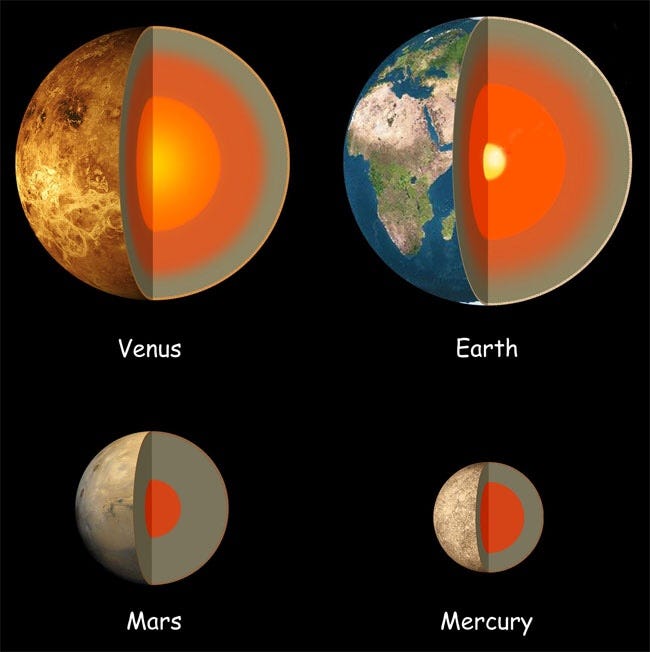
Venus weighs in at 81 percent of Earth’s mass, producing a surface gravity of 0.904 g — close enough to home that human bones wouldn’t decalcify, muscles wouldn’t atrophy, and cardiovascular systems wouldn’t degrade over generations. A child born in a Venus colony could grow up strong enough to walk on Earth without rehabilitation.
Mars, by contrast, offers only 0.379 g — roughly 38 percent of Earth’s pull. We have no data on how humans fare after decades in one-third gravity, but every indication from long-duration spaceflight suggests trouble. Bone density loss, vision impairment, muscle wasting, and unknown developmental effects on fetuses all loom as unsolved problems. You can thicken an atmosphere and warm a planet. You cannot dial up gravity.
This single fact should give pause to anyone treating Mars as the obvious choice. Yet Venus remains the wallflower of interplanetary ambition.
Closer, Faster, Cheaper
Venus is our nearest planetary neighbor. At closest approach, it swings within 24 million miles of Earth — roughly half the minimum distance to Mars. A spacecraft can reach Venus in about three months using conventional trajectories, compared to six to nine months for Mars. That means half the radiation exposure en route, half the consumables, half the psychological toll of confinement, and twice the launch windows.
Venus also offers something Mars cannot: a thick atmosphere dense enough for aerobraking. A vehicle entering the Venusian atmosphere can shed velocity using atmospheric drag rather than firing thrusters, saving enormous amounts of fuel. On Mars, the air is so thin that landing requires a complex choreography of heat shields, parachutes, and rocket-powered descent.
So why aren’t we going? Because Venus has a reputation problem.
The Surface from Dante’s Imagination
There is no sugarcoating what awaits at ground level. Venus is the hottest planet in the solar system — 464 degrees Celsius on average, hot enough to melt lead and zinc. The atmospheric pressure crushes at 90 times Earth’s sea level, equivalent to diving 900 meters beneath the ocean, deeper than almost any military submarine can survive. The clouds aren’t water vapor; they’re sulfuric acid. The surface is a dim, yellow-orange desert pocked with volcanoes larger than anything on Earth, shrouded in a permanent haze that blocks most sunlight.
And then there’s the rotation. Venus spins backward — retrograde — and takes 243 Earth days to complete one turn. A single Venusian day lasts longer than its year of 225 Earth days. The slow spin means negligible magnetic field protection and no meaningful day-night cycle. Seasons don’t exist; the axial tilt is a mere 3 degrees.
This is the Venus that Soviet Venera probes glimpsed before their circuits fried within minutes. This is the Venus that earned its nickname: Earth’s evil twin.
But here’s the thing — nobody serious about colonizing Venus wants to live on the surface.
The Cloud-Top Revelation
In 2003, NASA scientist Geoffrey Landis published a paper that reframed the entire conversation. He pointed out that roughly 50 kilometers above the Venusian surface, the atmosphere undergoes a remarkable transformation. At that altitude:
-
Pressure drops to roughly 1 atmosphere — essentially sea-level Earth pressure.
-
Temperature settles between 20 and 30 degrees Celsius — room temperature, even balmy.
-
Gravity remains 0.9 g — comfortable and familiar.
The only catch? You’re floating in a sky filled with carbon dioxide and sulfuric acid mist. But carbon dioxide is denser than the nitrogen-oxygen air we breathe. A balloon filled with ordinary Earth air would float in the Venusian atmosphere. In fact, it would be buoyant. A one-kilometer spherical habitat filled with breathable air would generate enough lift to carry 700,000 tons — the mass of two Empire State Buildings. A two-kilometer balloon could lift six million tons.
Landis estimated that a billion such habitats could float in the Venusian cloud layer, each housing hundreds of thousands of people. The concept became known as the High Altitude Venus Operational Concept (HAVOC) — a NASA study, now inactive, that sketched out a 30-day crewed mission to the cloud tops.
At these altitudes, colonists would enjoy Earth-like pressure and temperature without pressurized suits or domes. They’d have natural radiation shielding from the thick atmosphere above them — something Mars, with its wispy air and absent magnetic field, cannot provide. They’d have four times the solar energy available on Mars, making power generation and agriculture far more viable. And any puncture in a habitat would result in a slow, manageable leak of air outward into the CO2 surroundings — not the explosive decompression of a high-pressure habitat in vacuum.
The sulfuric acid? Unpleasant, but not insurmountable. Materials like Teflon and certain ceramics resist it easily. And sulfuric acid is H₂SO₄ — hydrogen, sulfur, and oxygen. Through electrolysis, colonists could crack it apart to produce water, with sulfur as a byproduct. The very clouds that make Venus seem hostile become a resource.
The Terraforming Equation
Floating cities are a compelling near-term prospect, but true terraforming means walking on the ground without a suit. And Venus presents the inverse problem of Mars.
Mars is too cold, too thin, too dead. Terraforming Mars means adding — thickening the atmosphere, warming the surface, melting ice caps, importing volatiles. The three goals are complementary: more greenhouse gases trap more heat, which releases more frozen CO₂ and water vapor, which traps more heat. It’s a positive feedback loop that, in principle, could bootstrap itself over centuries.
Venus is too hot, too thick, too suffocating. Terraforming Venus means subtracting — stripping away 90 atmospheres of CO₂, cooling the surface by hundreds of degrees, and somehow dealing with a runaway greenhouse effect that has baked the planet for eons.
Carl Sagan proposed the first serious solution in 1961: seed the atmosphere with genetically engineered algae or cyanobacteria to convert CO₂ into organic compounds. The discovery of sulfuric acid clouds and the sheer scale of the atmosphere rendered that idea impractical, but it launched a field of speculation that continues today.
In 1991, British Interplanetary Society member Paul Birch proposed a more aggressive approach: bombard Venus with hydrogen. The chemistry is elegant. Hydrogen reacts with atmospheric CO₂ to produce graphite (solid carbon) and water. Flood Venus with enough hydrogen — roughly 4×10¹⁹ kilograms, an astronomical but not impossible quantity — and you could theoretically convert the bulk of the atmosphere into oceans covering 80 percent of the surface. The graphite would settle out or be buried, and Venus would become an ocean world.
Others have proposed solar shades — massive reflective structures stationed at the Sun-Venus L1 Lagrange point to block a portion of incoming sunlight. Cooling the planet would cause atmospheric CO₂ to condense into dry ice, which could then be sequestered underground or launched into space. Combined with orbital mirrors to speed up Venus’s rotation — creating a 24-hour day and potentially jump-starting a magnetic dynamo — the shade approach could, over millennia, render the surface tolerable.
Another proposal involves carbonate sequestration. Bombarding Venus with refined magnesium or calcium from off-world sources would lock CO₂ into stable carbonate rocks. The required mass — roughly 8×10²⁰ kilograms of calcium — exceeds the mass of the asteroid Vesta, making this among the more resource-intensive options. But recent Earth-based research into accelerated carbon mineralization using catalysts suggests the geological timescale could be compressed from millions of years to mere days in controlled settings.
Even more exotic ideas include atmospheric vortex engines — stationary tornadoes that pipe heat from the surface to high altitudes where it can radiate into space — and radiative cooling metamaterials that exploit spectral windows in Venus’s CO₂ atmosphere to bleed infrared energy directly into the void.
The common thread? Every Venus terraforming scheme operates on timescales of centuries to millennia, requires energy budgets that dwarf anything humanity has ever managed, and assumes technologies we do not yet possess. But the same is true of Mars.
Mars: The Fixer-Upper vs. Venus: The Tear-Down
Elon Musk famously called Mars a “fixer-upper of a planet.” You need domes at first, but over time you could thicken the atmosphere, warm it up, and eventually walk outside with just an oxygen mask. It’s a compelling narrative because each step builds on the last. Small colonies become larger ones. Local industry bootstraps global transformation.
Venus, by comparison, is a tear-down. There is no incremental path from floating cities to surface cities because the surface is lethal in every conceivable way. You cannot send a rover to build a habitat. You cannot mine regolith for construction materials — at least not with any technology that survives 464 degrees and 90 atmospheres. The gap between “cloud colony” and “surface civilization” is a chasm, not a staircase.
And yet, Mars has its own unfixable problems. Its gravity may be too low for permanent human health, full stop. Its atmosphere, even if thickened, will always leak into space because Mars lacks the mass to hold it indefinitely. Without a global magnetic field, solar wind will strip away whatever atmosphere you build, requiring constant replenishment. And the thin air offers no protection from cosmic radiation, meaning settlers will always live underground or in heavily shielded surface structures.
Venus’s gravity holds atmospheres just fine — it currently holds 90 times too much. Its radiation shielding is built-in. Its solar energy is abundant. The problem is excess, not absence, and excess can theoretically be managed. Scarcity is harder to solve.
The Forgotten History of a Wet World
Perhaps the most haunting argument for Venus is geological. Before the Space Age, astronomers speculated that Venus might be a steamy jungle world, its perpetual cloud cover hiding warm oceans beneath. The reality was crueler — but the speculation wasn’t baseless.
Evidence suggests Venus did have liquid water oceans for perhaps two to three billion years. It may have been habitable long after Mars lost its surface water. Something went wrong — a runaway greenhouse effect, possibly triggered by volcanic outgassing or a weakening magnetic field — that turned a temperate world into a pressure cooker. Mars, by contrast, had liquid water for only a few hundred million years before its small size and weak gravity caused it to dry out and freeze.
If life ever existed in the solar system beyond Earth, Venus may have hosted it longer than Mars did. NASA’s DAVINCI and VERITAS missions, along with ESA’s EnVision, aim to probe this history. The discovery of phosphine in Venus’s upper atmosphere in 2020 — though still debated — reignited interest in whether microbial life might persist in the cloud layer today, where temperatures and pressures are benign.
We overlook Venus, some scientists argue, because we discovered its hellish surface during the Space Race and never looked back. Since the mid-1990s, American scientists have submitted nearly 30 Venus mission proposals to NASA. None have been approved. Mars has absorbed the lion’s share of exploration budgets, public attention, and colonization dreams. Chinese Scientists Develop Low-Cost Technology to Turn Plastic Waste into Jet Fuel | Maya
The Verdict
So could we terraform Venus instead of Mars? The honest answer is: not with today’s technology, not on human timescales, and not without a civilization-scale commitment to megastructures that make the Pyramids look like Lego sets.
But the more interesting question is: should we be trying?
If the goal is a permanent human presence beyond Earth in the next century, Venus’s cloud cities offer a more immediately viable path than Mars’s surface domes. Same gravity. Same pressure. Same radiation protection. Four times the solar power. Half the travel time. The engineering challenges are formidable but finite — materials science, atmospheric chemistry, buoyant architecture. They don’t require rewriting the laws of planetary physics.
If the goal is true terraforming — a second Earth where humans walk barefoot on soil under an open sky — both planets demand miracles. Mars needs mass it doesn’t have. Venus needs to lose an atmosphere it has too much of. Neither is a good bet for the impatient.
But Venus has one advantage that transcends engineering: it is a proof of concept that Earth-sized planets can go wrong. Studying Venus teaches us how runaway greenhouse effects work, how atmospheres evolve, and how fragile habitability truly is. In an era of climate anxiety, Venus is not just a destination — it’s a warning.
Maybe we don’t need to choose. The solar system is wide enough for both ambitions. But if we’re picking a world to pour our dreams into, we should at least give Venus a fair hearing. It has the gravity. It has the sunlight. It has the proximity. It has the atmospheric shielding. It even has the clouds.
All it needs is for us to look up — not down at the hell below, but across at the paradise floating fifty kilometers above.