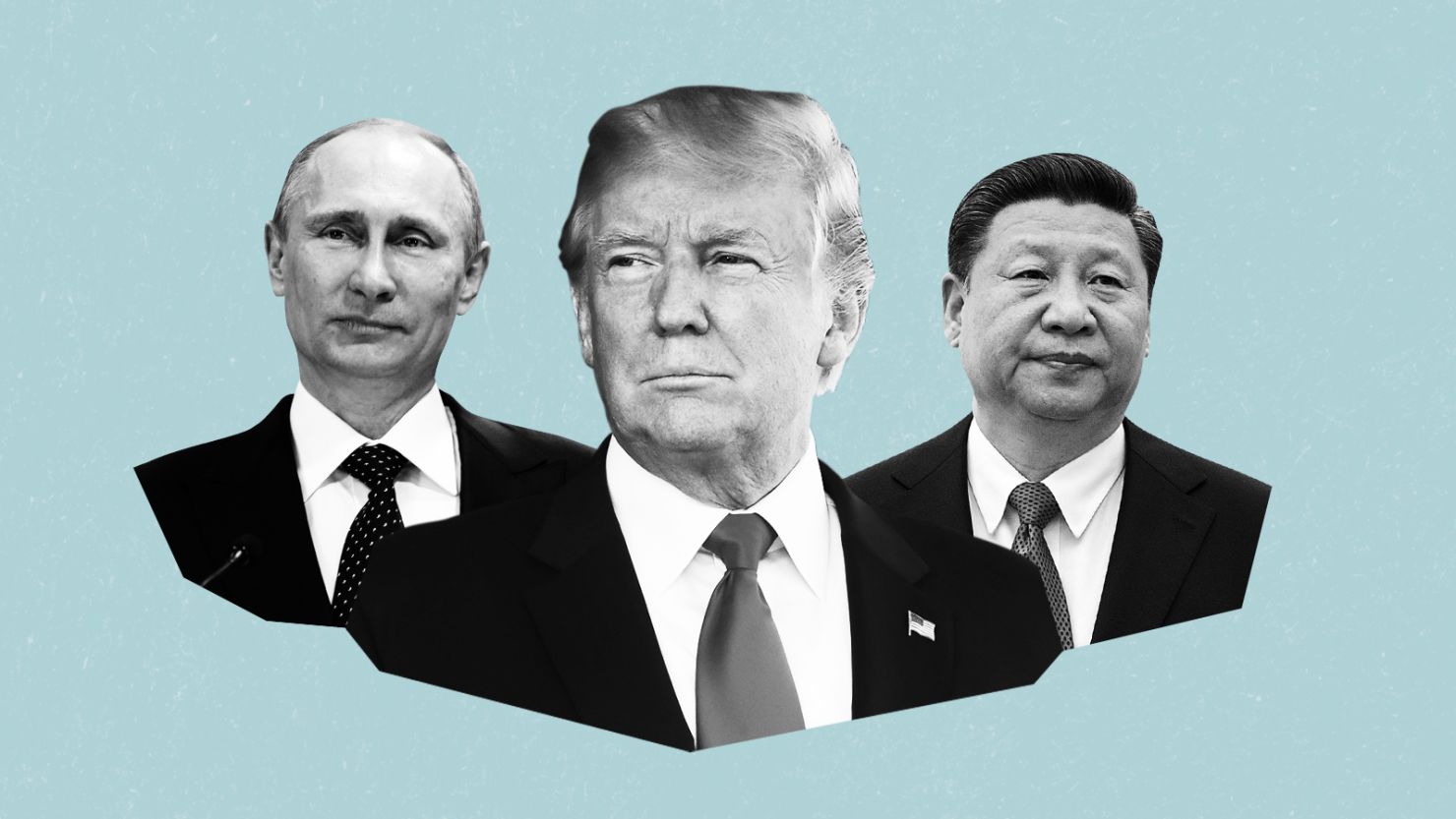
The trip, which includes major regional summits and an unprecedented three-way meeting with Chinese President Xi Jinping and Russian President Vladimir Putin, comes at a particularly sensitive moment for the White House. Following a series of electoral setbacks for Republicans, growing criticism of his administration and mounting questions about his foreign policy decisions, Trump has plenty of reasons to demonstrate that he remains a central figure in global affairs.
For American presidents facing political difficulties at home, international diplomacy has often provided an opportunity to change the conversation. By stepping onto the global stage, Trump may be hoping to remind Americans and foreign governments alike that domestic political turbulence has not diminished his presidential authority.
A Familiar Presidential Strategy
The idea of using foreign travel to restore a president’s political image is hardly new. The strategy dates back to Ronald Reagan, who travelled through Latin America in 1982 as his administration struggled with a recession, rising unemployment and disappointing political results for Republicans.
The trip was designed to shift attention towards presidential leadership and America’s international role. Since then, several presidents have adopted a similar approach after suffering political setbacks in midterm elections.
Bill Clinton travelled to the Philippines in 1994 following a major Republican victory in congressional elections. George W. Bush visited Vietnam shortly after Republicans lost control of Congress in 2006. Barack Obama also made high-profile Asian visits after difficult midterm elections in 2010 and 2014.
Trump himself followed the pattern in 2017, visiting France after Republicans lost their House majority.
The underlying message is straightforward: even when a president encounters resistance at home, the international stage remains an arena where the White House can demonstrate authority and leadership.
Former US ambassador to Malaysia Edgard Kagan has described presidential diplomacy as one of the few areas where the president enjoys a distinctive advantage. Such visits provide an opportunity to attract international attention, generate diplomatic momentum and reshape the political narrative.
Trump Faces Questions About His Political Strength
Trump’s upcoming journey comes amid growing scrutiny of his administration. Recent electoral disappointments have encouraged political opponents and even some Republican allies to question the direction of his presidency.
The White House has also faced criticism over personnel changes, internal disagreements and demands for greater accountability among senior officials.
The involvement of billionaire Elon Musk adds another political dimension. Despite spending hundreds of millions of dollars supporting Republican candidates and political causes, his efforts did not produce the electoral results many conservatives had hoped for.
These developments have created an uncomfortable political environment for Trump, particularly as foreign governments closely monitor the strength and stability of his administration.
For leaders such as Xi and Putin, American domestic politics are not merely an internal matter. They can influence Washington’s negotiating position, foreign policy priorities and ability to sustain international commitments.
Trump’s challenge, therefore, is not simply to conduct diplomatic meetings. He must also convince international observers that he continues to possess the political influence necessary to deliver on his promises.
The Xi-Putin-Trump Meeting: A Global Power Display
The most striking feature of the trip is the proposed three-way meeting between Trump, Xi and Putin.
Bringing together the leaders of the United States, China and Russia would create an extraordinary diplomatic spectacle. These three countries possess enormous economic, military and geopolitical influence, making their interactions particularly important for the international order.
The meeting also carries historical significance. Some observers may draw comparisons with the 1945 Yalta Conference, where Franklin D. Roosevelt, Winston Churchill and Joseph Stalin discussed the postwar international settlement.
However, Trump’s aides have rejected suggestions that the upcoming gathering is intended to divide the world into competing spheres of influence. They have also indicated that the Ukraine conflict is not expected to feature on the formal agenda.
Instead, the White House hopes to use the meeting to begin discussions on nuclear weapons and strategic stability.
The gathering could provide Trump with a powerful image: the American president sitting alongside two of the world’s most influential leaders, discussing issues that will shape global security for decades.
Yet the symbolism should not be confused with diplomatic success. A photograph featuring three powerful leaders does not automatically translate into an agreement or a breakthrough.
Nuclear Weapons Could Become a Major Talking Point
Arms control is expected to be among the most important issues surrounding the proposed meeting.
The last major nuclear arms control agreement between Washington and Moscow expired in February, raising concerns about the future of strategic stability between the two largest nuclear powers.
Both countries possess thousands of nuclear warheads, while China has been steadily expanding its own nuclear capabilities. Its arsenal is now estimated to exceed 600 warheads.
Washington has increasingly argued that future arms control arrangements should include Beijing. However, China has shown limited enthusiasm for joining a formal agreement alongside the United States and Russia.
Trump could attempt to use the meeting to bring all three countries into a broader conversation about nuclear security.
Nevertheless, expectations remain modest. American officials have indicated that the discussions should be viewed as an initial step rather than an opportunity for an immediate agreement.
Getting China to participate in meaningful nuclear negotiations could become one of the most difficult diplomatic challenges of Trump’s presidency.
China Trade and Technology Complicate the Visit
Beyond security issues, Trump’s relationship with China remains shaped by trade, technology and strategic competition.
His administration is seeking new commercial agreements across Asia, with a proposed agreement with Thailand among the expected developments. The White House also wants to demonstrate that American economic engagement in the region remains strong.
The choice of Shenzhen as a destination is particularly significant. The Chinese city has become one of the country’s most important centres for technology, manufacturing and innovation.
However, the visit comes against the backdrop of controversy surrounding advanced artificial intelligence chips and allegations involving Chinese espionage. These sensitive issues could complicate discussions between Washington and Beijing.
Trump is reportedly not planning to raise the spying allegations directly with Xi. Nor are American officials expecting a major discussion about additional restrictions on advanced semiconductor exports to China.
This approach suggests that the White House may be prioritising broader diplomatic and commercial objectives over some of the most contentious technology disputes.
The challenge for Trump will be balancing the desire for improved economic relations with the need to protect American technological advantages and national security interests.
Iran and Ukraine Continue to Cast a Shadow
Despite the focus on Asia, Trump cannot easily escape the conflicts dominating his foreign policy agenda.
The war involving Iran has affected energy markets and contributed to rising fuel prices across parts of Asia. Meanwhile, Trump’s efforts to bring an end to the war in Ukraine have yet to deliver the decisive results he has sought.
Both conflicts could influence conversations with Asian leaders, particularly as governments across the region remain concerned about energy security, economic stability and the consequences of prolonged geopolitical tensions.
These challenges also create a political problem for Trump at home.
His approach to tariffs and the Iran conflict has contributed to economic uncertainty and voter dissatisfaction. Democrats are seeking to challenge some of the administration’s policies and limit the president’s room for manoeuvre.
The same foreign policy decisions that Trump has presented as demonstrations of American strength could also become political liabilities if their economic consequences continue to affect ordinary Americans.
Can the Asia Tour Change Trump’s Political Narrative?
Trump’s journey represents more than a series of diplomatic engagements. It is also an opportunity to shape perceptions of his leadership at a moment when his domestic political position is under pressure.
His meetings with Xi and Putin could generate enormous international attention. New trade agreements, discussions on nuclear security and renewed American engagement with Asian economies could help the White House present the trip as a diplomatic success.
But the underlying questions will remain.
Can Trump persuade China to cooperate on nuclear security? Can he establish a more stable relationship with Russia without weakening American support for Ukraine? Can he strengthen economic partnerships across Asia while managing the tensions surrounding tariffs and advanced technology?
And perhaps most importantly, can an impressive diplomatic appearance translate into tangible political and economic achievements?
Trump may be able to command the global spotlight by sitting alongside Xi and Putin, but reclaiming American influence will require much more than diplomatic photographs and carefully choreographed meetings.
Ultimately, the Asia tour offers Trump a chance to project confidence, demonstrate international relevance and remind the world that he remains a major force in global politics.
Whether it becomes a genuine diplomatic turning point or simply another attempt to change the political conversation at home will depend on what happens after the cameras stop rolling.