
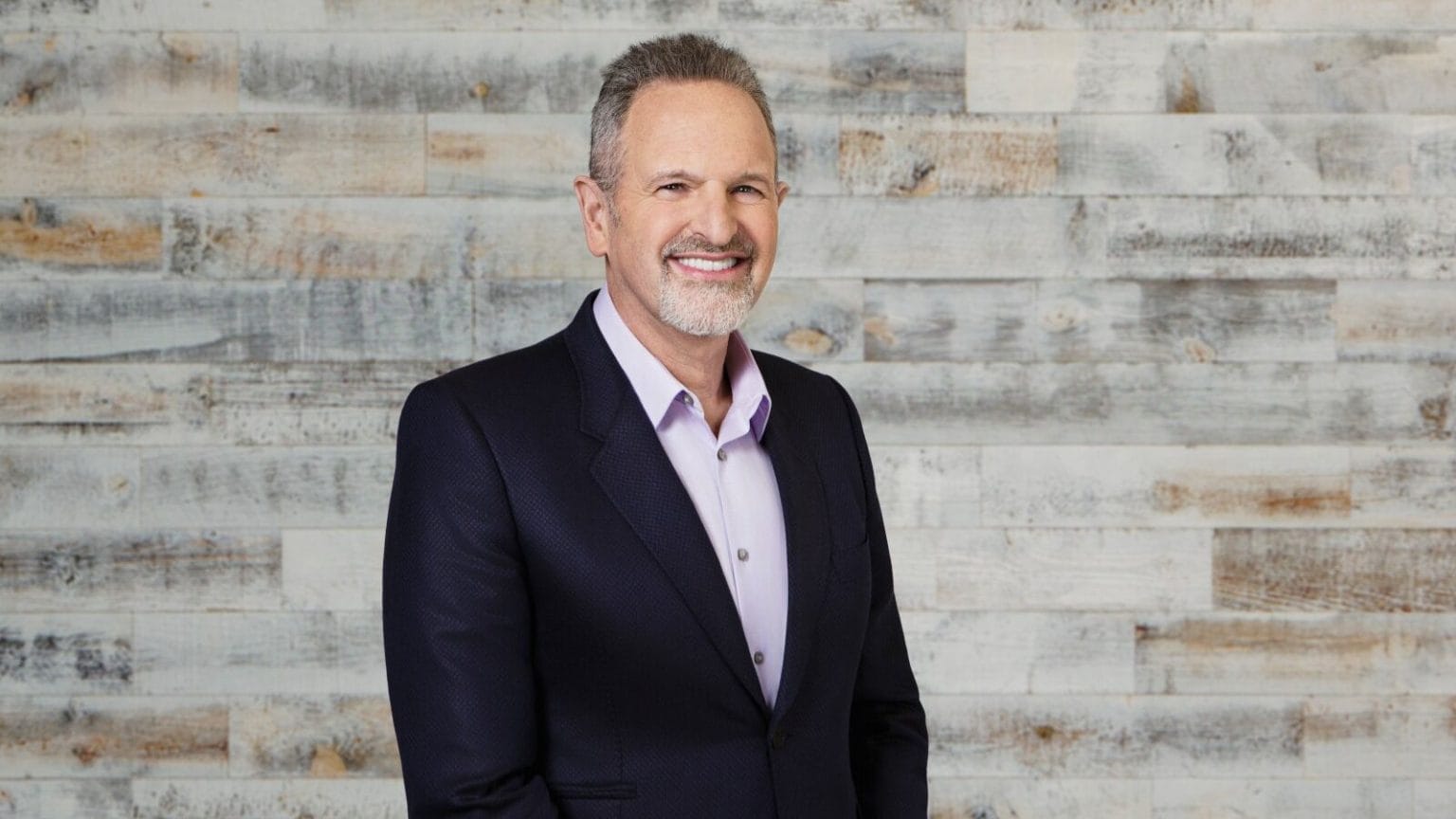
Nvidia Turns to Arm CEO Rene Haas for Jensen Huang’s Successor: Is a New Era Beginning for the AI Giant? Nvidia is facing one of the biggest leadership transitions in its history after its longtime chief executive, Jensen Huang, stepped down from the company he co-founded more than three decades ago. As the artificial intelligence giant begins searching for its next leader, an unexpected name has emerged as a potential candidate: Rene Haas, the chief executive of British chip designer Arm Holdings.
According to a report by the Financial Times, Nvidia’s board has approached Haas as part of its search for a potential successor to Huang. The development has attracted considerable attention across the technology industry, given Haas’s previous association with Nvidia and his current position at one of the world’s most influential semiconductor companies.
However, Haas is not the only person being considered, and there is no confirmation that he will accept or even receive a formal offer. The search comes at a particularly sensitive time for Nvidia, whose extraordinary growth has been closely associated with Huang’s leadership.
Jensen Huang’s Sudden Departure Creates a Leadership Vacuum
Jensen Huang’s departure marks the end of an extraordinary 33-year leadership period at Nvidia. Having co-founded the company in 1993, Huang transformed it from a graphics-processing hardware manufacturer into a global technology powerhouse at the centre of the artificial intelligence revolution.
Under his leadership, Nvidia’s graphics processing units (GPUs) became essential components of modern AI infrastructure, powering everything from advanced language models and data centres to autonomous systems and scientific research.
However, Huang’s exit followed a controversy involving reports of extramarital relationships. He acknowledged being unfaithful to his wife in a communication to employees, while media reports raised additional questions about his personal relationships and their potential implications for the company.
The situation also attracted attention because one reported relationship involved a woman suspected by US intelligence officials of having connections to Chinese intelligence. These allegations have added another layer of scrutiny to Nvidia’s corporate governance and national security concerns.
Importantly, Nvidia’s official filing confirmed that Huang resigned from his positions as president, CEO and board member on November 11, 2026. The company has not publicly described his departure as a dismissal.
Following his resignation, Nvidia appointed chief financial officer Colette Kress as interim CEO while the board begins its search for a permanent replacement.
Who Is Rene Haas?
Rene Haas is a prominent executive in the global semiconductor industry and currently leads Arm Holdings, the British technology company known for designing processor architectures used in billions of electronic devices.
His potential selection is particularly interesting because he has a strong professional connection with Nvidia.
Before joining Arm in 2013, Haas spent approximately seven years at Nvidia, where he held senior management positions, including vice president and general manager of its computing products business.
His previous experience at Nvidia could give him an advantage in understanding the company’s engineering culture, business priorities and long-term technological ambitions.
Haas eventually rose through Arm’s leadership structure and became its chief executive in 2022. Under his leadership, Arm completed its high-profile stock market listing in 2023, bringing renewed attention to the company’s importance in the global semiconductor market.
His combination of previous Nvidia experience and current leadership at Arm makes him an interesting potential candidate for one of the most influential jobs in the technology industry.
However, moving from Arm to Nvidia would also present significant challenges. The two companies have a complicated commercial relationship, with Nvidia relying on Arm’s processor architecture while increasingly developing its own competing technologies.
Nvidia Is Considering More Than One Candidate
Although Haas has emerged as a prominent external possibility, Nvidia’s leadership search is not limited to him.
The company’s chief financial officer, Colette Kress, is already serving as interim CEO and could potentially provide continuity during the transition.
Another name attracting attention is Ian Buck, a longtime Nvidia executive who has played an important role in developing CUDA, the software platform that has become central to the company’s AI ecosystem.
Other external possibilities discussed by analysts and industry observers include AMD CEO Lisa Su and senior executives from major technology and semiconductor companies.
The selection will be particularly important because Nvidia is no longer simply a graphics-chip manufacturer. It has become a central supplier of the computing infrastructure supporting the global AI industry.
Its next chief executive will have to manage enormous demand for AI chips, maintain relationships with major technology companies, navigate international trade restrictions and continue investing in next-generation computing technologies.
Employees Want Jensen Huang Back
Interestingly, Huang’s departure has not been welcomed by everyone inside Nvidia.
Reports suggest that some employees have urged the company’s board to reconsider its decision and explore the possibility of bringing the former CEO back.
An internal employee discussion reportedly attracted more than 1,600 comments, with several participants expressing support for Huang and questioning the circumstances surrounding his exit.
The situation highlights the difficulty Nvidia could face in replacing a leader who has been closely associated with its identity and success for more than three decades.
Billionaire entrepreneur Elon Musk has also publicly supported an effort to bring Huang back, saying he would sign a petition seeking his reinstatement.
However, whether these efforts will influence the board’s decision remains uncertain. Nvidia Employees Want Jensen Huang Back: Inside the Leadership Crisis Shaking the AI Giant | Maya
Why Replacing Jensen Huang Will Be Difficult
Finding a successor for Huang is not simply about appointing another experienced technology executive. The new leader will inherit a company operating at the centre of one of the most competitive industries in the world.
Nvidia’s dominance in AI computing is built on several interconnected advantages, including its advanced GPU technology, CUDA software ecosystem, relationships with major cloud providers and extensive investments in AI infrastructure.
Maintaining this position will require more than developing faster processors.
The company must continue delivering powerful chips while competing against rivals such as AMD and responding to growing efforts by major technology companies to develop their own AI processors.
There are also geopolitical challenges. Restrictions on advanced semiconductor exports to China and increasing government scrutiny of the AI industry could influence Nvidia’s business strategy for years.
The next CEO will therefore be responsible for protecting Nvidia’s technological leadership while managing an increasingly complicated global business environment.
Haas could bring valuable experience to this challenge, particularly because of his understanding of both Nvidia and Arm. Nevertheless, the board will have to consider whether his leadership approach and strategic priorities match Nvidia’s future requirements.
Arm and Nvidia: An Interesting Leadership Connection
One of the most interesting aspects of Haas’s potential appointment is the relationship between Nvidia and Arm.
Arm is known for designing processor architectures that are licensed to semiconductor companies around the world. Its technology powers a significant proportion of smartphones and is increasingly finding applications in computers, cloud infrastructure and artificial intelligence systems.
Nvidia, meanwhile, has built its reputation around high-performance GPUs and the software ecosystem supporting them.
Although the companies have different core business models, their technologies increasingly overlap as the semiconductor industry moves towards advanced AI computing.
Nvidia has also been expanding its efforts in CPU development, including products based on Arm architecture.
If Haas eventually takes over Nvidia, his experience leading Arm could provide useful insight into the changing semiconductor landscape. At the same time, such a transition would raise questions about the future relationship between the two companies.
Arm has its own shareholders, commercial partnerships and competitive ambitions, meaning Haas’s departure would also represent a significant leadership change for the British chip designer.
What Happens Next for Nvidia?
For now, Nvidia’s board has an important decision ahead.
According to reports, Haas has been approached as part of the search, but there is no guarantee that he will become the company’s next chief executive.
Nvidia has indicated that it is selecting an external search firm and that speculation about individual candidates is premature. Colette Kress will continue managing the company as interim CEO while the process moves forward.
The leadership transition is unfolding at a critical moment for the AI industry. Demand for advanced computing infrastructure remains a major driver of semiconductor investment, and Nvidia occupies a central position in that market.
Investors, employees, technology companies and governments will all be watching closely to see who eventually takes responsibility for steering the company.
The appointment could influence not only Nvidia’s future but also the direction of the wider artificial intelligence industry.
If Haas is selected, Nvidia would gain a leader with previous experience inside the company and a strong understanding of the semiconductor business. If the board chooses an internal candidate, it could signal a preference for maintaining continuity with Huang’s existing strategy.
Either way, replacing a founder who led Nvidia for 33 years will be an extraordinary challenge.
A Defining Moment for the AI Industry
Jensen Huang’s departure represents the end of an important chapter in Nvidia’s history. His leadership helped turn the company into a central force behind the modern AI revolution.
Now, the search for his successor has brought Rene Haas into the spotlight, creating an interesting possibility of a leadership transition between two major players in the semiconductor industry.
However, the final decision remains with Nvidia’s board, and several candidates could still emerge.
The biggest question is whether Nvidia can maintain its extraordinary momentum without the founder who shaped its rise.
For now, the technology world is waiting to discover who will take control of the AI giant and lead it into its next chapter.