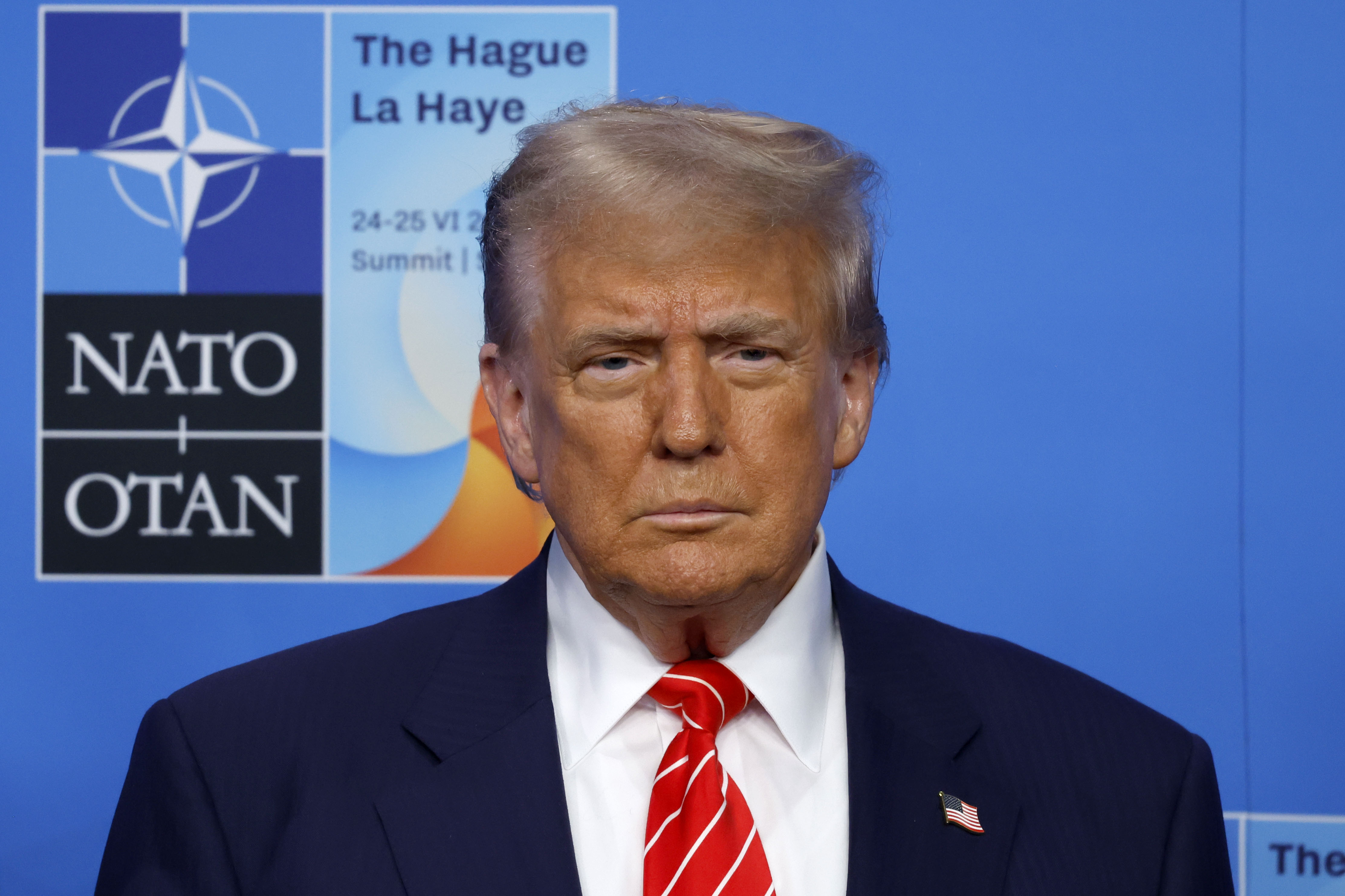
Trump Questions NATO’s Relevance, Hints at US Withdrawal- Fresh concerns about the future of the transatlantic alliance have emerged after remarks attributed to Donald Trump, in which he reportedly questioned the credibility of NATO and suggested that a U.S. withdrawal from the alliance is no longer unthinkable. The comments—linked to an interview with The Daily Telegraph—have triggered intense debate across Europe and Washington, reviving long-standing tensions over defense commitments, burden-sharing, and the future of Western security cooperation.
A Familiar Critique, Now Sharpened
Trump’s skepticism toward NATO is not new. During his presidency from 2017 to 2021, he repeatedly criticized member states for failing to meet the alliance’s defense spending target of 2% of GDP. He argued that the United States was shouldering a disproportionate share of the burden, effectively subsidizing the security of wealthier European nations.
However, the tone of the latest remarks appears more forceful. Describing NATO as a “paper tiger” and suggesting that U.S. withdrawal is “beyond reconsideration” signals a shift from criticism to potential disengagement. If taken at face value, such a stance would represent one of the most dramatic reversals in U.S. foreign policy since the alliance’s founding in 1949.
European Allies Respond
Across Europe, the reaction has been swift and, in many cases, anxious. NATO remains the cornerstone of European defense, particularly in the face of ongoing tensions with Vladimir Putin and the war in Ukraine.
Countries like Germany and France—two of the European Union’s largest powers—have reiterated their commitment to NATO while also acknowledging the need to strengthen their own military capabilities. German officials have pointed to recent increases in defense spending, including a landmark €100 billion fund to modernize the Bundeswehr, as evidence that Europe is taking Trump’s earlier criticisms seriously.
France, under its long-standing push for “strategic autonomy,” has emphasized the importance of a more self-reliant European defense system. French leaders have argued that Europe must be prepared to act independently if U.S. support becomes uncertain.
In Eastern Europe, the stakes are even higher. Countries such as Poland and Estonia, which share historical and geographic proximity to Russia, view NATO as an essential security guarantee. Poland has significantly increased its defense spending—well above the 2% target—and has hosted U.S. troops and missile defense systems as part of NATO’s forward presence.
Similarly, Baltic states like Latvia and Lithuania have consistently called for a stronger NATO footprint in the region. For these nations, any hint of U.S. withdrawal raises fears of reduced deterrence against potential aggression.
The United Kingdom, one of NATO’s most capable military powers, has also reaffirmed its commitment to the alliance. British officials stress that NATO remains vital for collective defense and transatlantic unity, particularly in a volatile geopolitical environment.
The Iran Factor
The reported comments come in the context of tensions surrounding U.S. military action against Iran, an issue that has historically divided NATO members. While the United States has taken a more confrontational approach toward Tehran, several European countries—including Germany and France—have favored diplomacy and the preservation of agreements such as the Iran nuclear deal.
This divergence highlights a broader challenge within NATO: aligning the strategic priorities of 31 member states with differing political systems, economic interests, and threat perceptions. Trump’s remarks appear to tap into frustration over what he sees as insufficient support from allies in critical moments.
Legal and Political Realities
Despite the rhetoric, withdrawing the United States from NATO would not be straightforward. The alliance is underpinned by treaties ratified by the U.S. Senate, and any attempt to exit would likely face significant legal and political hurdles. In recent years, bipartisan legislation has been introduced in Congress to prevent a president from unilaterally withdrawing from NATO without legislative approval.
Moreover, the U.S. defense establishment—including the Pentagon and many senior military leaders—has consistently emphasized the strategic value of NATO. The alliance not only enhances collective defense but also provides a framework for joint operations, intelligence sharing, and global influence.
Strategic Implications
If the United States were to reduce its role in NATO or withdraw entirely, the consequences would be far-reaching. For Europe, it would necessitate a rapid and substantial increase in defense spending and coordination. While some countries have already begun this process, bridging the gap left by the U.S. would be a monumental challenge.
For global geopolitics, such a move could shift the balance of power. Analysts suggest that it could embolden rivals, including Russia, while also raising questions about U.S. commitments in other regions, such as Asia. Alliances like NATO are often seen as a cornerstone of American leadership on the world stage; weakening them could alter perceptions of U.S. reliability.
A Divided Debate in the United States
Within the United States, opinions on NATO remain divided. Supporters of Trump’s position argue that the alliance is outdated and that European nations should take greater responsibility for their own defense. Critics, however, warn that abandoning NATO would undermine decades of stability and cooperation that have helped prevent major conflicts in Europe.
Public opinion has generally favored maintaining NATO membership, though there is growing support for ensuring that allies contribute more equitably. This reflects a broader debate about the role of the United States in global affairs—whether it should continue to act as a guarantor of international security or adopt a more restrained approach.
The Road Ahead
For now, Trump’s remarks have reignited a conversation that has been simmering for years. While it remains unclear whether such statements would translate into concrete policy, they have already had a tangible impact by prompting European allies to reassess their security strategies and accelerate defense initiatives.
Ultimately, the future of NATO may depend on its ability to adapt to changing geopolitical realities while maintaining the core principle of collective defense. Whether the alliance can navigate internal divisions and external pressures will determine its relevance in the years to come.
As tensions persist and global uncertainties grow, one thing is clear: the debate over NATO’s role—and America’s place within it—is far from over.