Israel’s Northern Front: Security Measures Along the Lebanon Border
The northern frontier between Israel and Lebanon has long been one of the most volatile and strategically sensitive borders in the Middle East. In recent months, escalating exchanges between the Israeli military and Hezbollah have transformed this already tense boundary into an active conflict zone, prompting renewed debate over security doctrine, deterrence, and the future of civilian life along both sides of the border.
From Israel’s perspective, the current operations in southern Lebanon are primarily driven by one central objective: preventing the establishment of a permanent offensive threat close to its northern communities. Israeli officials argue that Hezbollah’s continued military entrenchment in border villages—through rocket systems, surveillance positions, and underground infrastructure—has created an intolerable risk to civilian populations in northern Israel.
The concept of a “security buffer zone” is not new in Israeli strategic thinking. Historically, Israel maintained such a zone in southern Lebanon until its withdrawal in 2000, aiming to reduce direct cross-border attacks and provide early warning against militant incursions. Today, the resurgence of hostilities has revived this strategic logic in a modern and far more complex battlefield environment, shaped by precision-guided weapons, drones, and asymmetrical warfare.
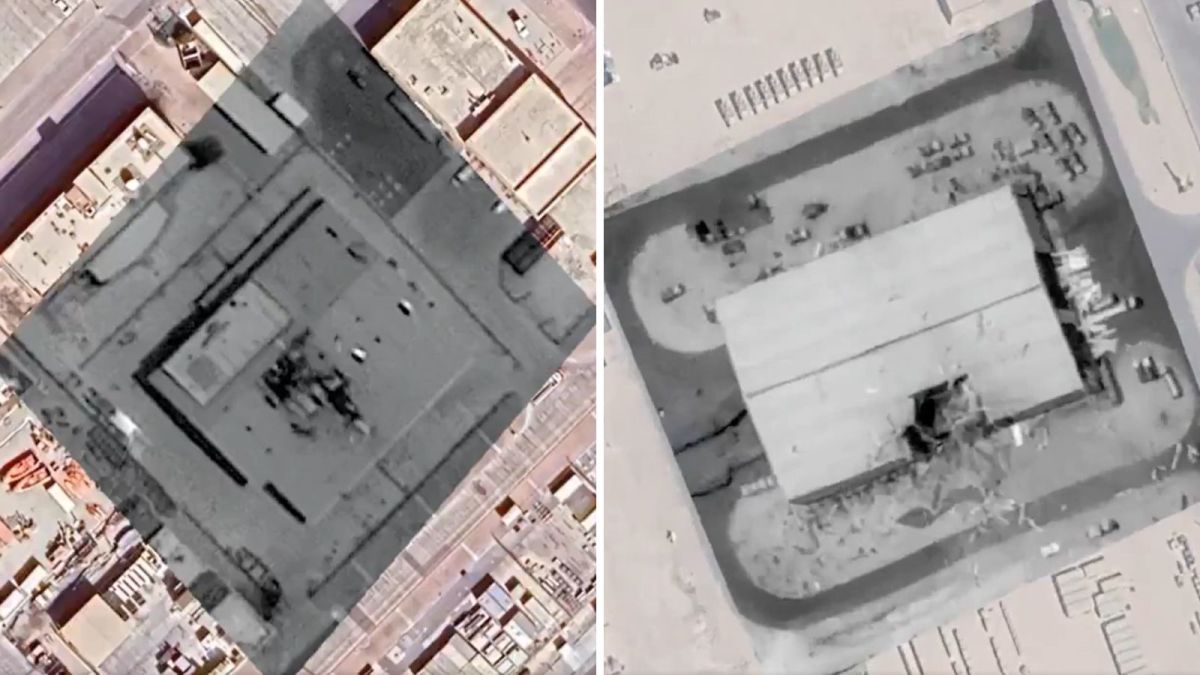
Israeli military operations in the region have focused on degrading Hezbollah’s operational capabilities, particularly in areas identified as immediate threats to border towns. This includes targeting weapons depots, command centers, and launch sites embedded within civilian-populated areas. Israeli defense officials maintain that Hezbollah’s strategy of operating within residential zones complicates military engagement and increases the risk of collateral damage, a challenge widely recognized in urban warfare contexts globally.
At the same time, the Israel Defense Forces (IDF) emphasize that advance warnings, evacuation advisories, and intelligence-driven targeting are used where possible to reduce harm to civilians. They argue that the intent is not territorial expansion or permanent depopulation, but rather the creation of a temporary security environment that prevents further escalation and allows displaced populations in northern Israel to eventually return home safely.
On the Lebanese side of the border, communities have suffered significant disruption. Civilian infrastructure, including homes, roads, and public facilities, has been damaged or abandoned in several border villages. Lebanese officials and international observers have raised concerns about long-term displacement and the humanitarian impact of sustained military activity. However, Israel maintains that these outcomes are an unfortunate consequence of Hezbollah’s embedding within civilian areas rather than the objective of its operations.
The broader geopolitical context is critical to understanding this escalation. Hezbollah, backed by Iran, has maintained a significant military presence along Israel’s northern frontier for decades, frequently engaging in cross-border attacks, surveillance operations, and weapons buildup. Israel views this as part of a coordinated regional strategy that extends beyond Lebanon, linking security threats in Gaza, Syria, and other theaters.
As a result, Israel’s northern defense strategy is increasingly integrated into a multi-front security doctrine. This includes air power, intelligence operations, and rapid-response ground forces designed to neutralize threats before they can materialize into large-scale attacks on Israeli territory. Officials argue that without such measures, northern Israel—home to hundreds of thousands of civilians—would remain under constant threat of rocket fire and infiltration attempts.
International actors, including the United Nations, have repeatedly called for de-escalation and adherence to existing border agreements, particularly UN Security Council Resolution 1701, which mandates that southern Lebanon remain free of unauthorized armed groups. However, enforcement of these provisions has proven difficult, and both sides accuse each other of violations.
Despite the ongoing hostilities, there remains a shared recognition among many analysts that the current trajectory is unsustainable. The destruction of infrastructure, displacement of civilians, and deepening mistrust risk entrenching a cycle of retaliation that is difficult to reverse. Yet from Israel’s standpoint, ensuring immediate security for its northern population remains the overriding priority.
As the situation continues to evolve, the northern front stands as a stark example of modern asymmetric conflict—where military necessity, civilian protection, and political strategy intersect in deeply complex and often contradictory ways. The coming months will likely determine whether this security campaign stabilizes the border or further intensifies an already fragile regional balance.
Apple’s New App Store Subscription Model Lets You Pay Monthly — But Locks You In for a Year | Maya