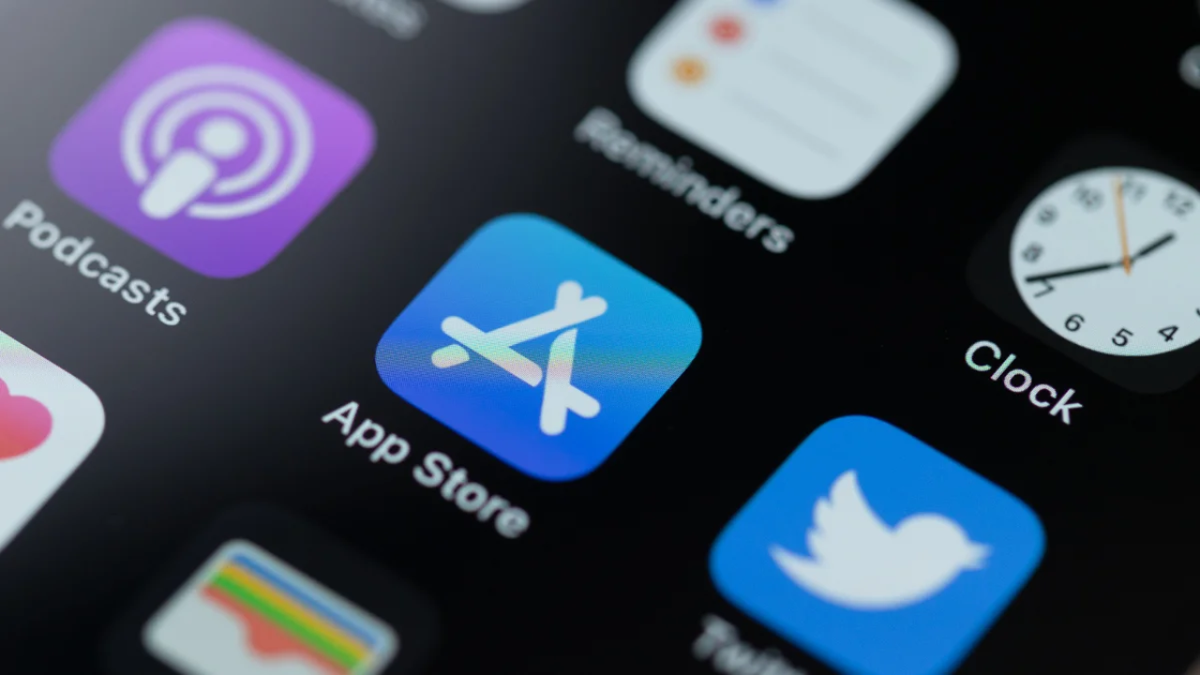
Apple’s New App Store Subscription Model Lets You Pay Monthly — But Locks You In for a Year- Apple has quietly reshaped how developers can charge for their apps on the App Store, introducing a new billing structure that blends the affordability of monthly payments with the commitment of an annual plan. Signs of the change surfaced in the iOS 26.5 beta last month, and Apple has now made it official: developers can begin setting up and testing monthly subscriptions with a 12-month commitment starting today, ahead of the public rollout in May.
The idea is straightforward. Rather than asking users to pay a large sum upfront for a yearly subscription — or offering a cheaper monthly plan with no strings attached — developers can now offer a middle path. Users pay month by month but agree at sign-up to complete a full 12-month cycle. It’s the same financial commitment as an annual plan, spread across smaller, more manageable instalments.
Cancellation is permitted at any time, but it works differently from a standard monthly subscription. Cancelling doesn’t immediately stop charges. Instead, it prevents the plan from automatically renewing once all 12 committed payments have been made. In other words, users can exit the arrangement on their own terms, but they remain responsible for the payments they already agreed to. Apple compares this framing to the way it handles auto-renewable subscriptions more broadly — the cancellation applies to what comes next, not to what’s already been promised.
To keep things transparent, Apple is building visibility directly into users’ Apple Accounts, where they’ll be able to see exactly how many monthly payments have been completed and how many remain. The company will also send email reminders ahead of upcoming billing dates and, for users who opt in, push notifications as well — designed to ensure no one is caught off guard by a charge they’ve forgotten about.
Developers can configure the new subscription type in App Store Connect and test it in Xcode right now. The option will go live to the public alongside the iOS 26.5, iPadOS 26.5, macOS Tahoe 26.5, and visionOS 26.5 updates expected in May, and requires at least version 26.4 of those operating systems to function.
There is one notable carve-out. The feature is launching worldwide — with the exception of the United States and Singapore. Apple has not explained why either market is excluded or when the feature might expand to cover them. The company had not responded to requests for comment at the time of publication.
The structure will feel familiar to anyone who has dealt with Adobe’s subscription model, which similarly locks users into a 12-month contract payable monthly, with early cancellation typically triggering a fee for the remaining balance. Apple’s version doesn’t appear to impose an early exit fee — cancellation simply stops future renewals rather than penalizing users for leaving — but the underlying logic of locking in a longer commitment at a more accessible monthly rate is the same.
For developers, the appeal is clear. Annual plans drive higher retention and more predictable revenue, but the upfront cost can be a barrier for users reluctant to pay a large sum at once. This new structure lets developers offer the discount pricing typically associated with an annual plan while lowering the psychological friction of a big single payment. For users, it’s a way to access annual pricing without emptying their account in one go — though they should understand they are committing to the full year regardless of whether they continue using the app.
The bigger picture here is that Apple is expanding its monetization toolkit for developers at a time when the App Store’s business model faces ongoing regulatory pressure across multiple markets. More flexibility in how subscriptions are structured gives developers more room to experiment with pricing, and potentially more room to convert hesitant users who find a $99-per-year upfront ask harder to swallow than twelve payments of $9.
Taylor Swift Is Not an AI Property, and She Has the Trademark to Prove It | Maya