Taiwan Is No Longer Just a Flashpoint — It Is Becoming a Test of the Future World Order- For years, the Taiwan issue was viewed as a regional dispute — sensitive, dangerous, but manageable. Today, that calculation is rapidly changing. Taiwan is no longer simply a question of territory between China and a self-governing island. It has become a global test of power, sovereignty, technology, and the limits of American influence in the 21st century.
At the centre of this growing tension lies a complicated triangle: Taiwan wants security and international space, China insists reunification is non-negotiable, and the United States continues to support Taiwan militarily without formally recognizing it as an independent country.
This balancing act is becoming harder to sustain.
Taiwan’s Position: Democracy Without Recognition
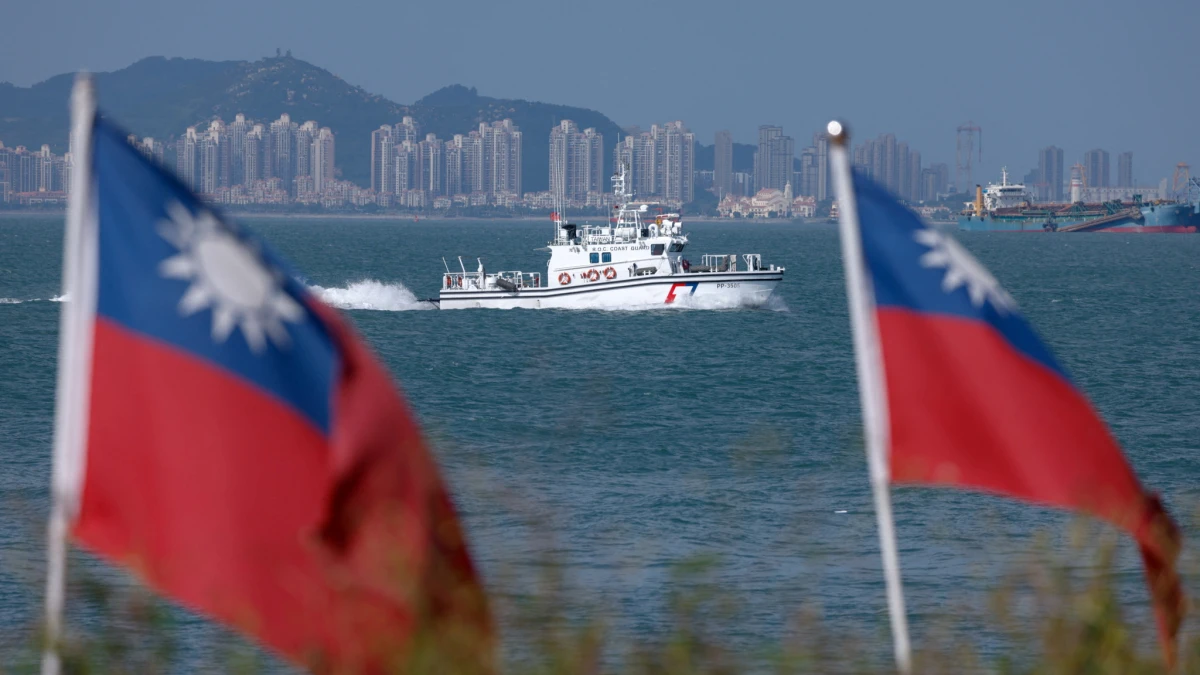
Taiwan functions like an independent nation in almost every practical sense. It has:
- its own government,
- military,
- currency,
- elections,
- passport system,
- and foreign trade networks.
The island has developed into one of Asia’s most advanced democracies and a global technology powerhouse, especially in semiconductor manufacturing. Yet diplomatically, Taiwan occupies a strange space. Most countries, including the United States, officially recognize the “One China” policy, meaning they acknowledge Beijing’s position that Taiwan is part of China.
But reality tells a more complex story.
Taiwan’s population increasingly identifies as Taiwanese rather than Chinese, particularly among younger generations. Many do not necessarily seek formal independence immediately, but they also reject the idea of being governed by Beijing’s Communist Party. What Taiwan wants most today is not symbolic declarations — it wants the ability to preserve its current system, democracy, and autonomy without coercion.
That is where the United States enters the equation.
Why the United States Arms Taiwan
The U.S. does not officially recognize Taiwan as a sovereign state, yet it remains Taiwan’s most important security partner. Through arms sales, military training, and strategic support, Washington helps Taiwan maintain a credible defence capability.
At first glance, this appears contradictory:
- America says it supports “One China,”
- but simultaneously supplies weapons to Taiwan.
However, Washington’s logic is based less on ideology and more on deterrence.
The United States fears that if Taiwan becomes vulnerable, China could eventually attempt forced reunification through military pressure or invasion. American weapons are therefore meant to raise the cost of aggression, making conflict less likely rather than more likely.
This is why Taiwan receives:
- missile defence systems,
- fighter aircraft,
- naval support,
- surveillance technology,
- and asymmetric warfare capabilities.
The strategy is clear: Taiwan may never match China militarily, but it can become difficult enough to conquer that Beijing hesitates to act.
China’s View: Taiwan Is Not Negotiable
For China, Taiwan is not merely a foreign policy issue — it is tied directly to national identity and political legitimacy.
Beijing views Taiwan as unfinished business from the Chinese Civil War. The Communist Party considers reunification essential to what it calls “national rejuvenation.” From China’s perspective, allowing Taiwan to permanently separate would:
- weaken territorial claims,
- encourage separatist movements elsewhere,
- and challenge Communist Party authority.
This explains why Chinese leaders repeatedly insist there can be:
- no independence for Taiwan,
- no foreign interference,
- and no permanent separation.
To Beijing, U.S. arms sales and political support cross a red line. China argues that Washington is slowly hollowing out the “One China” framework while avoiding direct recognition of Taiwan.
Military drills around Taiwan, naval patrols, airspace incursions, and aggressive rhetoric are all signals from Beijing that patience has limits.
The Real Fear: Miscalculation
The greatest danger today may not be deliberate war but strategic misunderstanding.
Taiwan believes stronger American support improves its security.
China believes stronger American support encourages Taiwanese resistance to reunification.
The United States believes military support prevents Chinese aggression.
Each side sees deterrence; the other sees provocation.
This creates a dangerous cycle where every military exercise, weapons package, diplomatic visit, or political statement increases mistrust.
Unlike the Cold War, modern tensions are also deeply connected to economics and technology. Taiwan produces the world’s most advanced semiconductors — the tiny chips powering smartphones, AI systems, defence technology, and global industries. Any conflict involving Taiwan would immediately disrupt the global economy on an enormous scale.
In many ways, Taiwan has become the geopolitical centre of the digital age.
A New Reality Emerging
What makes the Taiwan issue different today is that all three players are changing simultaneously.
China is stronger
China is no longer the developing economy it was twenty years ago. Its military modernization has accelerated rapidly, giving Beijing more confidence in asserting regional influence.
Taiwan is more identity-conscious
A growing number of Taiwanese citizens see themselves culturally and politically distinct from mainland China.
The United States is more openly strategic
Washington increasingly frames Taiwan not only as a democratic partner but as part of a larger Indo-Pacific strategy to counterbalance China’s rise.
As these shifts intensify, the old system of strategic ambiguity — where no side clearly defines its limits — is becoming harder to maintain.
Can Rubio’s Visit Reset Washington–Delhi Relations? | Maya
The Future May Depend on Restraint, Not Victory
Much of the global conversation focuses on who would “win” in a Taiwan conflict. But the deeper reality is that nobody truly wins.
A war over Taiwan would likely:
- destabilize Asia,
- damage the global economy,
- disrupt semiconductor supply chains,
- and pull major powers into direct confrontation.
This is why the Taiwan issue is increasingly less about invasion and more about endurance.
China wants long-term pressure without triggering catastrophic conflict.
Taiwan wants survival without formal war.
The United States wants deterrence without direct military confrontation.
The challenge is that all three goals can collide at any moment.
Taiwan Is Becoming a Mirror of the Century Ahead
The Taiwan question now reflects something bigger than sovereignty alone. It represents competing visions of the future international order:
- Can smaller democracies maintain autonomy beside powerful neighbours?
- Can economic interdependence prevent war?
- Can the United States continue acting as a security guarantor in Asia?
- And can China rise peacefully while accepting political systems different from its own?
The answers remain uncertain.
But one thing is increasingly clear: Taiwan is no longer a peripheral diplomatic issue. It has become one of the defining geopolitical fault lines of the modern world — where technology, nationalism, military power, and democracy intersect all at once.