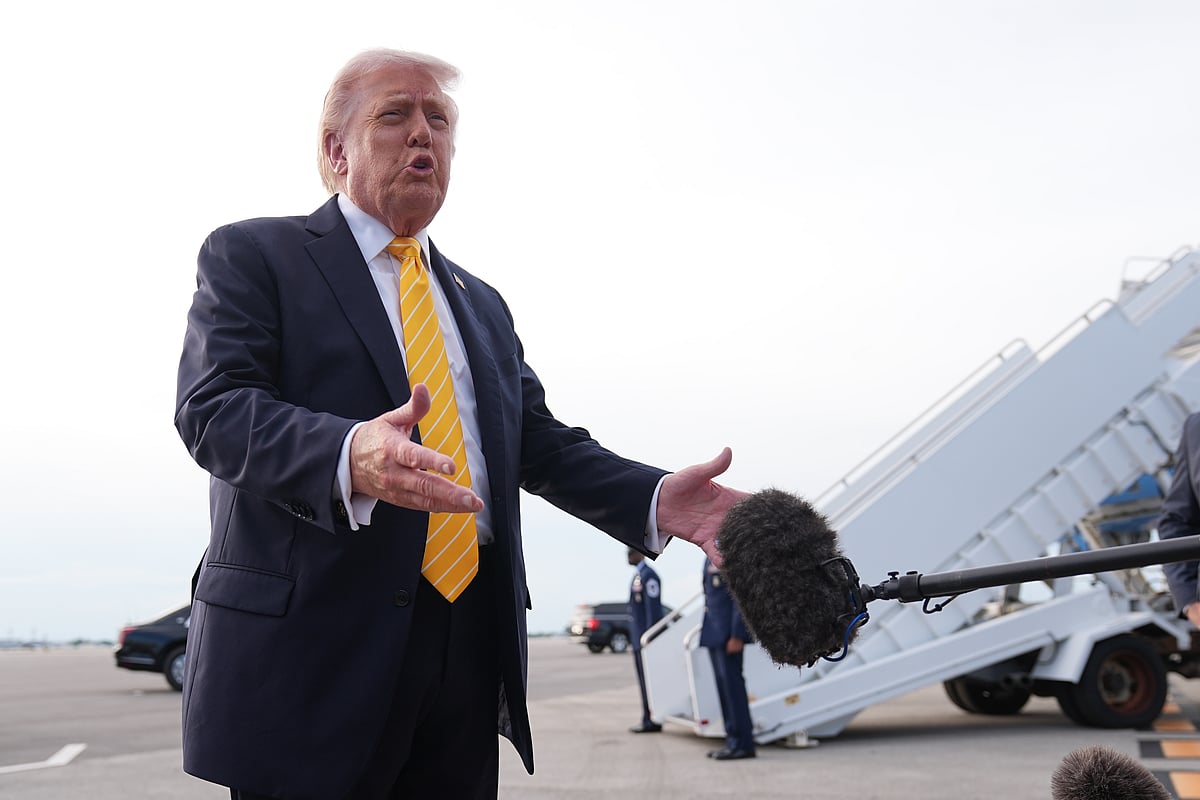
Netanyahu Agrees to Halt Beirut Troop Move, Trump Says: A potential escalation in the Middle East appeared to ease on Monday after U.S. President Donald Trump announced that Israeli Prime Minister Benjamin Netanyahu had agreed to halt a planned troop movement toward southern Beirut, while Hezbollah signaled a willingness to suspend attacks.
The development comes amid growing concerns that the conflict involving Israel, Iran, and Iran-backed groups could widen into a broader regional confrontation. Trump’s statement suggested that diplomatic efforts had succeeded, at least temporarily, in preventing a new flashpoint in Lebanon.
Taking to his Truth Social platform, Trump said he had held a “very productive” conversation with Netanyahu and received assurances regarding Israeli military movements.
“There will be no troops going to Beirut, and any troops that are on their way have already been turned back,” Trump said, describing the outcome as a significant step toward de-escalation.
The announcement followed reports of heightened tensions between Israel and Hezbollah, the powerful Lebanese militant and political group backed by Iran. Southern Beirut, considered a stronghold of Hezbollah, has remained a highly sensitive area throughout the conflict, with any Israeli military incursion carrying the risk of triggering a wider war.
According to Trump, Hezbollah also agreed to halt attacks, creating the basis for a mutual reduction in hostilities. While neither Israel nor Hezbollah immediately issued detailed public statements confirming the arrangement, the reported understanding was welcomed by observers concerned about the possibility of a new front opening in Lebanon.
The reported agreement represents one of the most significant diplomatic interventions aimed at preventing a direct Israel-Hezbollah confrontation since the current regional conflict intensified.
However, the easing of tensions in Lebanon was accompanied by a setback on another diplomatic front. Iran’s Tasnim News Agency reported that Tehran had suspended indirect exchanges of messages with the United States through mediators.
The move signals growing frustration in Tehran over recent developments in Lebanon and reflects the increasingly complex dynamics surrounding efforts to end the three-month-old conflict involving Iran and its regional allies.
Iranian officials reportedly linked their decision to ongoing military actions in Lebanon, arguing that such operations undermine diplomatic efforts and regional stability.
The suspension of communications could complicate attempts by international mediators to broker a broader settlement. Indirect contacts between Washington and Tehran have played an important role in managing tensions during previous crises, even when formal diplomatic relations remained strained.
Analysts say Iran’s decision underscores the challenge facing negotiators seeking to contain multiple interconnected conflicts across the Middle East. While progress may have been achieved in reducing immediate tensions between Israel and Hezbollah, broader disagreements involving Iran remain unresolved.
The latest developments come at a particularly delicate moment for regional diplomacy. International actors have been working to prevent the conflict from spreading beyond its current boundaries, fearing that a wider war could destabilize neighboring countries and disrupt global energy markets.
The possibility of military escalation in Lebanon has been viewed as one of the most dangerous scenarios confronting policymakers, given Hezbollah’s extensive military capabilities and its close ties to Iran.
For Israel, avoiding a prolonged confrontation in Lebanon could help limit military and political risks at a time when multiple security challenges continue to demand attention. For Hezbollah, a pause in hostilities may offer an opportunity to avoid further escalation while maintaining its strategic position within Lebanon.
Despite the apparent breakthrough, questions remain about how durable the arrangement will prove to be. Previous ceasefire understandings and de-escalation efforts in the region have often unraveled amid renewed attacks, retaliatory strikes, or political disagreements.
Observers note that successful implementation will depend on both sides honoring their commitments and refraining from actions that could reignite tensions.
While Trump’s announcement points to a rare moment of diplomatic progress, the broader regional picture remains uncertain, particularly as Iran steps back from indirect engagement with the United States.
For now, the reported decision to halt Israeli troop movements toward Beirut has eased fears of an immediate escalation in Lebanon. Yet with underlying disputes unresolved and diplomatic channels under strain, the Middle East remains on edge as regional and international actors continue efforts to prevent the conflict from expanding further.
Nvidia Unveils New AI Chips to Power Next Generation of Personal Computers | Maya