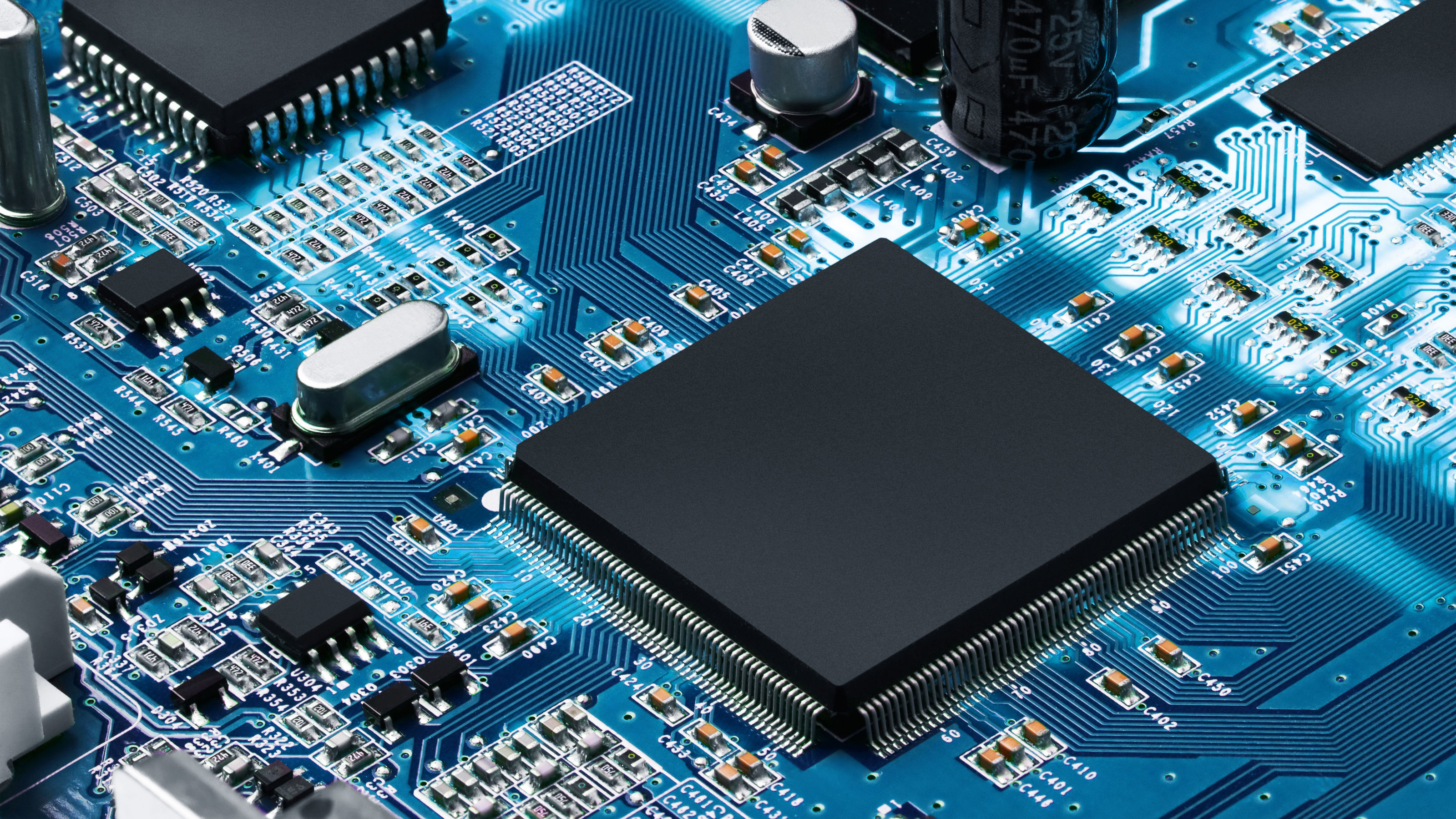
Facts That Show Why Semiconductor Control Decides Global Power- If you wanted to identify the single resource that quietly underpins almost every form of modern power, military, economic, and technological, you’d land on the semiconductor. These tiny silicon chips power everything from AI data centers to fighter jets, and the global supply chain that produces them is so concentrated that a handful of factories effectively determine which nations can compete in the 21st century. Here’s why semiconductor control has become one of the clearest dividing lines of global power in 2026.
1. The global chip market is approaching $1 trillion
The semiconductor industry generated roughly $791.7 billion in 2026 and is on track to approach $975 billion, putting it on the threshold of becoming a trillion-dollar annual market. For context, that’s larger than the entire GDP of most countries on earth, concentrated in an industry controlled by a remarkably small number of players.
2. One company effectively controls the world’s most advanced chip production
Taiwan’s TSMC remains the world’s dominant chipmaker, especially at the cutting edge. Its newest 2-nanometer production line began mass production in late 2025 and reportedly has its capacity fully booked through 2026, meaning a single company in a single country is the gatekeeper for the chips that power the most advanced AI systems on the planet.
3. One Dutch company has a total monopoly on the equipment needed to make advanced chips
Without ASML’s extreme ultraviolet lithography machines, no country can manufacture chips below a certain size, full stop. ASML stands as the sole global supplier of this equipment, which means any nation hoping to build a competitive advanced chip industry has to go through one company in the Netherlands, regardless of how much money or talent they have.
4. America’s share of physical chip manufacturing has collapsed, even as it dominates design
The US share of global chip manufacturing has fallen from around 37% in the early 1990s to roughly 12% today, even though American firms still dominate chip design and sales. This split, designing the world’s most important chips but not making most of them, is one of the central vulnerabilities driving US semiconductor policy.
5. China is racing toward chip self-sufficiency on an aggressive timeline
China’s current Five-Year Plan calls for decisive breakthroughs across the entire semiconductor supply chain, targeting 80% self-sufficiency in common chip types using domestically built equipment. Industry analysts project China’s share of global production capacity could grow from around 25% to 42% within just a few years.
6. China is already building advanced AI chips without the equipment everyone thought it needed
Despite being cut off from EUV lithography, Chinese firms have used older deep ultraviolet equipment with multiple patterning techniques to produce chips at the 7-nanometer class, a level previously thought to require equipment China doesn’t have access to. Some estimates suggest China’s self-sufficiency in AI graphics processors could reach over 75% by the end of the decade.
7. Asia produces over half of the world’s semiconductors
The Asia-Pacific region holds roughly 53% of the global semiconductor market, driven by a manufacturing ecosystem, skilled workforce, and government backing that other regions have struggled to replicate. This concentration means that any disruption in the region, economic, political, or military, has consequences for the entire global economy.
8. Europe writes the rules but makes a shrinking share of the chips
Europe’s actual share of global chip production has remained stuck around 10% for years, even though European companies and research institutions remain central to the equipment, automotive-grade chips, and research that the rest of the industry depends on. This gives Europe outsized regulatory influence even as its manufacturing footprint shrinks.
9. AI chip demand is reshaping where new factories get built
The explosive growth in demand for AI accelerators, the chips that power large language models and data centers, has triggered a wave of new fabrication investment, with talk of a “Silicon Heartland” emerging in parts of the US Midwest. Where these new fabs get built will help determine which countries have reliable access to the chips that power next-generation AI systems.
10. Memory chips have become their own strategic battleground
Beyond logic chips, the race for high-bandwidth memory, the specialized memory used in AI systems, has become its own point of competition, with a small number of companies in South Korea and elsewhere dominating this space as a new generation of memory technology arrives in 2026. Control over memory production has become just as strategically important as control over the processors themselves.
The bigger picture: What these ten facts reveal is that semiconductor control isn’t just an economic advantage, it’s the foundation everything else is built on. A country can have a powerful military, a large economy, and ambitious AI programs, but if it can’t access the chips needed to run them, none of that capability fully materializes. This is why a small island, a handful of companies, and one Dutch equipment maker now sit at the center of decisions that used to be made in capitals and war rooms. In 2026, the question of who controls semiconductor production has effectively become a proxy for the question of who holds real power in the world.
How Can You Turn Jackfruit Seeds into Delicious Meals? | Maya