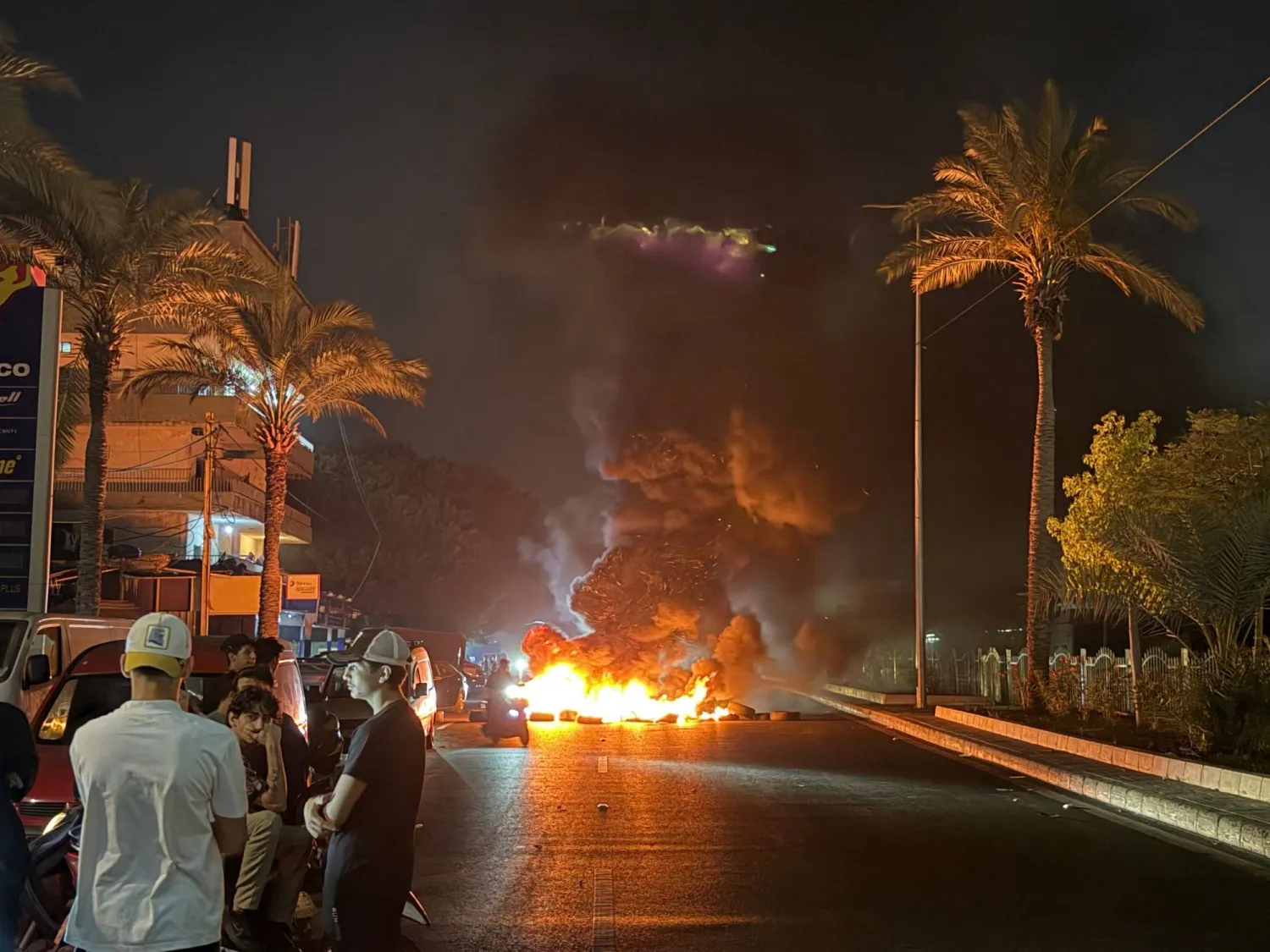
One Killed in Israeli Airstrikes as Hezbollah Rejects Landmark Peace Accord- A landmark agreement intended to open the door to lasting peace between Israel and Lebanon has come under immediate strain after Israeli airstrikes in southern Lebanon killed one person, according to the Lebanese health ministry. The strikes took place less than 24 hours after the two governments signed a U.S.-brokered accord designed to reduce years of cross-border hostilities and create a framework for long-term stability.
The renewed violence has cast doubt over the durability of the agreement, highlighting the complex political and military realities that continue to shape the relationship between the two neighboring countries.
Israeli officials said the strikes targeted locations linked to militant activity in southern Lebanon. While the Israeli military has not released full operational details, it maintained that its actions were aimed at addressing security threats rather than undermining the newly signed accord.
Lebanese authorities, however, condemned the strikes, saying they represented a dangerous escalation at a moment when diplomatic efforts were beginning to gain momentum. The country’s health ministry confirmed that one person was killed in the attacks, though additional details about the victim have not yet been released.
The peace agreement, negotiated with strong backing from the United States, seeks to establish a pathway toward reducing military tensions along the Israel-Lebanon border. The deal includes commitments to improve border security, strengthen communication channels, and prevent future confrontations that could spiral into a wider regional conflict.
Despite the optimism surrounding the signing ceremony, the agreement has already encountered significant resistance from Hezbollah, the powerful Iran-backed armed group and political movement that was not involved in the negotiations.
In his first public comments following the accord, Hezbollah Secretary-General Naim Qassem strongly rejected the agreement, accusing the Lebanese government of making concessions that weaken the country’s sovereignty. He argued that decisions affecting Lebanon’s national security should not be made without the participation of resistance groups that have long played a role in confronting Israel.
Qassem insisted that Hezbollah does not consider itself bound by an agreement in which it had no role and suggested that the movement would continue to determine its own security policies independently. His remarks immediately raised concerns about whether the accord can succeed without the cooperation of one of Lebanon’s most influential armed organizations.
The Lebanese government has defended the agreement as a diplomatic opportunity to spare the country from another devastating conflict. Officials argue that years of economic hardship, political instability, and repeated military confrontations have made peaceful engagement increasingly important for Lebanon’s future.
Israel has also expressed cautious support for the agreement while emphasizing that it reserves the right to respond to any perceived security threats originating from Lebanese territory. Israeli leaders have repeatedly stated that they will not tolerate attacks by armed groups operating near the border.
International observers say the situation reflects the broader challenge of achieving lasting peace in a region where governments, non-state armed groups, and foreign powers all hold competing interests. Even with official agreements in place, isolated military incidents or political disagreements can quickly undermine diplomatic progress.
The United States, which played a central role in brokering the accord, has urged all parties to exercise restraint and avoid actions that could derail the fragile peace process. American officials have described the agreement as an important first step rather than a final solution, acknowledging that additional negotiations and confidence-building measures will be necessary.
Regional governments have also called for calm, warning that renewed violence along the Israel-Lebanon border could have consequences beyond the two countries. Any sustained escalation could increase instability across the Middle East at a time when several conflicts remain unresolved.
Security analysts believe the coming days will be critical in determining whether the agreement can survive its first major challenge. Continued military exchanges or further political opposition could weaken confidence in the accord before implementation even begins. On the other hand, successful diplomatic engagement between the two governments may still provide an opportunity to prevent a return to full-scale hostilities.
For now, hopes for lasting peace remain alive but increasingly fragile. The combination of renewed Israeli airstrikes, Hezbollah’s rejection of the agreement, and lingering mistrust between the two sides demonstrates that while diplomacy has opened a new chapter, the path toward lasting stability remains uncertain. Whether the accord evolves into a meaningful peace framework or becomes another failed attempt at reconciliation will depend largely on the willingness of all influential actors to avoid further escalation.