Acer’s New Handheld Has How Much RAM?!
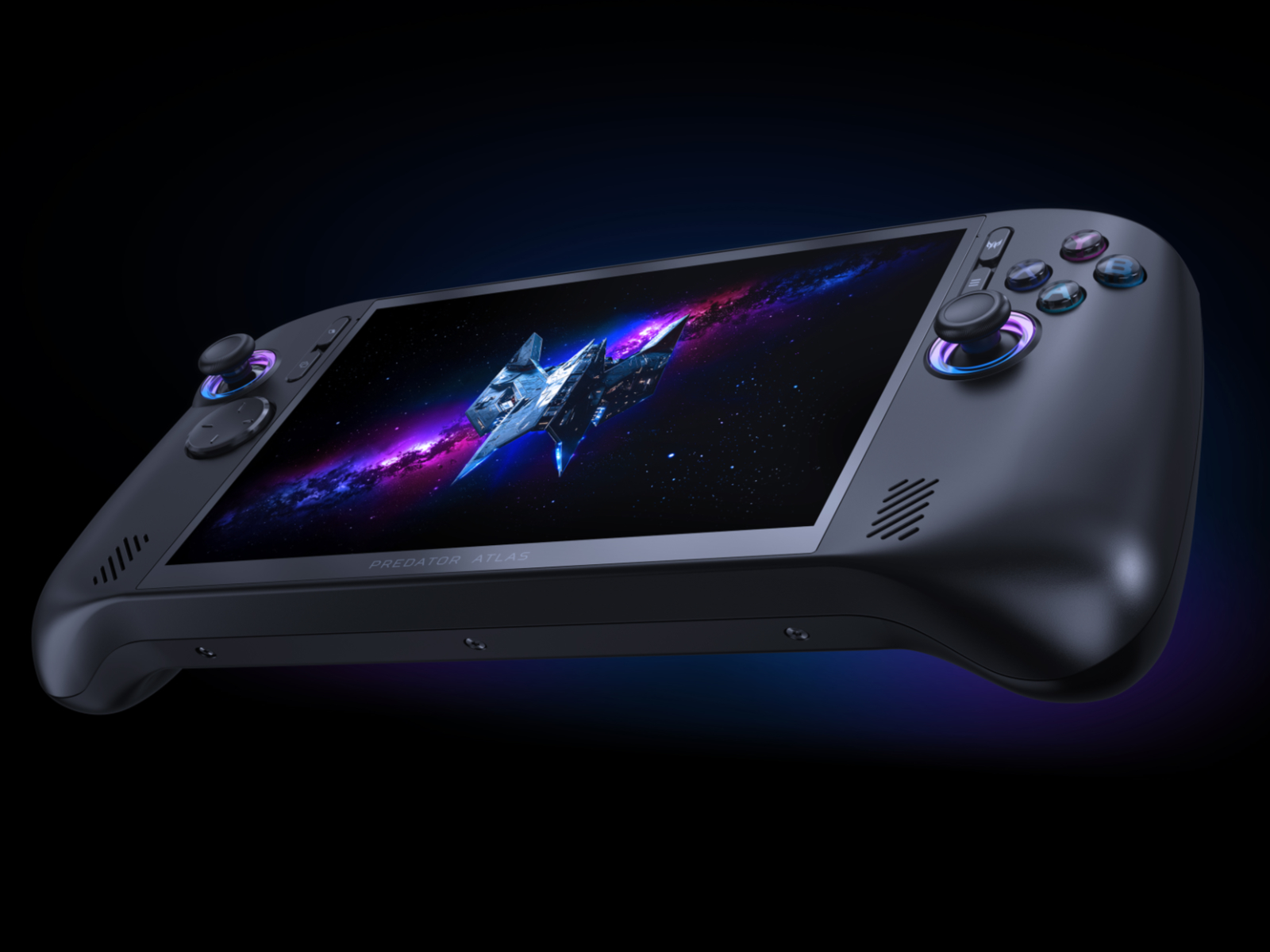
Just when you thought the handheld gaming market was locked into an arms race of massive processors, giant battery packs, and beefy cooling fans, Acer decided to throw a massive curveball. Announced just ahead of the Computex tradeshow, the upcoming Acer Nitro Blaze Link is officially slated for a Q4 2026 launch.
But it’s the spec sheet that has everyone rubbing their eyes in disbelief.
The Nitro Blaze Link features a beautiful 7-inch display pushing a sharp 1920 x 1200 resolution. It boasts modern Wi-Fi 6 connectivity. And its memory capacity? Just 1GB of LPDDR4 RAM paired with a tiny 8GB of eMMC storage.
Let’s put that into perspective: 1GB of RAM isn’t even enough memory to locally boot up Stardew Valley, let alone a modern AAA title. If you tried to run a standard desktop operating system on this hardware, it would choke before it finished loading the taskbar.
But Acer isn’t crazy. They are trying to rewrite the rules of the handheld market by building what they call a “streaming-first handheld and companion device.”
Zero Local Hardware, Maximum Local Streaming
The Nitro Blaze Link is essentially the PC ecosystem’s answer to the PlayStation Portal. It isn’t designed to process games; it is designed to decode them.
By stripping out the expensive AMD or Intel APUs that power beasts like the Steam Deck or ROG Ally, Acer has eliminated the need for heavy copper heat pipes, noisy exhaust fans, and massive, heavy batteries. Instead, the Blaze Link runs on a highly customized, ultra-light Debian Linux architecture. Because the OS has almost zero overhead, that single gigabyte of RAM is entirely dedicated to pulling an incoming video feed from your home network and sending controller inputs back in real time.
If you already own a powerful Nitro or Predator gaming laptop, the Blaze Link is built to act as its ultimate tether. Your laptop does all the heavy lifting, rendering path-traced graphics and pushing frames in your living room, while you sit comfortably in bed holding a device that stays completely cool to the touch.
The Ghost of the Logitech G Cloud
We have seen companies try to walk this path before, and it is a notoriously difficult tightrope to balance. A few years ago, Logitech launched the G Cloud. On paper, it was a much more capable standalone machine: it ran Android, featured 4GB of RAM, and packed 64GB of storage for $350.
Yet, the G Cloud was a remarkably tough sell. At that price point, consumers couldn’t justify buying a device that became a paperweight the moment you lost a solid internet connection—especially when spending just fifty dollars more got you a base-model Steam Deck capable of playing thousands of games completely offline.
Acer is clearly attempting to learn from Logitech’s friction points. By dropping the RAM to 1GB and the storage to 8GB, Acer has pushed the hardware bill of materials down as low as humanly possible.
Why Wi-Fi 6 Changes the Game
The secret weapon for the Blaze Link is the inclusion of a Wi-Fi 6 chip. For a streaming-only device, network capability is infinitely more important than local processing power.
When streaming via ultra-low-latency protocols like Sunshine and Moonlight, Wi-Fi 6 allows for significantly higher bitrates, vastly improved stability, and sub-frame decoding latency. If your host PC is hardwired to your router, a Wi-Fi 6 handheld can deliver an experience so seamless that you genuinely forget the game isn’t running natively on the device in your hands.
The Ultimate Bottom Line
Whether the Nitro Blaze Link succeeds or fails won’t come down to its performance—it will come down entirely to its price tag.
If Acer prices this aggressively as a budget-friendly accessory—well underneath the PlayStation Portal‘s $200 mark—it could become an incredibly popular holiday impulse buy for PC gamers who want to take their library to the couch without holding a heavy, hot, battery-guzzling Windows handheld. But if Acer tries to position this as a premium luxury item near the $300 mark, it may face the exact same uphill battle that stalled the cloud handhelds that came before it. Alienware’s New 5K OLED Ultrawide Headlines Computex Monitor Lineup | Maya