
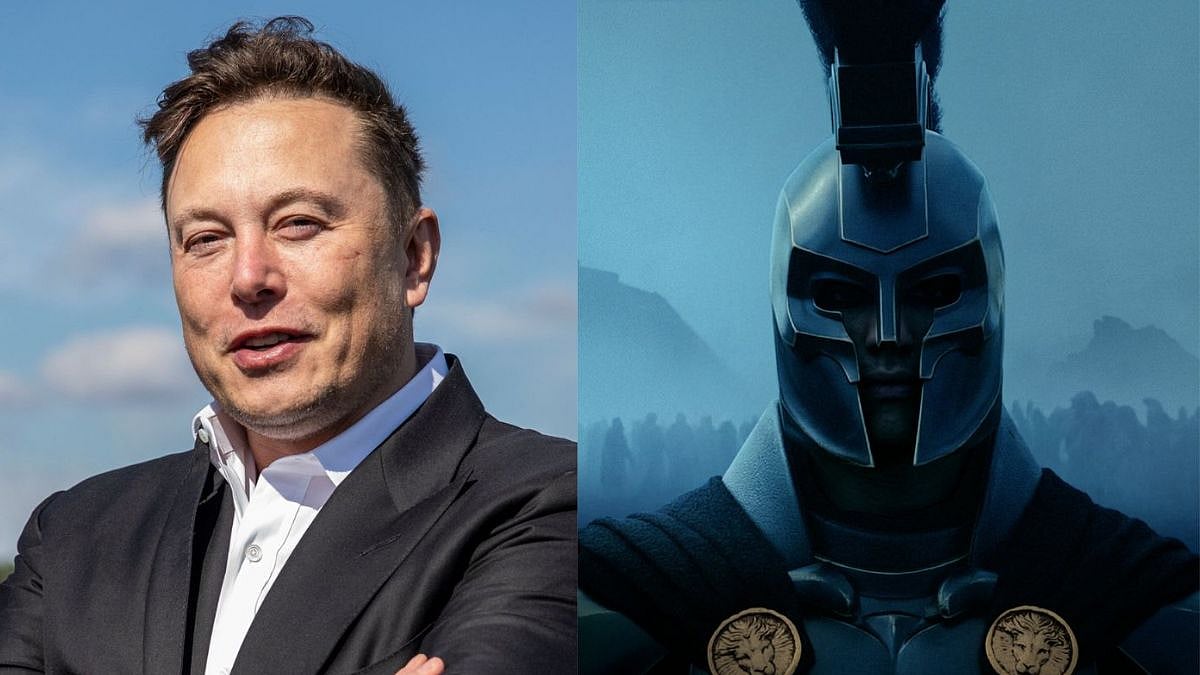
After Criticizing Nolan, Elon Musk Announces His Own AI Odyssey- Elon Musk has once again sparked debate at the intersection of technology, entertainment, and artificial intelligence—this time by announcing that his AI platform, Grok Imagine, will produce a full-length adaptation of Homer’s The Odyssey. The billionaire entrepreneur claims the project will be “historically accurate” and remain “true to the art of Homer,” positioning it as a different vision from the recently released cinematic adaptation directed by Christopher Nolan.
The announcement arrives just days after Nolan’s The Odyssey dominated headlines with a strong box office debut and widespread praise from critics and audiences. Musk’s comments have reignited discussions about AI-generated filmmaking, artistic interpretation, and whether artificial intelligence can truly compete with traditional cinema.
Musk’s Vision for an AI-Powered Epic
Sharing the news on X, Musk stated that Grok Imagine would create a complete feature-length version of The Odyssey before the end of the year. Alongside the announcement, he highlighted a short AI-generated sequence depicting Odysseus and the nymph Calypso, giving viewers a glimpse of what the technology could potentially deliver.
According to Musk, the goal is not merely to retell Homer’s legendary tale but to produce a version that stays faithful to the original epic while presenting visuals generated entirely through artificial intelligence.
Although the announcement has generated excitement among AI enthusiasts, it also raises questions about whether current AI video-generation tools are capable of sustaining a coherent narrative across an entire feature-length film.
A New Chapter in Musk’s Criticism of Nolan
Musk’s announcement follows weeks of public criticism directed at Christopher Nolan’s adaptation of The Odyssey. Before the film’s release, Musk questioned several casting decisions, particularly those involving Lupita Nyong’o and Elliot Page, suggesting the casting choices prioritized awards recognition over historical authenticity.
His remarks quickly became part of a broader online debate surrounding historical representation in adaptations of ancient literature. While supporters defended Musk’s call for historical accuracy, others argued that creative reinterpretation has always been a fundamental part of adapting classic works for modern audiences.
The conversation has extended far beyond casting, touching on larger issues involving artistic freedom, inclusion, and the evolving expectations of contemporary filmmaking.
Nolan’s Film Thrives Despite Online Debate
Despite the controversy, Nolan’s The Odyssey has enjoyed an exceptionally successful launch.
The film reportedly earned approximately $264 million worldwide during its opening weekend, making it one of the strongest box office openings of the year. Audience reception has been equally impressive, with the film earning a 97% audience score on Rotten Tomatoes, reflecting widespread approval among moviegoers.
Rather than allowing online criticism to dominate the conversation, audiences have largely focused on the film’s ambitious storytelling, visual scale, and performances.
Christopher Nolan’s Response
Christopher Nolan has largely dismissed the pre-release controversy surrounding his film.
The acclaimed filmmaker noted that discussions taking place before audiences have actually seen a movie often fail to reflect the finished work. He emphasized that early online criticism is common with major productions and suggested that viewers should judge the film based on the final experience rather than social media debates.
Nolan also shared his views on artificial intelligence in filmmaking, expressing skepticism that AI could replace human creativity. According to the director, technology can assist filmmakers, but storytelling remains fundamentally rooted in human imagination, collaboration, and artistic decision-making.
His comments have resonated with many professionals across Hollywood, where AI continues to be viewed as both an opportunity and a source of concern.
Can AI Really Make a Feature Film?
The idea of a fully AI-generated feature film is ambitious.
Over the past year, AI video-generation models have made remarkable progress, producing increasingly realistic short clips with cinematic visuals and consistent animation. However, creating a two-hour narrative presents an entirely different challenge.
Feature-length filmmaking requires maintaining consistent characters, emotional performances, dialogue, visual continuity, pacing, and storytelling over thousands of individual shots. These are areas where current AI systems still face significant limitations.
If Grok Imagine succeeds in producing a coherent full-length adaptation, it could represent a major milestone in AI-powered entertainment. If not, the project may instead highlight how much work remains before AI can rival traditional filmmaking.
What Does “Historically Accurate” Really Mean?
One aspect of Musk’s announcement that has attracted particular attention is his promise of a “historically accurate” adaptation.
The phrase itself is open to interpretation.
Homer’s The Odyssey is an ancient Greek epic poem, blending mythology, heroic legend, supernatural beings, and cultural traditions. While scholars have reconstructed aspects of Bronze Age Greece through archaeology and historical research, the story itself was never intended as a literal historical record.
As a result, viewers are likely to debate whether historical accuracy should refer to clothing, architecture, weapons, and social customs—or simply to following Homer’s original narrative as closely as possible.
The Growing Battle Between AI and Hollywood
Musk’s latest announcement reflects a broader shift taking place across the entertainment industry.
Artificial intelligence is increasingly being used for visual effects, concept art, script analysis, editing, dubbing, and animation. While many filmmakers see AI as a valuable production tool, others worry that it could eventually replace creative jobs traditionally performed by artists, writers, editors, and actors.
Hollywood’s recent labor negotiations have already highlighted concerns over AI’s future role in film production, making announcements like Musk’s particularly significant.
Whether Grok Imagine ultimately delivers on its promise or not, the project is likely to become another major talking point in the ongoing conversation about technology versus human creativity.
In Summary
Elon Musk’s plan to create an AI-generated version of The Odyssey has added another unexpected twist to one of this year’s biggest entertainment stories. By presenting Grok Imagine as a tool capable of producing a “historically accurate” adaptation while publicly criticizing Christopher Nolan’s interpretation, Musk has positioned AI filmmaking directly alongside one of Hollywood’s most celebrated directors.
For now, Nolan’s adaptation is enjoying both commercial success and strong audience support. Meanwhile, all eyes will be on Grok Imagine to see whether it can transform an ambitious promise into a feature-length reality. If successful, it could mark a significant moment in the evolution of AI-generated entertainment. If not, it will serve as another reminder that, despite rapid technological advances, recreating the depth and artistry of human filmmaking remains an extraordinary challenge.


