
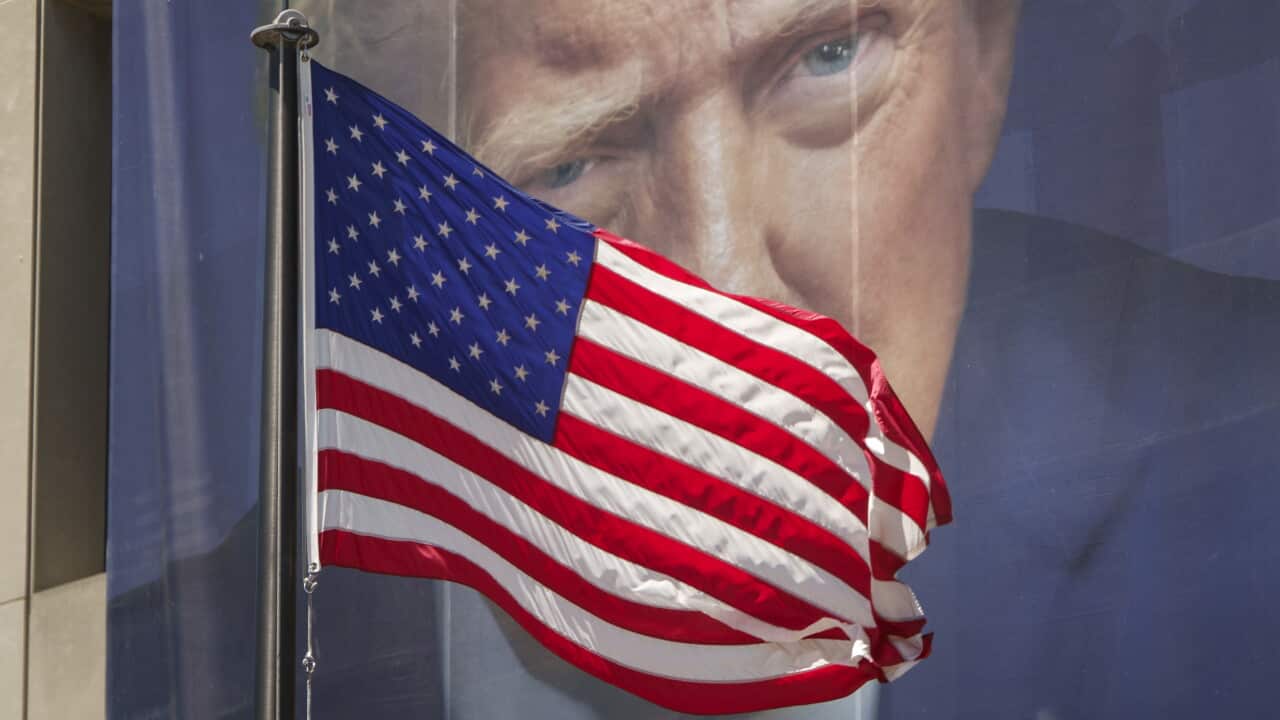
Echoes of Conflict, Lights of Celebration: The U.S. at 250 in a Fractured World- The world in 2026 feels less like a single map and more like a set of overlapping fault lines. Wars grind on in Eastern Europe, tensions simmer across the Middle East, global alliances are being redefined in real time, and economic uncertainty ripples across continents. Yet amid this fractured global landscape, one nation marked a milestone that forced attention back to its origins: the United States of America, celebrating 250 years of independence.
It was a celebration defined not just by fireworks and speeches, but by contrast—between global instability and domestic spectacle, between historic reflection and present-day political division, and between national pride and global anxiety.
A Nation Turns 250 Amid Global Turbulence
The 250th anniversary of the Declaration of Independence arrived at a moment when international headlines were dominated by war and geopolitical tension. The Russia–Ukraine conflict remained unresolved, reshaping European security and energy politics. In the Middle East, ongoing instability and periodic escalations continued to draw global concern. Across multiple regions, shifting alliances and economic fragmentation suggested a world order still in transition.
Against this backdrop, the United States projected an image of continuity and endurance.
In Washington, D.C., the National Mall became the symbolic center of the nation’s milestone celebration. Visitors gathered under heavy security and intense summer heat, many describing the experience as a once-in-a-lifetime moment—“You only get one 250th,” as one attendee put it.
But even the atmosphere of celebration could not escape the broader mood of the era: a world defined by uncertainty, and a superpower defining itself in contrast to that uncertainty.
Washington Becomes a Stage of Symbolism
The centerpiece of the anniversary unfolded on the National Mall, where thousands gathered despite weather warnings and extreme heat reaching nearly 38°C (100°F). The day began with long queues stretching across the capital, with visitors waiting for hours under a relentless sun.
Yet what followed was not just a ceremony—it was a carefully staged display of national identity.
Military flyovers cut across the sky in formation. Patriotic music echoed between monuments. Families waved flags while security forces distributed water to prevent heat exhaustion. The environment itself became part of the narrative: endurance under pressure, celebration under strain.
As night fell, the capital transformed.
The Washington skyline erupted into what organizers called the largest fireworks display in U.S. history, lighting up landmarks from the Lincoln Memorial to the Washington Monument. For a brief moment, the fractured global backdrop felt distant, replaced by bursts of color and synchronized sound.
But even in that moment, the symbolism was layered: a nation celebrating stability in an unstable world.
Presidential Messaging and Political Undercurrents
President Donald Trump’s address at the Freedom 250 event became one of the defining moments of the day.
Speaking before a large crowd, he framed the anniversary not only as a historical commemoration but as a directional statement about America’s future. His message emphasized renewal, strength, and ideological contrast with adversarial systems abroad.
“The American dream is back,” he declared, positioning the celebration as both remembrance and resurgence.
Throughout his remarks, he touched on familiar themes: national sovereignty, constitutional rights, opposition to communism, and domestic policy initiatives aligned with his administration’s agenda.
He closed with a sweeping declaration of national destiny:
“This is only the dawn of the golden age of America.”
Supporters responded with enthusiasm, viewing the speech as a reaffirmation of national confidence at a time of global instability.
Critics, however, argued that the event blurred the line between national celebration and political messaging, pointing to the separate structure of the Freedom 250 event from the congressionally established America 250 Commission. In their view, the milestone risked becoming a platform for political identity rather than shared national reflection.
Thus, even as fireworks lit the sky, the country’s internal divisions remained visible beneath the celebration.
A Fractured World Beyond the Fireworks
While the United States marked its milestone, the global context remained tense.
In Eastern Europe, the Russia–Ukraine war continued to reshape security calculations and military strategy across NATO and beyond. The Middle East remained volatile, with periodic escalations influencing global energy markets and diplomatic alignments. In Asia and Africa, shifting economic partnerships and regional conflicts added further complexity to an already unstable global environment.
The phrase “fractured world” became more than metaphor—it reflected a reality of competing blocs, disrupted supply chains, and rising geopolitical mistrust.
In this environment, America’s 250th anniversary was interpreted in multiple ways abroad:
- As a symbol of institutional endurance
- As evidence of continued U.S. global centrality
- Or, in some critiques, as a display of domestic spectacle amid global fragmentation
The same fireworks that inspired celebration at home were read elsewhere through the lens of shifting global power dynamics.
Heat, Storms, and the Fragility of Planning
Even within the United States, nature added its own layer of unpredictability.
A severe heatwave swept across large portions of the country, forcing emergency precautions at multiple events. In Washington, attendees endured long exposure to extreme temperatures before storms triggered temporary evacuations from parts of the National Mall.
Across other cities, Independence Day events were disrupted or cancelled entirely:
- Parades in major cities were called off due to weather threats
- Outdoor gatherings were evacuated in some regions
- Fireworks displays were delayed or shortened in multiple states
The juxtaposition was striking: a nation projecting strength while simultaneously managing environmental vulnerability.
Even planned enhancements for the celebration faced setbacks. The Lincoln Memorial Reflecting Pool, intended to be visually upgraded, drew criticism for visible algae growth and peeling paint—small details that became symbolic talking points in a highly scrutinized national moment.
Religion, Identity, and the Public Square
Amid the crowds on the National Mall, another layer of American identity emerged: religion in public space.
Groups of Christian attendees displayed signs referencing faith and purpose. Some addressed crowds with microphones, calling for reflection, repentance, and belief.
One voice rose above the noise:
“Who here is a follower of Christ?”
The response—cheers and applause—highlighted how national celebrations in the United States often intersect with spiritual identity.
This blending of civic and religious expression added yet another dimension to the 250th anniversary: not only a political milestone, but a cultural and ideological mosaic. Elon Musk Posted More About UK Race and Immigration Than SpaceX Before Historic IPO, Report Says | Maya
The Weight of History at 250 Years
Reaching 250 years places the United States among a small group of modern nations with long-standing constitutional continuity. The anniversary invited reflection on the country’s trajectory—from revolutionary colony to global superpower, from civil war to civil rights movements, from industrial expansion to digital dominance.
But it also raised implicit questions:
- What does national unity mean in a polarized era?
- How does a superpower define its role in a fragmented world?
- Can celebration and division coexist in the same national moment?
These questions lingered beneath the fireworks, unanswered but unavoidable.
Fireworks Over a Divided Century
As the final bursts of light faded over Washington, the symbolism of the night became clearer.
The United States at 250 stood not as a static monument, but as a living contradiction: strong yet divided, celebrated yet contested, stable yet challenged by internal and external forces.
The fireworks did not resolve these tensions—but they illuminated them.
And in that illumination, the meaning of the anniversary became less about perfection and more about persistence.
After the Fireworks
“Echoes of Conflict, Lights of Celebration” captures more than a headline—it reflects a condition of the present era.
The echoes are the wars, the political divides, the global instability that refuses to fade. The lights are the fireworks, the ceremonies, the enduring rituals of national identity that continue despite uncertainty.
At 250 years, the United States stood at the intersection of both.
And as the sky over Washington returned to darkness, one reality remained:
The world is fractured—but the story is still unfolding.


