
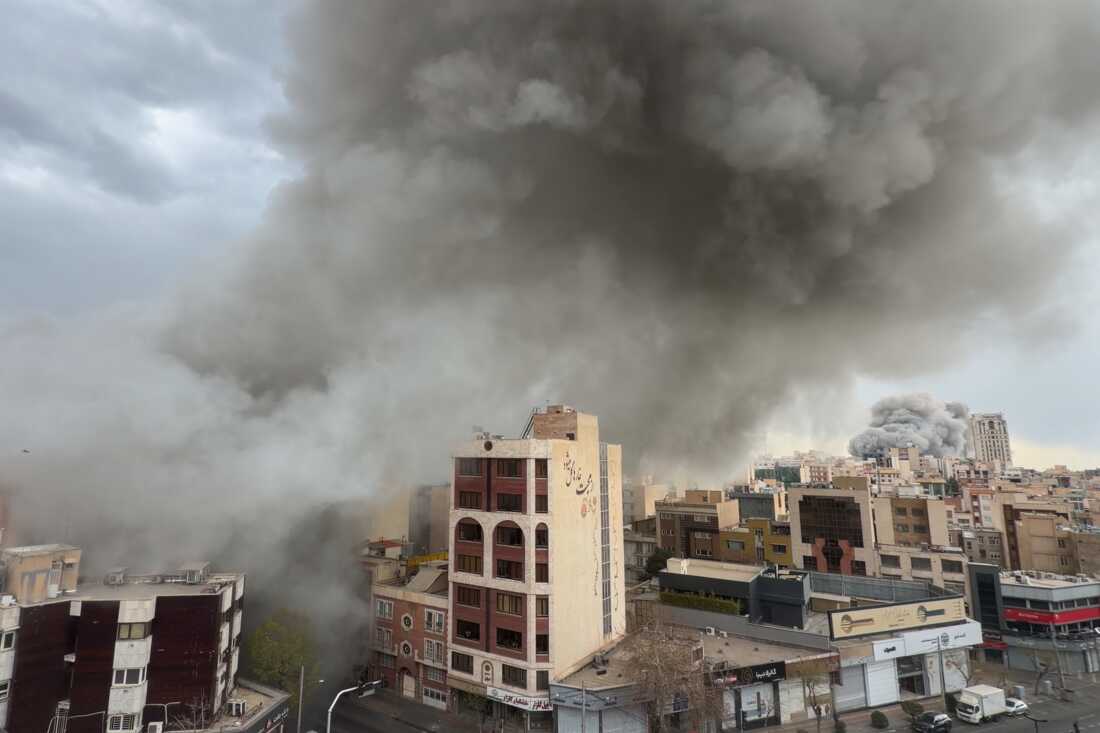
Middle East Conflict Escalates as Iran Strikes US Bases After American Attacks Leave Civilian Casualties- The confrontation between the United States and Iran has entered one of its most dangerous phases in years, with both countries exchanging military strikes across the Middle East. The latest escalation has expanded the conflict beyond Iranian territory, raising fears that a wider regional war could be unfolding.
The crisis intensified after the United States launched a new series of air and missile strikes targeting Iranian military facilities on Tuesday. According to U.S. officials, the operation focused on air defense systems, radar installations, missile launch sites, and military command infrastructure. Washington said the attacks were intended to weaken Iran’s military capabilities and protect American forces and international shipping routes in the region.
However, Iran says the strikes also caused devastating civilian casualties.
The Iranian Red Crescent reported that one of the American missile attacks struck near a residential area in Sirik, a city in southern Iran, where a wedding celebration was taking place inside a family home. According to the organization, shrapnel from the missile hit the house, killing five people, including a child, and injuring more than 50 others. Emergency responders rushed survivors to nearby hospitals while rescue teams searched the damaged building for additional victims.
Iranian officials condemned the incident, calling it a violation of international law and accusing the United States of targeting civilians. Images released by Iranian media showed destroyed sections of the home, damaged vehicles, and rescue workers treating the injured. U.S. officials have acknowledged the military operation but have not confirmed Iran’s account of the reported wedding casualties.
Within hours of the strikes, Tehran launched a large-scale retaliation against American military positions across the Middle East. Iranian forces fired missiles and drones toward U.S. bases and facilities in Jordan, Iraq, Kuwait, and Bahrain. The attacks marked one of Iran’s broadest direct military responses against U.S. forces in recent years.
Air defense systems in several countries were activated as incoming missiles and drones approached military installations. Authorities reported intercepting many of the projectiles before they reached their intended targets, although assessments of damage and casualties are still ongoing. Iran claimed its operation successfully struck American military assets, while U.S. officials disputed those claims and said they were continuing to evaluate the situation.
The exchange of attacks has dramatically increased tensions throughout the region. Gulf nations have strengthened security around military bases, airports, and critical infrastructure as concerns grow that additional strikes could follow. Governments across the Middle East have urged their citizens to remain alert while monitoring the rapidly changing security situation.
The renewed fighting also threatens one of the world’s most important energy corridors. The Strait of Hormuz, located near southern Iran, carries a significant share of global oil exports every day. Any disruption to shipping through the narrow waterway could send energy prices higher and affect economies worldwide. Financial markets have already reacted to the growing uncertainty, with investors closely watching developments for signs of further escalation.
International leaders are calling for restraint as fears mount that the conflict could spread beyond the current battlefields. Several countries have urged both Washington and Tehran to avoid actions that could trigger a larger regional war involving additional nations. Diplomatic efforts are continuing behind the scenes, but prospects for immediate de-escalation remain uncertain.
Military analysts warn that the latest exchange represents a dangerous turning point. Unlike previous confrontations that were often limited or indirect, both sides are now openly striking each other’s military targets. This raises the risk of miscalculation, unintended civilian casualties, and an expanding cycle of retaliation.
For civilians living across the region, the consequences are becoming increasingly severe. Families in affected areas face the constant threat of missile attacks, while emergency services continue responding to casualties and damaged infrastructure. The reported deaths at the wedding celebration have added a tragic humanitarian dimension to an already volatile military confrontation.
As both sides remain on high alert, the world is watching closely to see whether diplomacy can prevent further violence. For now, the exchange of U.S. airstrikes and Iranian missile attacks has pushed the Middle East into another period of uncertainty, with the possibility of additional military action remaining high in the days ahead.


