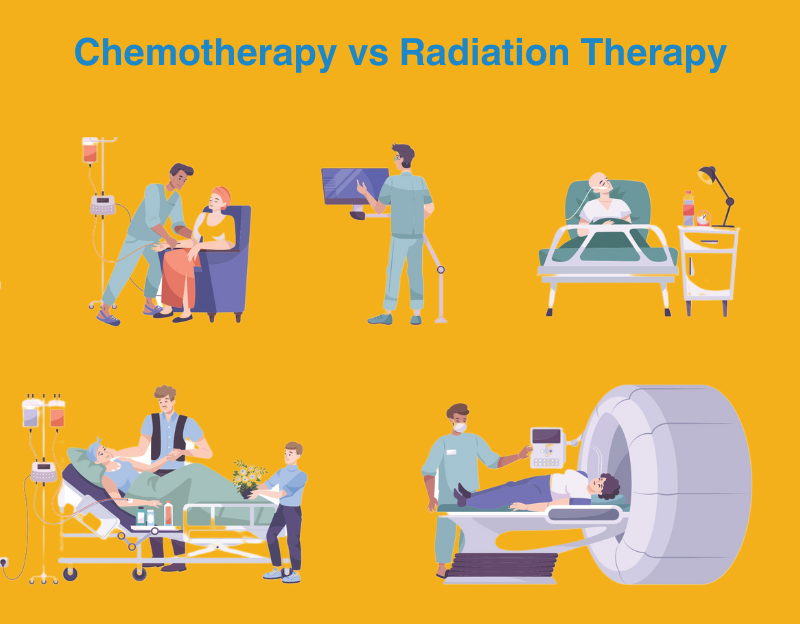
Radiation therapy vs. chemotherapy is a common question for people who are newly diagnosed with cancer or supporting a loved one through treatment. Both are important cancer treatments, but they work in different ways and are used for different purposes.
Radiation therapy uses high-energy radiation to damage cancer cells in a specific area of the body. Chemotherapy uses medicines that travel through the bloodstream and can affect cancer cells in multiple parts of the body. Depending on the type and stage of cancer, doctors may recommend radiation therapy, chemotherapy, both treatments, or another combination of therapies.
The choice is not simply about which treatment is stronger. Cancer specialists consider the location and size of the tumor, whether the cancer has spread, the patient’s general health, previous treatments, and the overall goal of therapy.
This guide explains the difference between radiation therapy and chemotherapy, their common side effects, treatment duration, cost considerations, and situations in which doctors may combine them.
What Is Radiation Therapy?
Radiation therapy, commonly called radiotherapy, is a cancer treatment that uses high-energy radiation to damage the DNA inside cancer cells.
When cancer cells receive enough radiation damage, they lose their ability to multiply and may eventually die. Radiation can also affect nearby healthy cells, which is why treatment planning is carefully designed to concentrate radiation on the tumor while protecting surrounding tissues as much as possible.
Radiation therapy is often considered a local treatment because it is directed toward a particular part of the body.
There are several forms of radiation treatment. External beam radiation therapy uses a machine positioned outside the body to deliver radiation to the treatment area. Internal radiation, or brachytherapy, involves placing a radioactive source inside or close to the tumor.
Radiation may be used:
-
Before surgery to reduce tumor size
-
After surgery to destroy remaining cancer cells
-
Alongside chemotherapy
-
As the primary treatment for certain cancers
-
To control cancer that cannot be completely removed
-
To relieve symptoms caused by tumors
The number of radiation sessions varies. Some treatment plans involve only a few sessions, while others require several weeks of appointments.
What Is Chemotherapy?
Chemotherapy involves the use of medicines designed to kill cancer cells or prevent them from growing and dividing.
Unlike conventional localized radiation therapy, chemotherapy is generally considered a systemic treatment. The medicine enters the bloodstream and can travel throughout the body.
Chemotherapy can therefore be useful when cancer cells may be present beyond the original tumor or when there is a risk that microscopic cancer cells have spread.
Chemotherapy may be given through an intravenous infusion or as an oral medication. Some medicines may be administered using other methods depending on the cancer and treatment plan.
Treatment is commonly divided into cycles. A cycle consists of treatment followed by a recovery period. The exact schedule depends on the medicines being used and the type of cancer being treated.
Chemotherapy can be used before surgery, after surgery, together with radiation, or as treatment for advanced or metastatic cancer.
Radiation Therapy vs. Chemotherapy: What’s the Difference?
The biggest difference between radiation therapy and chemotherapy is how the treatment reaches cancer cells.
Radiation therapy is generally aimed at a particular area. Chemotherapy circulates through the body.
For example, radiation may be directed at a tumor in the breast, lung, brain, prostate, or another specific location. Chemotherapy can circulate throughout the body and potentially reach cancer cells in several locations.
However, the distinction is not absolute. Some radiation treatments can affect the body more broadly, and some chemotherapy drugs can be delivered directly into particular areas.
Another important difference involves side effects.
Because radiation is usually focused on one region, its side effects often depend on the body part being treated. Chemotherapy can affect rapidly dividing healthy cells throughout the body, so its side effects can be more widespread.
Neither approach is universally better. The appropriate treatment depends on the individual cancer.
Radiation Therapy vs. Chemotherapy: Comparison Table
| Factor | Radiation Therapy | Chemotherapy |
|---|---|---|
| Treatment type | Usually local | Usually systemic |
| Main method | High-energy radiation | Anticancer medicines |
| Common delivery | External machine or internal radiation | IV infusion, tablets, or other routes |
| Treatment schedule | Often repeated sessions | Often given in cycles |
| Hair loss | Usually limited to the treated area | May involve the scalp and other areas |
| Fatigue | Common | Common |
| Nausea | Possible | Common with some drugs |
| Skin changes | Can occur in the treatment area | Less typical but possible |
| Blood-count changes | Usually less prominent | Common with some chemotherapy drugs |
| Nerve symptoms | Possible in certain treatments | Possible with particular medicines |
| Main side effects | Often related to treatment location | Often affect multiple body systems |
| Cost | Depends on equipment, planning, and sessions | Depends heavily on medicines and number of cycles |
How Does Radiation Therapy Work?
Radiation damages the genetic material of cancer cells.
Cancer cells generally divide more rapidly or behave differently from normal cells. Radiation takes advantage of differences in how cells respond to DNA damage.
Treatment is carefully planned using imaging and computerized calculations. The medical team determines where radiation should be delivered, the dose required, and how surrounding organs can be protected.
Modern radiation techniques can shape and direct radiation more precisely than older approaches.
The goal is not simply to deliver as much radiation as possible. The objective is to deliver an appropriate therapeutic dose to the cancer while minimizing unnecessary exposure to healthy tissue.
How Does Chemotherapy Work?
Chemotherapy drugs work in different ways.
Some interfere with cell division. Others damage DNA or disrupt processes that cancer cells need to survive.
Because many chemotherapy drugs also affect healthy cells that divide rapidly, side effects can occur. Hair follicles, bone marrow, and cells lining the digestive tract are examples of healthy tissues that can be affected by some chemotherapy medicines.
Different drugs have different mechanisms and side-effect profiles. For this reason, the phrase “chemotherapy side effects” describes a broad range of possible experiences rather than one predictable set of symptoms.
Common Radiation Therapy Side Effects
Radiation side effects depend largely on the location receiving treatment.
Fatigue
Tiredness is one of the most frequently reported effects. It may develop gradually during a course of radiation and can continue for some time after treatment.
Skin changes
Radiation can cause redness, dryness, irritation, darkening, or sensitivity in the treated area.
Hair loss
Hair may fall out where radiation is delivered. This does not necessarily mean that hair throughout the body will be affected.
Nausea
Radiation involving certain areas, particularly the abdomen or brain, can cause nausea. The likelihood depends on the treatment site and dose.
Digestive symptoms
Radiation involving the abdomen or pelvis may lead to diarrhea, bowel changes, or abdominal discomfort.
Mouth and throat problems
Radiation to the head and neck can cause mouth soreness, dry mouth, swallowing difficulties, or changes in taste.
Most side effects are managed by the oncology team and may improve after treatment ends. Some effects can persist or develop later, depending on the treatment area and radiation dose.
Common Chemotherapy Side Effects
Chemotherapy side effects vary considerably from one medicine or combination to another.
Nausea and vomiting
Some chemotherapy drugs can cause significant nausea, while others have relatively low nausea risk. Doctors can prescribe medicines to help prevent or control chemotherapy-related nausea.
Hair loss
Certain chemotherapy medicines cause hair loss because they affect rapidly dividing cells in hair follicles. Other chemotherapy drugs may cause little or no hair loss.
Fatigue
Tiredness can result from the treatment itself, changes in blood counts, reduced appetite, sleep problems, or the cancer.
Low blood counts
Some chemotherapy drugs reduce the production of blood cells in the bone marrow. This can result in anemia, increased infection risk, or easier bruising and bleeding.
Mouth problems
Mouth sores, dryness, or changes in taste can occur with certain chemotherapy treatments.
Nerve-related symptoms
Some medicines can cause peripheral neuropathy. Symptoms may include tingling, numbness, burning sensations, or weakness, particularly in the hands and feet.
Digestive problems
Diarrhea, constipation, appetite changes, and other digestive symptoms may occur depending on the medicines used.
Not everyone receiving chemotherapy develops all of these effects.
Radiation Therapy vs. Chemotherapy Side Effects
One practical way to understand the difference is to consider where the side effects occur.
Radiation side effects are often associated with the treatment area. If radiation is directed at the pelvis, for example, bowel or bladder symptoms may occur. Radiation to the head and neck can produce a different set of effects.
Chemotherapy can produce effects throughout the body because the medicines circulate through the bloodstream.
This does not mean that one treatment is always easier than the other. A person’s experience depends on the specific treatment, dose, treatment area, other medications, and individual response.
Does Radiation Therapy Cause Hair Loss?
It can, but radiation-related hair loss is generally associated with the area being treated.
For example, radiation directed at the scalp can cause hair loss within the radiation field. Radiation aimed at another part of the body generally does not cause widespread scalp hair loss.
Hair may grow back after treatment, although recovery can vary depending on the radiation dose and other factors.
Chemotherapy, by comparison, can cause more widespread hair loss with certain drugs.
Does Chemotherapy Always Cause Hair Loss?
No.
Hair loss depends on the chemotherapy medicines being used, their doses, and the treatment schedule.
Some chemotherapy regimens cause complete hair loss, while others cause thinning or little noticeable change.
Patients should ask their oncology team about the specific medicines in their treatment plan rather than assuming that chemotherapy will automatically result in hair loss.
Is Radiation Therapy Painful?
The radiation delivery itself is generally not painful.
During external beam radiation, the patient is positioned carefully while the treatment machine delivers radiation. The machine may move around the body, but the radiation itself is usually not something the patient feels.
Discomfort can develop from side effects that appear during the course of treatment. Depending on the location, these may include skin irritation, inflammation, swallowing problems, digestive symptoms, or other localized effects.
Patients should tell their treatment team about pain or new symptoms because supportive treatment may be available.
Is Chemotherapy Painful?
Chemotherapy itself does not necessarily cause pain, although the experience varies.
For intravenous treatment, an IV line or another form of vascular access is used. Some patients experience discomfort from the needle or access device.
Certain chemotherapy drugs can cause burning, pain, or other symptoms if they affect tissues around an infusion site, making it important to report unusual sensations during treatment.
Other side effects, such as mouth sores, nerve symptoms, muscle aches, or digestive problems, can become uncomfortable after treatment.
Can Radiation and Chemotherapy Be Given Together?
Yes.
In some cancers, doctors intentionally combine radiation therapy and chemotherapy. This approach is often called chemoradiation.
Chemotherapy may make certain cancer cells more sensitive to radiation, while radiation provides focused treatment to the tumor or surrounding region.
The combination can also allow doctors to address cancer at both the local and systemic levels.
However, combining treatments can also increase the risk of side effects. The decision depends on the cancer type, treatment goal, patient’s health, and expected benefits.
How Long Does Radiation Therapy Take?
There is no single standard radiation schedule.
Some patients receive only a few treatments, while others have radiation sessions five days a week for several weeks.
The schedule may depend on:
-
Cancer type
-
Tumor location
-
Tumor size
-
Treatment goal
-
Radiation dose
-
Previous treatment
-
Whether chemotherapy is being used
-
Overall health
A radiation appointment itself may be relatively short, although positioning and preparation can take additional time.
Before treatment begins, patients usually undergo a planning process to determine how radiation should be delivered.
How Long Does Chemotherapy Take?
Chemotherapy can last anywhere from a relatively short period to several months or longer, depending on the treatment plan.
Many chemotherapy regimens use cycles. A patient may receive treatment on one or more days and then have a recovery period before the next cycle.
The number of cycles varies by cancer type and treatment objective.
Doctors may also modify the schedule if blood counts are low or side effects require additional recovery time.
Radiation Therapy Cost
The cost of radiation therapy varies considerably.
Factors that can influence the total expense include the technology used, treatment planning, number of sessions, facility, doctor fees, imaging requirements, and the healthcare system in which treatment is provided.
The cost of a complete radiation course can therefore be substantially different from the cost of a single treatment session.
Patients should ask for an estimate covering the complete planned course rather than relying on a per-session price alone.
Chemotherapy Cost
The cost of chemotherapy can vary even more depending on the medicines involved.
Some chemotherapy medicines are relatively inexpensive, while others can be significantly more costly. The number of cycles, dosage, method of administration, supportive medicines, laboratory testing, and hospital or clinic charges can all affect the final bill.
For this reason, two people receiving “chemotherapy” can have very different treatment expenses.
Radiation Therapy vs. Chemotherapy Cost in India
Cancer treatment costs in India vary between government facilities, private hospitals, specialized cancer centers, and different cities.
Radiation therapy expenses can depend on the type of radiation technology, treatment planning, number of sessions, and facility.
Chemotherapy costs can depend heavily on the selected medicines, number of cycles, dosage, supportive care, and whether treatment is given as an outpatient or requires hospitalization.
When discussing expenses with a hospital, patients can ask for a complete estimate that includes:
-
Oncologist consultations
-
Treatment planning
-
Medicines
-
Laboratory tests
-
Imaging
-
Treatment administration
-
Hospital or facility fees
-
Supportive medicines
-
Follow-up visits
-
Management of possible treatment complications
Insurance coverage and government-supported healthcare programs may also affect the amount a patient ultimately pays.
Which Is Better: Radiation Therapy or Chemotherapy?
There is no universal answer.
Radiation therapy and chemotherapy serve different purposes, and the appropriate treatment depends on the cancer.
A patient with a localized tumor may receive radiation as part of their treatment, while someone with cancer that has spread may require systemic therapy. In other situations, doctors may combine chemotherapy and radiation.
The important question is not simply which treatment has more side effects or costs less. It is whether the recommended treatment is appropriate for the particular cancer and treatment objective.
Can Radiation Therapy or Chemotherapy Cure Cancer?
Both can be used as part of treatment intended to cure certain cancers.
However, the possibility of cure depends on factors such as cancer type, stage, tumor characteristics, response to treatment, and whether the disease has spread.
In some situations, treatment is given with the goal of eliminating the cancer. In others, the purpose may be to slow cancer growth, prevent recurrence, reduce tumor size, or control symptoms.
Patients should ask their oncologist specifically about the goal of their treatment because the same therapy can be used for different purposes in different circumstances.
Can You Work During Cancer Treatment?
Some people continue working while receiving radiation or chemotherapy, while others need to reduce their workload or take time away from employment.
The answer depends on treatment intensity, side effects, job requirements, travel, and individual health.
Someone working from home may have different challenges from someone whose job involves physical labor or long hours.
Fatigue can be an important consideration with both treatments. Planning flexible working hours, rest periods, and time off around treatment appointments may make treatment easier to manage.
Questions to Ask Before Starting Treatment
A cancer diagnosis can make medical discussions overwhelming. Writing down questions before an appointment can help.
Consider asking:
-
What is the goal of my treatment?
-
Why is this treatment being recommended?
-
Do I need radiation, chemotherapy, or both?
-
How many sessions or cycles will I need?
-
What side effects are most likely?
-
Which symptoms require urgent medical attention?
-
How will you monitor my response?
-
Will treatment affect my fertility?
-
Can I continue working?
-
Are there dietary or lifestyle precautions?
-
What should I expect after treatment ends?
-
What is the estimated total treatment cost?
-
What expenses are included in the estimate?
-
Is financial assistance available?
Frequently Asked Questions
Is radiation therapy the same as chemotherapy?
No. Radiation therapy uses high-energy radiation, usually directed at a particular area of the body. Chemotherapy uses medicines that can circulate throughout the body.
Which causes more side effects, can produce more widespread effects. The specific treatment regimen is more radiation or chemotherapy?
Neither consistently causes more side effects for every patient. Radiation effects often depend on the body area being treated, while chemotherapy can produce more widespread effects. The specific treatment regimen is more important than the treatment category alone.
Can you have chemotherapy and radiation at the same time?
Yes. Some cancer treatment plans intentionally use both at the same time. This is known as chemoradiation.
Does radiation cause hair loss?
Radiation can cause hair loss in the area receiving radiation. It does not normally cause the same whole-body hair loss associated with some chemotherapy treatments.
How many radiation sessions are needed?
The number varies widely. Some patients need only a few treatments, while others may receive radiation over several weeks.
How many chemotherapy cycles are needed?
The number of chemotherapy cycles depends on the cancer, medicines, treatment objective, response, and tolerance. There is no universal number.
Is radiation therapy expensive?
The total cost varies according to the radiation technique, number of sessions, treatment planning, healthcare facility, location, and other medical expenses.
Is chemotherapy expensive?
Chemotherapy costs vary considerably, adjusted, or changed when side effects become significant. Decisions should be made with the oncology team because stopping because different medicines have different prices. The number of cycles and supportive treatments also influence the total expense.
Can cancer treatment be stopped because of side effects? How Can You Understand Any Medicine Just by Its Name and Salt? | Maya
Treatment may sometimes be delayed, adjusted, or changed when side effects become significant. Decisions should be made with the oncology team because stopping or changing treatment can affect cancer control.
Final Takeaway
The comparison between radiation therapy vs. chemotherapy is more complicated than simply choosing one treatment over the other.
Radiation therapy generally provides focused treatment to a specific region, while chemotherapy typically uses medicines that circulate throughout the body. Radiation side effects are often connected to the treatment site, whereas chemotherapy can affect several are influenced by treatment technology, planning, and the number of sessions, while chemotherapy costs depend substantially on the medicines, systems because of its systemic action.
The costs also vary. Radiation expenses are influenced by treatment technology, planning, and the number of sessions, while chemotherapy costs depend substantially on the medicines, dosage, number of cycles, and supportive care.
In many cases, cancer treatment involves more than one approach. Radiation, chemotherapy, surgery, targeted therapy, immunotherapy, hormone therapy, and other treatments may be combined individual’s treatment decision should be based on the specific cancer, its stage and characteristics, the treatment goal, and advice depending on the disease.
For that reason, a general comparison can provide useful background, but an individual’s treatment decision should be based on the specific cancer, its stage and characteristics, the treatment goal, and advice from the oncology team.
Understanding the differences between radiation and chemotherapy can help patients have more informed conversations with their doctors and prepare more realistically for treatment, side effects, recovery, and financial considerations.
This article is for informational purposes and is not a substitute for professional medical advice. Always consult your oncology team about your specific treatment plan.