
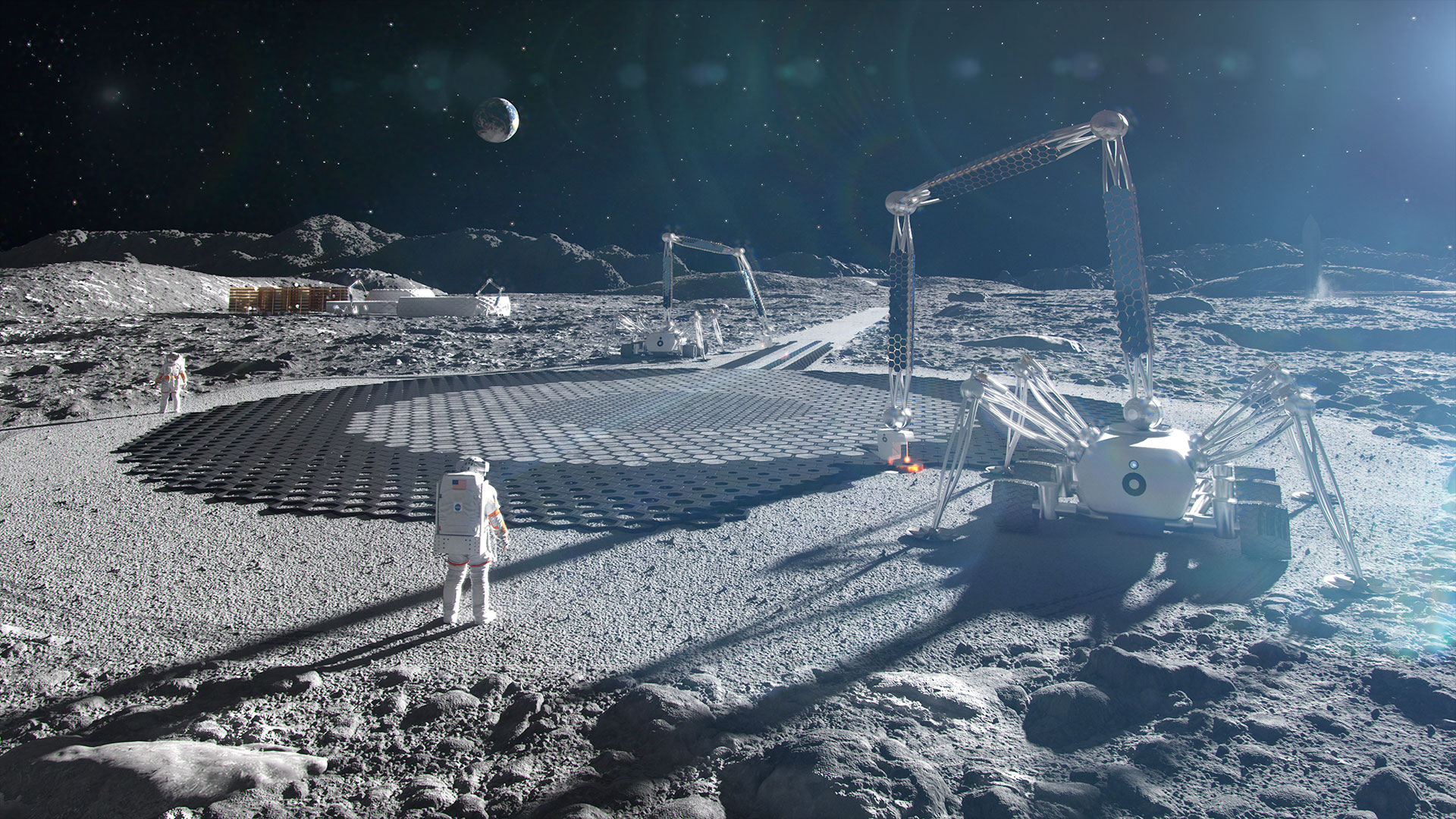
Who decides laws on the Moon if multiple countries build bases? If multiple countries build bases on the Moon, there is no single “Moon government” that automatically makes laws for everyone. Instead, the answer comes from international space law, especially the way treaties work today: countries decide laws on Earth, and then agree (or disagree) on how those laws apply in space.
So the real situation is more like a legal framework with shared rules, national laws, and cooperation agreements—not a single authority controlling the Moon.
Let’s break it down in a clear way.
1. The main rulebook: the Outer Space Treaty
The foundation of all space law is the Outer Space Treaty of 1967. Most spacefaring nations have signed it.
Its most important ideas are:
- No country can claim ownership of the Moon or any other celestial body
- The Moon must be used for peaceful purposes
- Space is considered the “province of all humankind”
- Countries are responsible for their own space activities, including private companies they authorize
So even if multiple countries build bases, none of them can legally say:
“This part of the Moon is ours forever.”
This is the key limitation: no sovereignty in space.
2. So who actually makes the rules?
There are three layers of “law-making” involved.
A. International treaties (global agreements)
These are created by countries through the United Nations system. The most important body is the UN Committee on the Peaceful Uses of Outer Space (COPUOS).
Countries negotiate rules together and then choose to sign them. These treaties become binding only for the countries that agree to them.
However:
- There is no global parliament for space
- No automatic enforcement system
- Countries can interpret rules differently
So international law sets the foundation, but not every detail.
B. National laws (each country’s space laws)
Each country controls its own citizens and companies in space.
For example:
- If a company from the United States builds a lunar base, it is governed by U.S. space law
- If an Indian mission operates on the Moon, it follows Indian regulations
A key principle in the Outer Space Treaty is that countries are responsible for their national activities in space, even if private companies are involved.
So if conflicts happen, responsibility is traced back to Earth-based governments.
C. Agreements between countries (bilateral or group rules)
When multiple countries operate near each other, they often create shared agreements.
These can cover:
- Safety zones around bases
- Communication protocols
- Resource sharing rules
- Emergency coordination
These agreements are practical and flexible, because space law at the global level is still limited in detail.
A real example of this approach is the framework used in missions involving the International Space Station, where multiple countries follow detailed cooperative rules even though no single country “owns” the station.
A similar model would likely evolve on the Moon.
3. What happens if bases conflict?
This is where things get complicated.
If two countries have bases near each other on the Moon, several scenarios are possible:
Scenario 1: Cooperation works
Countries agree on:
- Safe distances between bases
- Shared communication standards
- Emergency support systems
This is the ideal and most likely outcome.
Scenario 2: Disputes over resources or territory
Even though countries cannot legally claim territory, they might still:
- Compete for resource-rich areas (like water ice in lunar craters)
- Disagree over “operational zones”
- Argue over interference or safety boundaries
In this case:
- Diplomacy on Earth becomes the main tool
- International courts or arbitration may be used
- Pressure from other nations may help resolve disputes
Scenario 3: Legal grey zones
Because space law is not very detailed, some situations may not have clear answers, such as:
- How big a safety zone around a base should be
- Who regulates mining operations
- What happens if equipment overlaps
These would likely be handled case-by-case, until stronger rules are developed.
4. Who enforces the rules?
There is no space police.
Instead:
- Each country enforces rules on its own astronauts and companies
- Violations become diplomatic issues between governments
- International pressure and reputation play a big role
If a country or company breaks agreements, consequences usually happen on Earth, such as:
- Sanctions
- Loss of partnerships
- Legal action under national law
5. What about future Moon settlements?
If multiple permanent bases appear on the Moon, experts expect one of three possible systems to develop:
1. Cooperative governance model
Countries create a shared lunar framework:
- Safety zones are agreed upon
- Resource use is regulated jointly
- A coordination body may be formed
This would be similar to how the Antarctic Treaty works on Earth.
2. National control model (unlikely but possible tension)
Each country follows its own rules strictly:
- Bases operate independently
- Coordination is minimal
- Risk of disputes is higher
However, this is less stable long-term.
3. Hybrid system (most likely)
A mix of:
- International treaties for broad rules
- National laws for internal operations
- Local agreements between neighboring bases
This is currently considered the most realistic path.
6. Why the Moon is legally tricky
The Moon is not just empty land. It raises unique challenges:
- No clear borders or natural divisions
- Valuable resources like water ice exist in specific regions
- Scientific sites may need protection
- Human presence will likely expand gradually
Because of this, space law is still evolving rather than fully defined.
7. A simple way to understand it
Think of the Moon like a remote mountain range:
- No one owns the mountain
- Different groups can set up camps
- Everyone follows their home country’s rules
- They must also respect shared safety agreements
- If conflicts happen, governments negotiate back on Earth
There is no single mountain authority, just shared understanding and coordination.
Takeaway
If multiple countries build bases on the Moon, no single authority decides all laws. Instead, governance comes from a combination of international treaties, national laws, and cooperation agreements between countries.
The Outer Space Treaty prevents any country from claiming ownership of lunar territory, so no nation can legally “rule” the Moon. Instead, each country is responsible for its own activities, while broader rules are negotiated internationally.
In practice, lunar governance will likely evolve into a cooperative system, similar to large international projects like the International Space Station, where shared rules and coordination matter more than territorial control.
The Moon, in legal terms, is not a place to be owned—it is a place to be shared, and how that sharing is managed will be one of the biggest challenges of future space exploration.
Why Saturn’s Rings Are More Mysterious Than You Think | Maya


