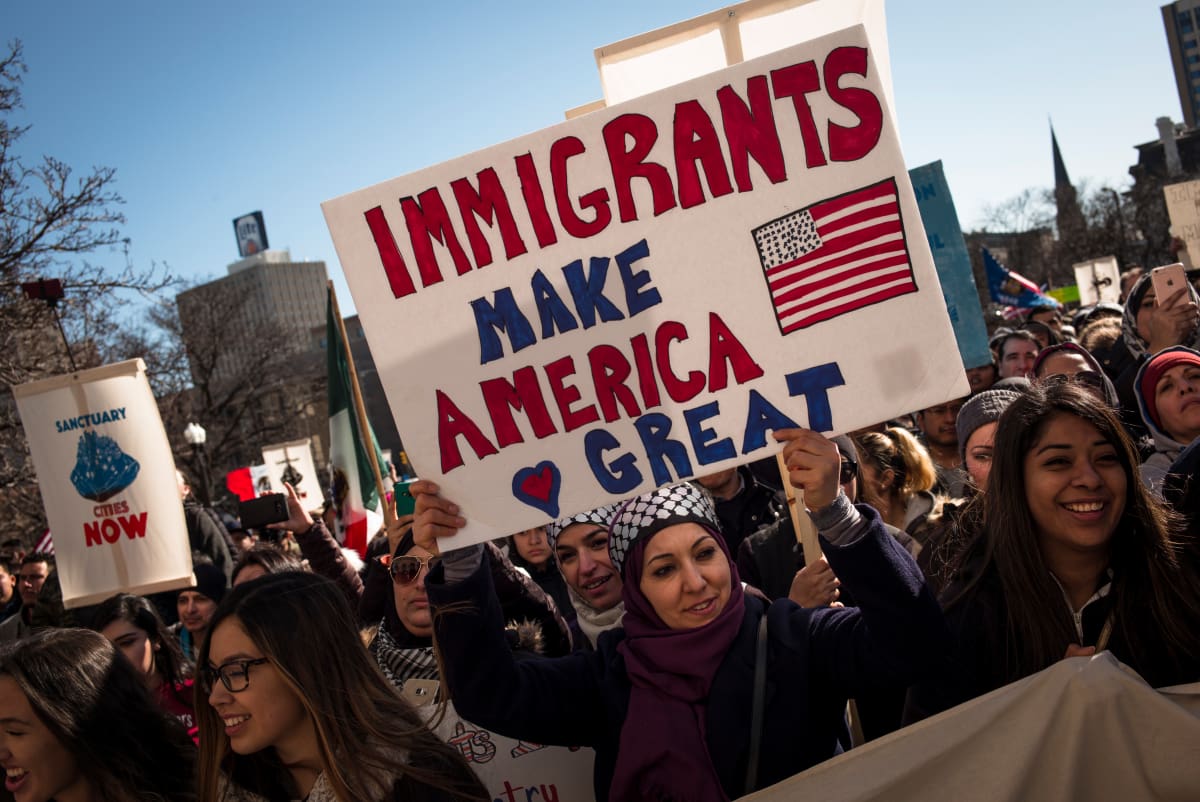
But as the country’s population continues to change, a difficult question is emerging: who will shape America’s political future, and how will immigration influence its elections, traditional values and national identity over the coming decades?
The debate goes beyond border security. It touches on the country’s founding philosophy, cultural traditions, economic priorities and the relationship between generations of Americans. While immigration has played a central role in building the United States, concerns are growing among some voters about whether current policies adequately balance the arrival of newcomers with the interests of established communities and the preservation of a shared national identity.
America was founded on principles that include individual liberty, constitutional government, freedom of expression, religious freedom and equality under the law. These ideas have shaped its political institutions and national character for centuries. The challenge facing the country is determining how these principles can remain central as its population becomes increasingly diverse.
Immigration is no longer simply a question of who enters the country. It is increasingly a question of how the United States will define itself in the future.
Immigration is changing America’s electorate
One of the most significant consequences of immigration is its growing influence on the American electorate. People who move to the United States for employment or education do not automatically receive voting rights. Foreign workers, international students and green-card holders cannot vote in federal elections. However, immigrants who complete the naturalisation process and become American citizens gain the right to participate in the country’s electoral system.
The number of naturalised citizens eligible to vote has increased considerably over the past two decades. According to demographic research published by the Pew Research Center in October 2026, approximately 25 million naturalised citizens were eligible to vote in the 2024 presidential election, representing around 10.3% of the eligible electorate. In 2000, the corresponding figure was approximately 12 million, or 6.2%.
This change demonstrates how immigration can gradually influence electoral politics. Communities that initially arrive as workers, students or permanent residents can eventually become an established part of the voting population.
Indian-American communities provide a prominent example. Thousands of Indians move to the United States for opportunities in technology, healthcare, engineering, research and higher education. Many establish permanent lives, bring their families and eventually become American citizens. Similar patterns exist among immigrants from African countries, Latin America, China, the Philippines and other parts of Asia.
The term NRI, commonly used in India to describe non-resident Indians, does not technically describe every Indian-origin American voter. Someone who becomes a US citizen is generally considered an Indian-American or naturalised American citizen.
As more immigrants become citizens and younger generations reach voting age, their participation could become increasingly important in future elections. Their influence will depend on naturalisation rates, voter turnout, geographic concentration and the issues that matter to individual communities.
However, it would be inaccurate to assume that all immigrant-origin voters support the same political party. Naturalised citizens have diverse political opinions, just like Americans whose families have lived in the country for generations. Some prioritise economic growth and lower taxes, others focus on immigration reform, healthcare, education, foreign policy or social issues.
For political parties, understanding these communities is becoming an increasingly important electoral consideration.
Could immigrant communities reshape America’s political direction?
The growing participation of naturalised citizens raises questions about how political priorities might evolve over time. Someone who moves from India to America for a technology job may initially be concerned about employment opportunities, immigration rules and the ability to bring family members into the country. After becoming a citizen, that individual may also have strong views on taxation, education, healthcare, international relations and national security.
The same applies to people arriving from African countries, Europe, Latin America and elsewhere. Their political priorities can be influenced by their experiences in their countries of origin, their professional backgrounds and the opportunities or challenges they encounter in America.
Yet their children, particularly those born and educated in the United States, may develop a different relationship with American politics. They may inherit cultural traditions from their parents while identifying entirely with American institutions and national life.
This creates a complex electoral landscape in which political parties must respond to a broader range of experiences and expectations.
The important distinction is that immigrants who become American citizens are not outsiders participating in someone else’s democracy; they are legally part of that democracy. At the same time, Americans have every right to debate how immigration levels, citizenship rules and integration policies should be managed.
What happens to traditional American culture and philosophy?
Beyond elections, the debate raises a deeper question: what does it mean to be American, and how should that identity be preserved as the country changes?
For many families whose roots in America extend across several generations, national identity is connected to more than citizenship documents. It includes inherited traditions, historical experiences, community relationships, language and a shared understanding of American history.
The country’s founding philosophy placed considerable importance on individual freedom, limited government, constitutional rights and equality before the law. These principles developed through the American Revolution, the Constitution and subsequent struggles to expand civil rights and democratic participation.
Immigration has introduced new traditions, languages, cuisines, businesses and perspectives into American society. These contributions have helped shape modern America. However, rapid demographic changes can also create anxiety among people who feel that established customs, local communities and familiar social structures are changing faster than institutions can accommodate.
Some Americans worry about the weakening of traditional cultural practices, declining community cohesion and the possibility that different groups may become increasingly separated rather than integrated into a shared national culture.
These concerns deserve discussion, but American identity cannot be defined exclusively by ancestry or the number of generations a family has lived in the country. A naturalised citizen who respects the Constitution, participates in civic life and contributes to society is equally part of the American national story.
The real challenge is maintaining a common American identity without requiring people to abandon their cultural heritage.
Immigration, crime and pressure on public services
Immigration has also become controversial because of concerns about illegal border crossings, crime, housing affordability, employment competition and pressure on public infrastructure.
Some Americans argue that poorly managed immigration can increase demand for affordable housing, schools, hospitals and local government services. Others point to immigrants’ contributions to entrepreneurship, scientific research, healthcare, agriculture and economic growth.
Public safety remains particularly important. Voters expect the government to enforce immigration laws, properly screen arrivals and prevent criminal activity. These are legitimate responsibilities of any government. However, criminal behaviour must be evaluated through reliable evidence rather than assumptions about nationality, ethnicity or country of origin.
It is equally important to distinguish between lawful immigrants, undocumented migrants, permanent residents and naturalised citizens. These groups have different legal statuses and cannot be treated as interchangeable.
For the United States, the policy challenge is to establish an immigration system that protects borders, addresses unlawful entry, supports economic needs and ensures that public services can accommodate population growth.
Foreign influence versus the political rights of citizens
Another important issue is the difference between immigrant communities influencing American elections and foreign governments attempting to interfere in the country’s political system.
Naturalised American citizens have the same fundamental voting rights as other citizens. Their participation is a constitutional part of democratic politics, regardless of where they were born.
Foreign governments attempting to manipulate American elections through covert financing, cyberattacks, disinformation campaigns or unlawful political operations present a separate national security concern.
The distinction matters because political participation by an American citizen of Indian or African origin should not be confused with interference by a foreign government.
At the same time, Washington must remain alert to attempts by overseas actors to exploit divisions within American society. Protecting elections, political institutions and public trust is essential regardless of which communities are involved.
What will America’s next generation inherit?
Perhaps the most important question concerns the generations growing up in the United States today. Children from immigrant families are increasingly becoming part of American schools, universities, workplaces and communities. Their understanding of national identity may combine American civic traditions with cultural influences inherited from their parents.
This does not necessarily mean that American culture will disappear. The United States has repeatedly adapted to successive waves of immigration. However, the speed of demographic change makes education, integration and a shared understanding of national values increasingly important.
Future administrations will face pressure to strengthen English-language education, civic awareness, constitutional literacy and respect for democratic institutions while allowing different communities to maintain their cultural traditions.
There is also a generational question concerning employment, housing and economic opportunity. Younger Americans, regardless of their backgrounds, are concerned about the affordability of homes, access to good jobs, healthcare costs and the quality of education. Immigration policies will increasingly be judged by how effectively governments balance the country’s demand for workers with the economic interests of existing residents.
The challenge is not simply deciding who enters America, but ensuring that everyone who becomes part of its society understands the responsibilities and principles that hold the country together.
Can America preserve its identity while becoming more diverse?
The United States is approaching an important period in its political and cultural development. Immigration will continue to influence its workforce, population and electoral landscape. As more permanent residents become citizens, immigrant-origin voters could become an increasingly significant part of future elections.
This may encourage political parties to reconsider their positions on border security, citizenship, foreign relations, taxation, public spending and national identity. The consequences could extend well beyond individual election campaigns, influencing how future administrations approach domestic and international policy.
However, demographic change alone will not determine America’s future. Its direction will depend on the strength of its institutions, the effectiveness of immigration policies, economic opportunities, public safety and the ability of different communities to coexist under a common constitutional framework.
For Americans whose families have lived in the country for generations, concerns about cultural continuity and the direction of national policy deserve serious consideration. Equally, people who have legally become American citizens must be recognised as members of the same democratic system, with equal rights and responsibilities.
The central question is whether America can remain united by shared principles while becoming increasingly diverse in its population. How the country answers that question could shape its national identity, political leadership, elections and position in the world for generations to come.