
Wildfire Smoke Becomes Latest Flashpoint in U.S.-Canada Relations: The already fragile relationship between the United States and Canada has entered another period of friction, this time over an issue that neither country can easily control—wildfire smoke.
As thick smoke from massive wildfires burning across northern Ontario drifted into several U.S. states, President Donald Trump escalated tensions by threatening fresh tariffs on Canadian imports. In a strongly worded statement, Trump complained that Americans were being exposed to what he described as “filthy air” crossing the border and warned that Canada could face economic consequences if the situation continued.
The remarks have transformed an environmental emergency into a diplomatic and trade dispute, adding to a growing list of disagreements that have strained ties between the two North American neighbours over the past year.
Relations between Washington and Ottawa have remained uneasy since the United States imposed tariffs on several Canadian exports, arguing that the measures were necessary to protect American industries. Canada has repeatedly criticized those tariffs, saying they have placed unnecessary pressure on businesses and workers despite decades of close economic cooperation under free trade agreements.
Political rhetoric has further complicated the relationship. Trump’s repeated suggestions that Canada should become the “51st state” have been met with widespread criticism across Canada, where leaders from across the political spectrum have rejected the idea as unacceptable. The comments also fueled a wave of public backlash, with many Canadians temporarily avoiding travel to the United States and calling for stronger support of domestic businesses.
Against this backdrop, the wildfire smoke issue has emerged as another source of conflict.
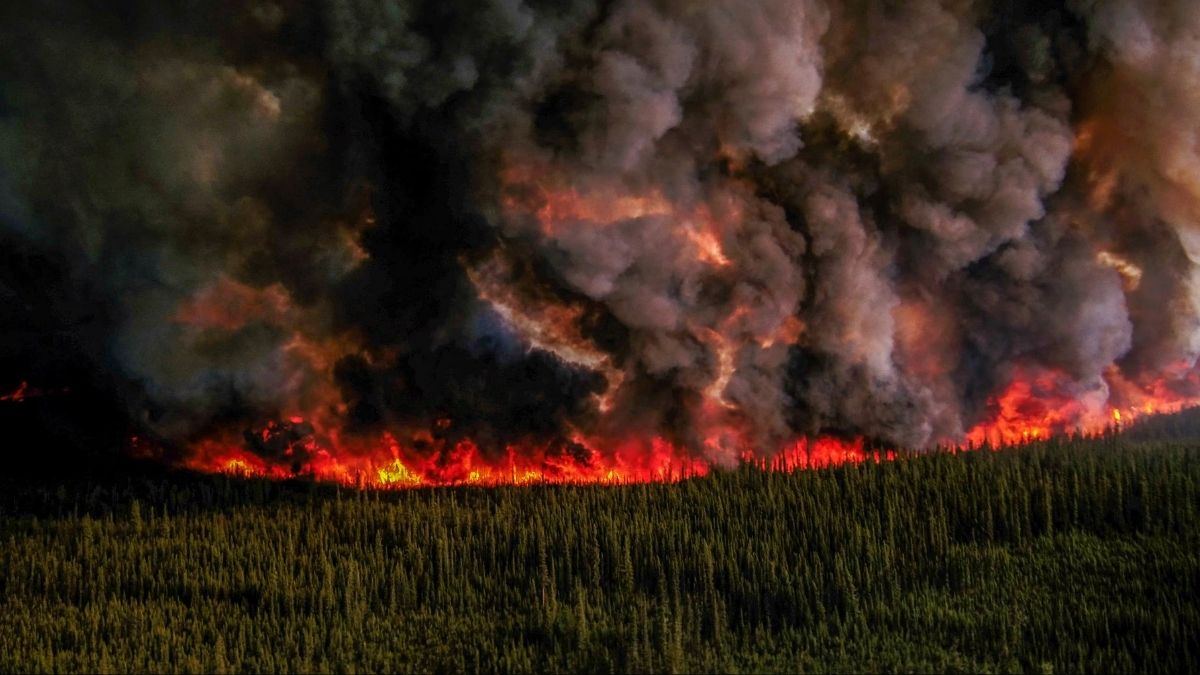
Large wildfires continue to burn across parts of northern Ontario, producing dense smoke that has been carried hundreds of miles south by changing wind patterns. Air quality alerts have been issued in several American states as fine particulate matter from the fires reduced visibility and raised health concerns for vulnerable groups, including children, older adults and people with respiratory conditions.
While wildfire smoke regularly crosses international borders during severe fire seasons, Trump’s decision to link the issue to trade policy marks a significant departure from the traditional approach taken by both countries.
Rather than treating the smoke as a shared environmental challenge, the U.S. president suggested that Canada should bear responsibility for its cross-border impacts. He also indicated that his administration was prepared to consider additional tariffs if the problem was not addressed.
Canadian leaders have responded more cautiously.
Prime Minister Mark Carney has not directly addressed Trump’s latest tariff warning but has reiterated that climate change and the increasing intensity of wildfire seasons are global challenges requiring international cooperation. He argued that every country, including the United States, has a responsibility to invest in climate resilience, disaster preparedness and emissions reduction.
Ontario Premier Doug Ford also defended Canada’s response, pointing out that Canadian firefighters and emergency personnel have frequently crossed the border to assist the United States during major wildfire emergencies. He noted that Canada has deployed crews to states including California in previous years and said the country would welcome similar support whenever needed.
Wildfire experts say such cooperation has long been a defining feature of North America’s emergency response system. Firefighters, aircraft and specialized equipment routinely move between Canada and the United States during particularly severe fire seasons, allowing both countries to respond more effectively when local resources are stretched.
Scientists also emphasize that smoke from large wildfires does not recognize political borders. Once released into the atmosphere, smoke can travel hundreds or even thousands of miles depending on wind direction, atmospheric pressure and weather conditions. Similar events have occurred in previous years, with smoke from Canadian fires affecting cities across the eastern United States, while smoke from U.S. wildfires has periodically reached parts of Canada.
Despite the latest disagreement, trade negotiations between the two countries continue.
Canadian officials remain under pressure to secure an agreement that would ease U.S. tariffs on sectors such as steel, aluminum and automobiles, industries that support hundreds of thousands of jobs. Businesses on both sides of the border are watching closely, as prolonged trade tensions could disrupt one of the world’s largest bilateral trading relationships.
The latest dispute highlights how climate-related disasters are increasingly influencing international politics. Wildfires are no longer viewed solely as environmental emergencies; they are becoming economic, diplomatic and public health challenges that test relationships between neighbouring countries.
Whether Trump’s tariff threat develops into formal trade action remains uncertain. However, the episode illustrates how quickly environmental crises can spill into broader political debates, particularly when existing tensions already exist.
For now, firefighters continue battling the blazes in northern Ontario while shifting winds determine where the smoke will travel next. At the same time, diplomats in Washington and Ottawa face the difficult task of ensuring that an environmental emergency does not deepen an already strained partnership between two of the world’s closest allies.


