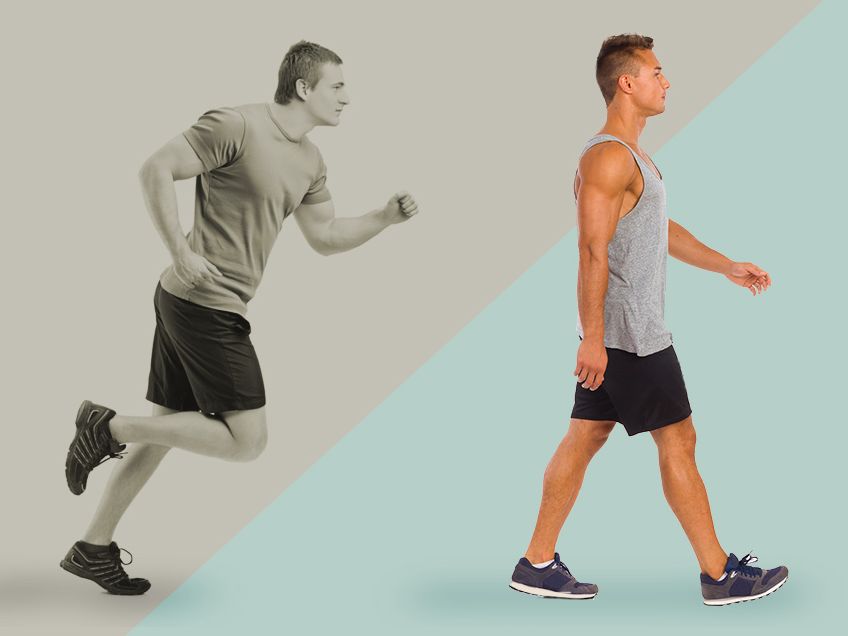
Walking vs. Running for Fat Loss: Which Is Better? Ask a runner and they’ll say running. Ask a walker and they’ll say walking is just as good with none of the knee pain. Both camps have a point, and both are partly wrong, because the real answer depends on what you mean by “better.”
If better means more calories burned per minute, running wins easily. If it means what you’ll actually keep doing for six months, walking often does. And since fat loss is mostly decided by weeks and months of consistency, not a single workout, that second question matters more than most people realize.
Calories burned: running wins per minute, but not by as much as you’d think
Running burns more energy per minute because you’re lifting your body off the ground with every stride. As a rough guide for a 70 kg person:
| Activity | Approx. calories per 30 minutes |
|---|---|
| Walking at 5 km/h (3 mph) | 110 to 135 |
| Brisk walking at 6.5 km/h (4 mph) | 150 to 180 |
| Running at 8 km/h (5 mph) | 270 to 300 |
| Running at 10 km/h (6 mph) | 330 to 370 |
Heavier people burn more at any speed, and lighter people burn less. These are estimates, and fitness trackers can be off by 20 to 40 percent.
Here’s the twist. Per kilometer covered, the gap shrinks a lot. Walking a kilometer costs roughly 0.7 calories per kilogram of body weight, while running costs about 1.0. So if you walk 5 km instead of running it, you burn perhaps a third fewer calories, not half. Walking just takes longer to get there.
That leads to the practical comparison: a 60-minute walk can burn about as much as a 25 to 30 minute run. If you have the time, walking can close the gap. If you don’t, running is more time-efficient.
What the research says about fat loss
Studies that directly compare the two are less dramatic than the internet suggests.
- When researchers match the energy burned, walking and running produce similar fat loss. A well-known analysis of runners and walkers in the National Runners’ and Walkers’ Health Studies, which followed tens of thousands of people, found that equal energy expenditure gave similar reductions in risk for high blood pressure, high cholesterol, diabetes, and heart disease. Running just got there faster.
- Exercise alone, either kind, usually produces modest weight loss. In trials, people often lose less than the calculations predict, partly because they eat a bit more or move less the rest of the day. Diet does most of the heavy lifting for the number on the scale.
- Exercise is much better at keeping weight off than at taking it off. People who maintain big losses nearly always stay physically active.
- Interval-style running appears to reduce abdominal fat efficiently for the time invested, though results across studies are mixed and the effect isn’t huge.
In short: neither is a magic bullet, and the difference in fat loss between them is largely a difference in calories burned.
The “fat burning zone” myth
You may have seen the claim that slow, low-intensity exercise like walking burns more fat. It’s partly true and mostly misleading. At lower intensities, a bigger percentage of the calories you burn comes from fat. At higher intensities, more comes from carbohydrate. But the total number of calories is lower when you walk, so the absolute amount of fat burned often ends up similar or lower than in a run of the same duration.
What matters for fat loss over weeks is total energy balance, not which fuel you burn during the session. Your body makes up the difference later.
Where walking has the edge
It’s easier to stick with. Injury and burnout end more running plans than anything else. Running injuries are common, with estimates that around half of recreational runners get hurt in a given year, often knees, shins, or feet. Walking carries a far lower injury risk.
It’s gentler on joints and heavier bodies. Running places forces of roughly two to three times body weight on your legs with each step. For someone with a lot of weight to lose, joint problems, or a long break from exercise, walking is a safer way to begin.
It’s easier to fit into life. You can walk to work, on calls, or after dinner. A post-meal walk of 10 to 15 minutes also lowers blood sugar spikes, which is a bonus for anyone with prediabetes or insulin resistance.
It doesn’t make you ravenous. Intense exercise can spike appetite in some people, and it’s easy to cancel a run’s calories with a recovery snack. Walking tends to leave hunger more manageable, though this varies from person to person.
Recovery is minimal. You can walk daily, even twice a day, without needing rest days.
Where running has the edge
Time efficiency. If you have 25 minutes, running burns about twice what walking does in the same time.
Cardiovascular fitness. Vigorous exercise improves aerobic capacity faster, and fitness is one of the strongest predictors of long-term health. Large studies find that even 5 to 10 minutes of running a day is associated with lower mortality.
Bone loading. Impact is good for bones. Running stimulates bone density more than walking does, which matters especially as you age.
Afterburn, a little. Harder exercise raises post-exercise calorie burn slightly more than walking, though the effect is modest, typically a few dozen calories.
Mental payoff. Many runners report a stronger mood lift and sense of accomplishment. That’s personal, but it can help motivation.
The middle path: you don’t have to choose
For most people, the best plan combines both, or progresses from one to the other.
- Brisk walking with hills or incline. Raising the intensity narrows the gap. A steep treadmill walk or hilly route can approach the calorie burn of easy jogging.
- Walk-run intervals. Alternate one minute of jogging with two minutes of walking. This is a popular on-ramp and is easier on joints than continuous running.
- Interval walking. Alternate three minutes of fast walking with three of easy walking. Studies in Japan found this beat steady walking for fitness and blood pressure.
- Add weight and strength. A weighted vest, backpack, or hill work, plus two strength sessions a week, protects muscle during weight loss.
Which should you choose?
Walking is probably better if you:
- Are new to exercise or returning after a long break
- Carry significant extra weight or have joint pain
- Have time but not energy or enthusiasm
- Have high blood pressure or other conditions where your doctor advises moderate activity
- Have tried running before and quit
Running is probably better if you:
- Have limited time
- Are already reasonably fit and injury-free
- Enjoy it, or want to build endurance
- Want a more efficient way to improve cardiovascular fitness
Both together is best if you:
- Want variety, can handle the load, and aim to lose fat and keep it off
What really drives fat loss
Whichever you pick, a few things will matter more than the choice itself.
- Food. A modest calorie deficit, enough protein, and mostly whole foods account for most of the scale change. Exercise supports it.
- Consistency. Four walks a week for a year beats a heroic running burst that ends in a sore shin by week three.
- Daily movement. Steps outside of workouts count. Many studies show gains from walking well beyond what’s required for health, although benefits flatten past roughly 8,000 to 10,000 steps a day for most adults.
- Strength training. Two sessions a week help preserve muscle while you lose fat.
- Sleep and stress. Both influence appetite and recovery more than people expect.
A simple starting plan
Weeks 1 to 2: Walk 30 minutes, five days a week, at a pace where you can talk but feel slightly breathless.
Weeks 3 to 4: Add hills or pick up the pace. Try three one-minute fast bursts per walk.
Weeks 5 to 8: If your joints feel good and you want to progress, introduce jogging: one minute jog, two minutes walk, repeated eight to ten times. Do this two or three times a week and keep walking on other days.
Beyond: Increase jogging time gradually, keeping total weekly increases under about 10 percent. Keep two strength sessions in the mix.
If anything hurts beyond ordinary muscle soreness, back off. Sharp or persistent pain is a signal to rest or see a professional.
Common myths
“Walking doesn’t count as real exercise.” It does. The evidence for health benefits is strong, and brisk walking meets guideline recommendations.
“Running ruins your knees.” Not in general. Recreational runners often have healthier knees than sedentary people. Injuries come mainly from doing too much, too soon, or in poor footwear.
“You must exercise fasted to burn fat.” Studies show no clear fat-loss advantage over exercising after eating. Do whatever feels better.
“More cardio always means more weight loss.” Not necessarily. The body adapts, and extra exercise often leads to extra eating or less movement elsewhere. Why the Same Medicine Can Work Differently in Different People | Maya
The bottom line
Running burns more calories per minute. Walking is easier to sustain, safer for joints, and works just as well if you have the time. For fat loss, the best exercise is the one you’ll do regularly, paired with sensible eating and some strength training.
If you’re starting out, walk. If you’re short on time and fit enough, run. If you can, do a bit of both. And whichever you pick, give it a few months before judging, because fat loss is slow, and consistency does the work.
This article is general information, not personal medical advice. If you have a heart condition, joint problems, or other health concerns, check with your doctor before starting a new exercise program.