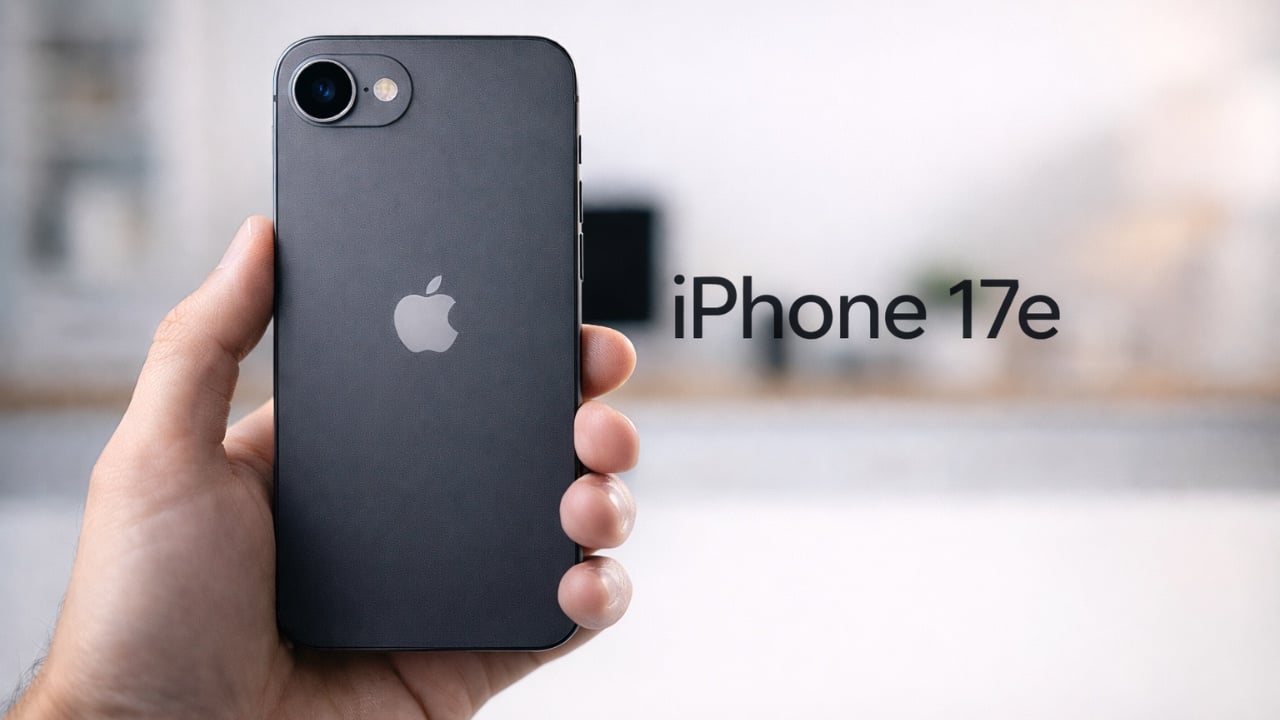
What the Smartphone of 2035 Will Look Like: By 2035, the smartphone will no longer feel like a “phone” in the way we understand it today. It will still sit in our pockets—or maybe on our wrists, clothing, or even inside our bodies—but its identity will have evolved into something closer to a personal AI interface than a standalone communication device. The change won’t happen in one dramatic leap. Instead, it will be a steady transformation driven by advances in artificial intelligence, materials science, battery technology, and ambient computing.
What we call a smartphone in 2035 will likely be the last generation to carry the name at all.
The disappearance of the “screen-first” device
For over a decade, smartphones have been defined by their glass screens. From early touchscreen pioneers to modern flagship devices from companies like Apple and Samsung, the display has been the center of human-computer interaction.
By 2035, that center of gravity will begin to dissolve.
Instead of staring into a rectangle of glass, users will interact with a hybrid interface composed of micro-displays, holographic projection, and contextual audio. The “screen” will appear only when needed—projected onto surfaces, glasses, or even the air via ultra-low-energy light field systems. When not in use, it will disappear completely.
Foldable phones were an early hint of this direction, but the real shift will be toward devices that prioritize invisibility over presence.
AI becomes the true operating system
The most important change will not be hardware—it will be intelligence.
Today’s smartphones still rely heavily on apps. In 2035, apps will largely disappear as visible structures. Instead, an always-on AI layer will interpret intent and execute tasks across services without requiring users to open anything.
Companies like Google are already pushing toward this future with multimodal AI systems that understand voice, images, context, and behavior. By 2035, this will evolve into what might be called a “personal operating intelligence.”
Rather than opening a banking app, a user might simply say—or think—“move my savings into a higher-yield account.” The device will handle authentication, compliance, and execution automatically, negotiating with financial systems in the background.
The smartphone becomes less of a tool and more of a proxy identity in the digital world.
No more battery anxiety
Battery life has always been a limiting factor in mobile computing. That constraint will largely disappear by 2035.
Advances in solid-state batteries, graphene-based supercapacitors, and ambient energy harvesting will allow devices to recharge continuously from movement, heat, and environmental radio waves. Instead of charging nightly, devices will maintain a constant energy equilibrium.
You may still plug in a device occasionally, but it will feel archaic—similar to winding a mechanical watch today.
More importantly, energy efficiency in processors will dramatically improve. Neuromorphic chips, inspired by the human brain, will allow complex AI computations to run on minimal power. The result is a device that is always on, always learning, but rarely “draining.”
From smartphones to personal ambient companions
By 2035, the smartphone will no longer be a single object. It will be a distributed system of connected surfaces and wearable nodes.
A user’s “phone” might include:
- A thin flexible computing strip embedded in clothing
- Smart lenses or lightweight AR glasses
- A wrist or finger device for biometric authentication
- Cloud-linked processing nodes for heavy computation
Instead of holding a device, you will carry an ecosystem.
The physical phone slab may still exist for some users, but it will function more like a backup control center than the primary interface.
Identity, privacy, and biometric fusion
Security will shift from passwords and fingerprints to continuous identity verification. Your device will recognize you through a combination of gait, voice, heart rhythm, eye movement, and micro-expressions.
In this model, identity is no longer something you “log into.” It is something you continuously are.
This raises significant privacy implications. The smartphone of 2035 will be deeply aware of its user—far more than today’s devices. It will know emotional states, health fluctuations, attention patterns, and even stress levels.
Regulation will struggle to keep pace. Some regions may adopt strict “data sovereignty” laws, while others will allow more fluid data ecosystems in exchange for convenience and personalization.
Communication becomes spatial and immersive
Traditional texting will still exist, but it will feel increasingly primitive. By 2035, communication will become spatial, multimodal, and emotionally adaptive.
Instead of reading a message, you might “hear” it as a voice in the sender’s tone while seeing subtle visual cues projected into your environment. Video calls will evolve into holographic presence, where participants appear as life-sized volumetric projections.
The goal is not just information transfer, but emotional fidelity. You will not simply know what someone said—you will experience how they said it.
The decline of traditional apps and operating systems
App stores as we know them may not exist in their current form. Instead of downloading software, users will subscribe to capabilities.
Need travel planning? Your AI agent activates a temporary “travel mode” that integrates maps, booking systems, translation tools, and scheduling without separate applications.
The operating system itself becomes fluid and modular. Companies like Apple and Google are already moving toward ecosystems where services are embedded into system intelligence rather than isolated apps.
By 2035, “installing an app” may feel as outdated as installing software from a CD-ROM today.
Hardware becomes invisible and adaptive
Material science will play a major role in reshaping smartphones. Devices will likely use self-healing polymers, adaptive textures, and flexible substrates that can change shape slightly depending on usage.
A phone might be rigid when in productivity mode, but soften into a wearable form when not in active use. Displays could stretch or shrink depending on context, and surfaces may dynamically change color or transparency.
Even camera systems will evolve beyond lenses. Computational imaging will reconstruct visual reality using distributed sensors, reducing the need for traditional protruding camera bumps.
The rise of predictive computing
The smartphone of 2035 will not wait for input. It will anticipate needs.
If your calendar shows a flight, it will proactively adjust your sleep schedule, suggest meals, and notify contacts. If you are stressed, it may dim notifications, play calming audio, or reschedule non-urgent tasks.
This predictive layer will be both powerful and controversial. It will blur the line between assistance and autonomy. Users may not always be aware of why decisions are being made unless they explicitly ask.
The ideal version of this system is subtle and respectful—helpful without being intrusive. The worst version risks becoming overbearing or manipulative.
Health integration becomes central
By 2035, smartphones will likely be deeply integrated with health monitoring systems. Using embedded sensors and wearable companions, they will track cardiovascular signals, glucose trends, hydration levels, and even early disease markers.
This transforms the device into a continuous wellness companion rather than an occasional diagnostic tool.
Early warnings for conditions like sleep apnea, hypertension, or metabolic disorders could be detected long before symptoms appear. In some cases, your smartphone might recommend medical consultation before you notice anything wrong.
What remains unchanged
Despite all this transformation, some core functions will remain surprisingly familiar. People will still want to communicate, capture memories, navigate the world, and access entertainment.
The difference is that these functions will become seamless and ambient rather than deliberate and mechanical.
You won’t “use” your smartphone as much as live inside its extended awareness layer.
Final analysis: the end of the smartphone era
By 2035, the smartphone will not disappear—but it will dissolve into something larger. It will become less of a device and more of an invisible intelligence woven into daily life.
The glass rectangle that defined the early digital age will give way to ambient computing environments, AI-driven interaction, and distributed wearable systems.
If today’s smartphones are tools we hold, tomorrow’s systems will be companions we inhabit.
And at that point, calling it a “phone” will no longer make sense at all. Can This Alien-Looking Veggie Replace Your Favorite Snack? | Maya