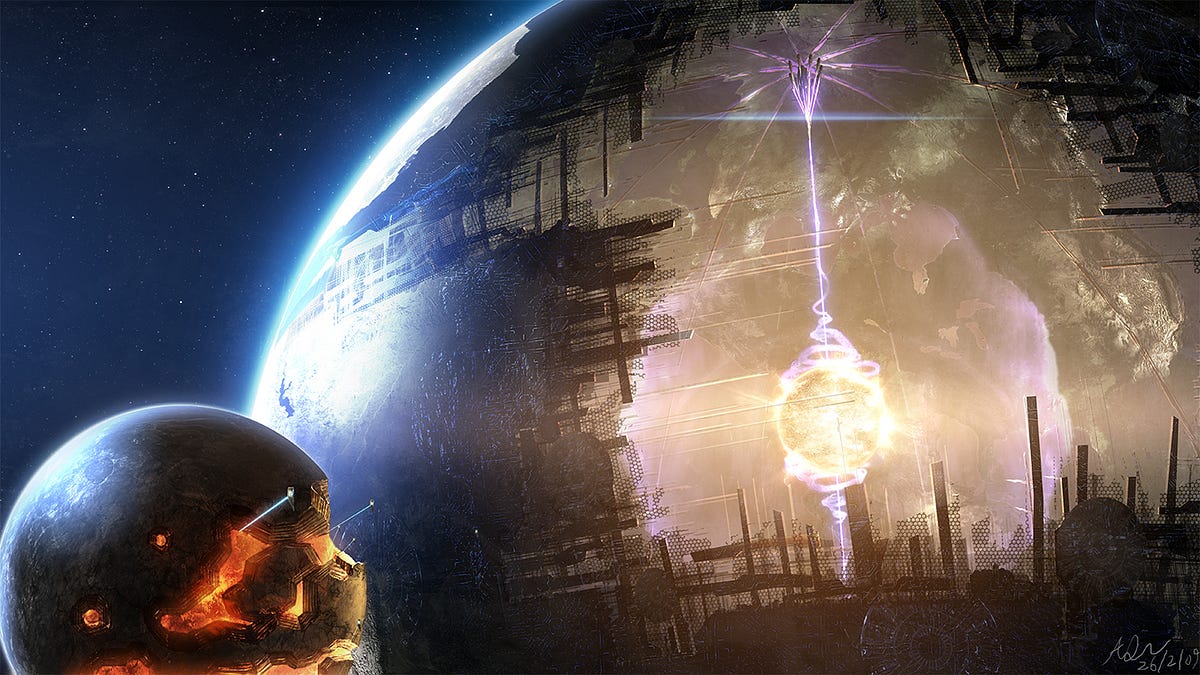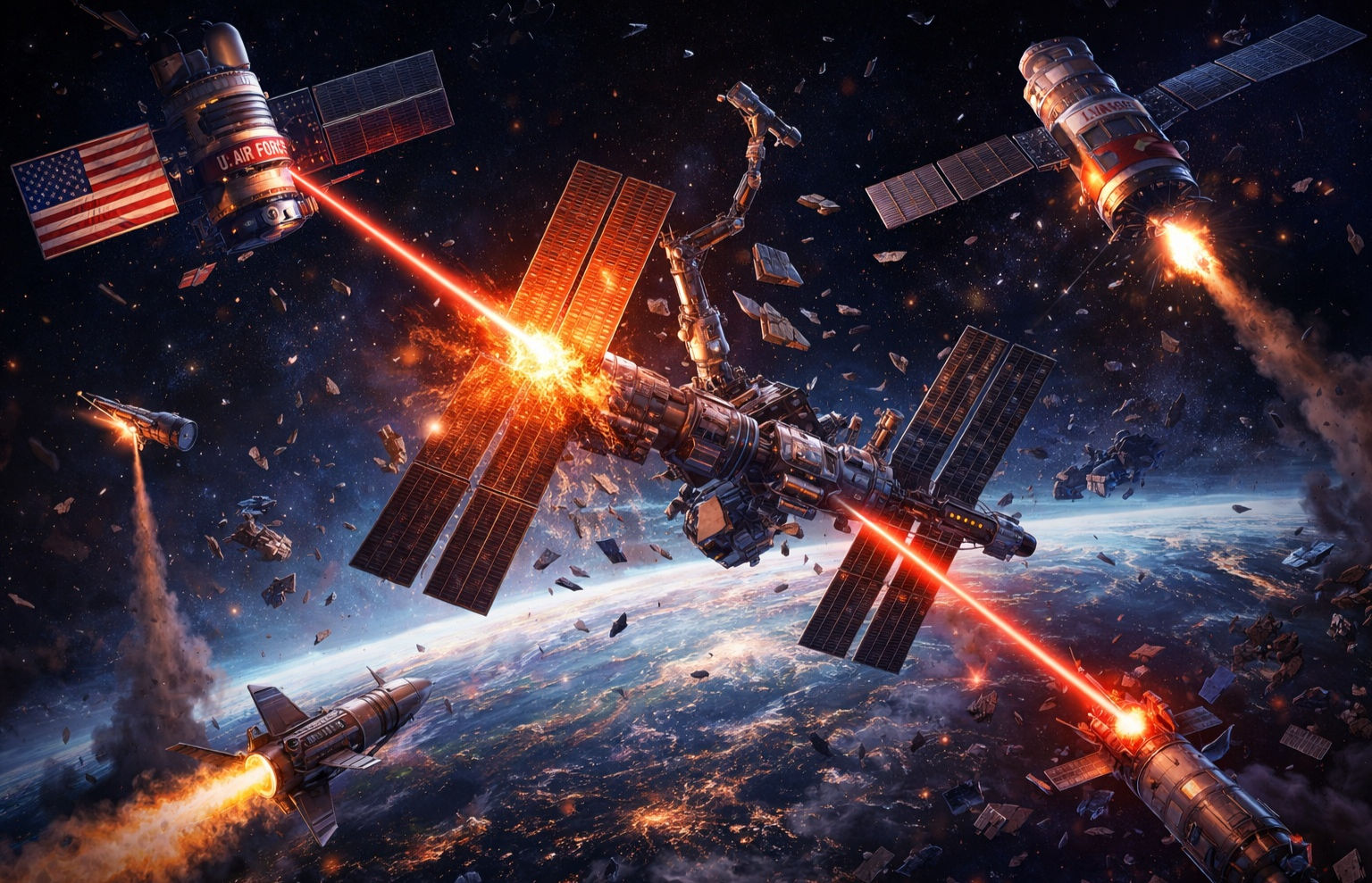
Could Future Wars Start in Space Between Orbiting Nations?
For most of human history, wars have been fought on land, at sea, and in the air. But as technology advances and nations extend their reach beyond Earth, a new question is emerging: could future wars begin in space?
Space is no longer just a domain for scientific exploration. It is now a critical infrastructure layer for communication, navigation, defense, and global economics. As more nations deploy satellites and develop space capabilities, Earth’s orbit is becoming strategically important—and potentially contested.
The idea of conflict in space is no longer science fiction. It is increasingly discussed in military strategy, international policy, and defense planning.
Why Space Has Become Strategically Important
Modern civilization depends heavily on satellites. Systems such as GPS navigation, weather forecasting, financial transactions, military communications, and internet services rely on orbital infrastructure.
These satellites are part of what is often called the “silent backbone” of modern life. Without them, global systems would quickly become unstable.
The Global Positioning System and other satellite networks are essential for:
- Military coordination
- Civil aviation and shipping
- Emergency response systems
- Banking and communications
Because of this dependency, space has become a high-value strategic domain.
The Growing Militarization of Orbit
Although space has traditionally been viewed as peaceful, militarization has already begun in subtle forms.
Countries such as the United States, China, and Russia have developed dedicated military space programs. These are focused not on warfare in space itself, but on protecting and potentially disrupting satellite systems.
The creation of the United States Space Force marked a significant shift, recognizing space as a distinct warfighting domain alongside land, sea, and air.
Other nations are developing similar capabilities, including:
- Anti-satellite missile systems
- Electronic jamming technologies
- Space surveillance networks
While no full-scale conflict has occurred in orbit, the tools for potential space-based confrontation are already being developed.
The Fragility of Satellite Infrastructure
One of the key reasons space conflict is considered a serious risk is the vulnerability of satellites.
Unlike terrestrial systems, satellites are:
- Difficult to repair once damaged
- Expensive to replace
- Exposed to debris and interference
- Often essential single points of failure
A targeted disruption of even a small number of satellites could have global consequences. Communication breakdowns, navigation failures, and economic disruptions could cascade across the world.
This creates a situation where even limited action in space could have disproportionate effects on Earth.
The Legal Framework: Space Is Not a Battlefield
The primary international agreement governing space activity is the Outer Space Treaty (1967). It establishes that space should be used for peaceful purposes and prohibits the placement of weapons of mass destruction in orbit.
However, the treaty does not fully address modern military technologies such as:
- Cyber interference with satellites
- Kinetic anti-satellite weapons
- Non-weaponized disabling technologies
This creates a legal gray zone where certain hostile actions may not clearly violate existing agreements.
As a result, the rules of space engagement remain incomplete compared to terrestrial warfare laws.
What a “Space War” Could Actually Look Like
Contrary to popular imagination, a future war in space would likely not involve fleets of spacecraft engaging in cinematic battles.
Instead, conflict would likely focus on disabling or disrupting infrastructure.
Possible scenarios include:
- Jamming satellite communications
- Blinding surveillance systems
- Destroying or disabling navigation satellites
- Creating debris fields to deny orbital access
This type of conflict is often described as “gray zone warfare” because it may occur below the threshold of formal war declarations.
The goal would not necessarily be territorial control in space, but strategic advantage on Earth.
The Risk of Space Debris and Chain Reactions
One of the most serious risks in any orbital conflict is space debris.
If satellites are destroyed, they can generate high-speed fragments that remain in orbit for years or even decades. These fragments can collide with other satellites, creating a chain reaction known as the Kessler Syndrome.
This could potentially make certain orbits unusable, affecting:
- Communication networks
- Earth observation systems
- Scientific missions
A single conflict in space could therefore have long-lasting consequences for all nations, regardless of their involvement.
Competition Between Major Space Powers
Several major powers are expanding their space capabilities, including the United States, China, India, Russia, and members of the European Space Agency.
Each of these actors depends on space assets for both civilian and military purposes. This overlap increases the risk of misunderstanding or escalation.
The rise of private space companies such as SpaceX has also added complexity, as commercial satellites now form part of critical national infrastructure.
This blending of civilian and military systems makes it harder to define targets and responsibilities in space.
Deterrence and the Prevention of Space Conflict
Despite rising tensions, space warfare is widely considered undesirable by all major powers.
This is because:
- Satellites are shared dependencies
- Conflict could damage global infrastructure
- Debris affects all orbital operators
- Economic losses would be global, not local
As a result, deterrence plays a major role in preventing conflict. Countries are aware that attacking space assets could lead to widespread retaliation and long-term instability.
Diplomatic efforts, including space cooperation agreements and transparency initiatives, aim to reduce misunderstanding and build trust.
Could Space Become the First Battlefield of the Future?
While space is unlikely to become a traditional battlefield in the near future, it is increasingly plausible that it could become the first domain where future conflicts begin.
This would not look like conventional warfare. Instead, it may involve:
- Silent disruption of satellites
- Strategic denial of services
- Cyber and electronic interference
- Rapid escalation affecting Earth-based systems
In this sense, space may not replace traditional war zones—but it could become the trigger point for them.
Final remarks
The possibility of future wars starting in space is no longer purely speculative. As reliance on satellites grows and orbital infrastructure becomes more critical, space is emerging as a strategic domain of global importance.
Frameworks like the Outer Space Treaty (1967) attempt to preserve peace in orbit, while organizations such as the United States Space Force reflect the growing recognition of space as a security frontier.
Companies like SpaceX are expanding access to orbit, further increasing activity and competition in space.
Whether space becomes a domain of cooperation or conflict will depend on how effectively nations manage shared risks, establish clear rules, and avoid escalation.
The most likely future is not a dramatic space war—but a silent, high-stakes competition where control of satellites becomes as important as control of territory once was on Earth. Can Humans Ever Use 100% of Their Brain? Myth vs Science | Maya