Google’s Android XR Smart Glasses Finally Feel Real — And Meta Should Pay Attention, For years, Google’s ambitions in smart glasses felt more like unfinished experiments than real consumer technology. From the early days of Google Glass to scattered augmented reality demos, the company struggled to convince people that wearable computing had a practical future.
Now, that may finally be changing.
At Google I/O 2026, the company offered its clearest glimpse yet into Android XR, its next-generation mixed reality platform built for smart glasses and immersive devices. While Google kept many details hidden — including the final designs of its upcoming eyewear partnerships — hands-on demonstrations at the conference suggested the company is preparing a serious challenge to Meta’s growing dominance in AI-powered glasses.
And despite arriving late to the race, Google may have a few advantages that could make Android XR glasses genuinely compelling.
Google Is Entering a Market Meta Already Helped Create
Meta currently leads the smart glasses category thanks to the popularity of its Ray-Ban Meta glasses, which blend cameras, speakers, voice controls, and AI features into stylish everyday eyewear.
Unlike earlier smart glasses attempts that looked bulky or awkward, Meta succeeded largely because its products resembled normal sunglasses people would actually want to wear. The company also benefited from its partnership with Ray-Ban owner EssilorLuxottica, giving it immediate credibility in fashion and eyewear design.
That head start matters.
Meta has spent years refining both the hardware and software experience, while also training users to become comfortable with AI-powered wearable devices. Features like hands-free photo capture, live streaming, music playback, and Meta AI integration have helped position its glasses as more practical lifestyle accessories than futuristic gadgets.
Google, meanwhile, has largely watched from the sidelines.
But Android XR suggests the company is finally ready to compete seriously again.
The Android XR Demo Looked Surprisingly Polished
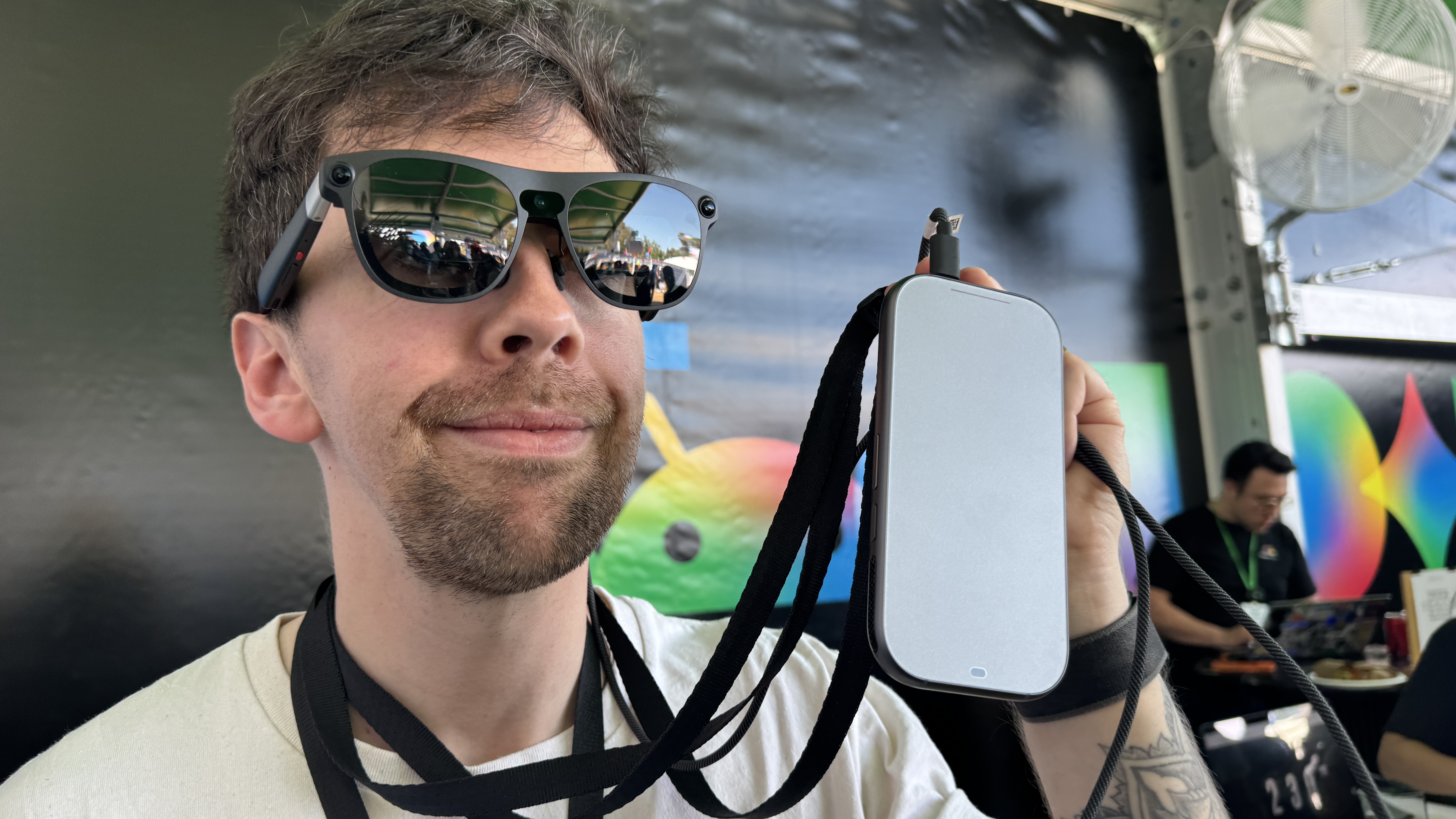
During demonstrations at Google I/O, attendees were able to test Android XR reference hardware — internal development glasses that Google uses while building the platform.
These were not the final branded consumer products shown briefly during the keynote presentation. Instead, they served as early working examples of how Android XR glasses may function.
What stood out immediately was how refined the hardware already appeared.
The glasses reportedly looked much closer to consumer-ready products than experimental prototypes. While slightly less polished than Meta’s Ray-Ban smart glasses, they avoided the oversized, overly technical appearance that has hurt many previous AR devices.
They also felt lighter than Meta’s chunkier display-equipped frames.
That may sound like a small detail, but comfort is one of the biggest barriers facing wearable technology. Consumers are unlikely to wear smart glasses daily if they feel heavy, awkward, or visually distracting.
Google appears aware of that challenge.
The company is partnering with brands like Warby Parker and Gentle Monster to create more fashion-forward Android XR eyewear. However, some of those first-generation products are expected to focus primarily on audio and AI functionality rather than full visual displays.
That approach mirrors Meta’s current strategy, which prioritizes lightweight usability over fully immersive augmented reality.
AI Could Become Google’s Biggest Advantage
While Meta has a lead in hardware experience, Google may hold an edge in artificial intelligence integration.
Android XR is being built around Gemini, Google’s flagship AI platform. The company wants its glasses to function less like standalone gadgets and more like AI-powered assistants integrated into everyday life.
That could become a major differentiator.
Imagine smart glasses that can:
- Translate conversations in real time
- Summarize messages and notifications
- Provide contextual navigation assistance
- Identify landmarks or products instantly
- Answer visual questions about surroundings
- Integrate directly with Gmail, Maps, Docs, and Search
Google already owns many of the services people use daily, giving Android XR access to a massive ecosystem that competitors may struggle to replicate seamlessly.
The company’s growing focus on “agentic AI” also plays directly into wearable devices. If Gemini evolves into a truly proactive assistant capable of completing tasks autonomously, smart glasses become a natural interface for that experience.
Instead of constantly pulling out a smartphone, users could interact with AI continuously through voice, audio, and contextual awareness.
That vision has long been promised by tech companies. Android XR may be the closest Google has come to making it feel believable.
Smart Glasses Are Quietly Becoming the Next Major Tech Battle
The renewed focus on smart eyewear signals a broader shift happening across the tech industry.
For years, companies believed virtual reality headsets would become the future of computing. But while VR found success in gaming and niche applications, mainstream adoption has remained limited due to size, weight, battery life, and social discomfort.
Smart glasses offer a potentially more practical path.
Unlike bulky VR headsets, lightweight AI glasses can blend into everyday life more naturally. They also align closely with the rapid evolution of generative AI.
As AI assistants become more capable, wearable devices could emerge as the ideal way to interact with them continuously throughout the day.
That explains why nearly every major technology company is now exploring the category:
- Meta continues expanding its Ray-Ban partnership
- Apple is reportedly developing future AR eyewear
- Samsung is collaborating with Google on XR projects
- Snap continues investing in Spectacles
- Amazon has experimented with Alexa-enabled glasses
Google’s Android XR platform places the company directly back into that competition.
Google’s Timing May Actually Help
At first glance, Google’s late arrival looks like a disadvantage. Meta already has consumer traction, brand partnerships, and several years of product refinement behind it.
But entering later may also allow Google to avoid some early mistakes.
The original Google Glass launched before both the technology and public acceptance were ready. Concerns around privacy, design, and usability prevented it from becoming mainstream.
Today’s environment is different.
Consumers are now more familiar with AI assistants, wearable devices, voice interaction, and camera-equipped products. Public attitudes toward smart glasses have softened significantly compared to a decade ago.
In some ways, Meta helped normalize the category for Google.
Now Google can focus on refining the experience instead of introducing the concept from scratch.
The company also benefits from recent advances in AI, battery efficiency, miniaturized components, and multimodal computing — areas that were far less mature during the Google Glass era.
The Real Competition Is About Ecosystems
Ultimately, the smart glasses race may not be decided by hardware alone.
The real battle is about ecosystems.
Meta is building an AI ecosystem centered around social interaction, entertainment, and its own assistant technology. Google is approaching the market from a productivity, search, and information perspective powered by Gemini.
Whichever company creates the most useful day-to-day experience could gain a major advantage in the next era of personal computing.
And that future may arrive sooner than expected.
While Google still hasn’t fully revealed its final Android XR glasses lineup, the early demonstrations suggest the company is finally treating smart eyewear as more than a futuristic side project.
For the first time in years, Google’s vision for smart glasses doesn’t feel experimental.
It feels real. Microsoft Windows Update Bug: Network-Restricted Systems Hit by 0x80010002 Error After January 2026 Update | Maya